The Man Who Led Pearl Harbor Finds Peace
A dramatized first-person retelling of documented events
The ships came in low and gray against the Uraga breakwater that spring, engines groaning, decks crowded with men who had been gone so long that their own families barely knew their faces. I worked the landing that season with a relief team, handing out rice balls and blankets, writing down names for the lists that would go to families waiting in Tokyo and Osaka and villages nobody in the government had visited in years. The wind off the harbor still carried a chill in April. I remember thinking that these men did not look like the fierce sailors of the newsreels. They looked like men who had simply been waiting a very long time to be forgiven for surviving.
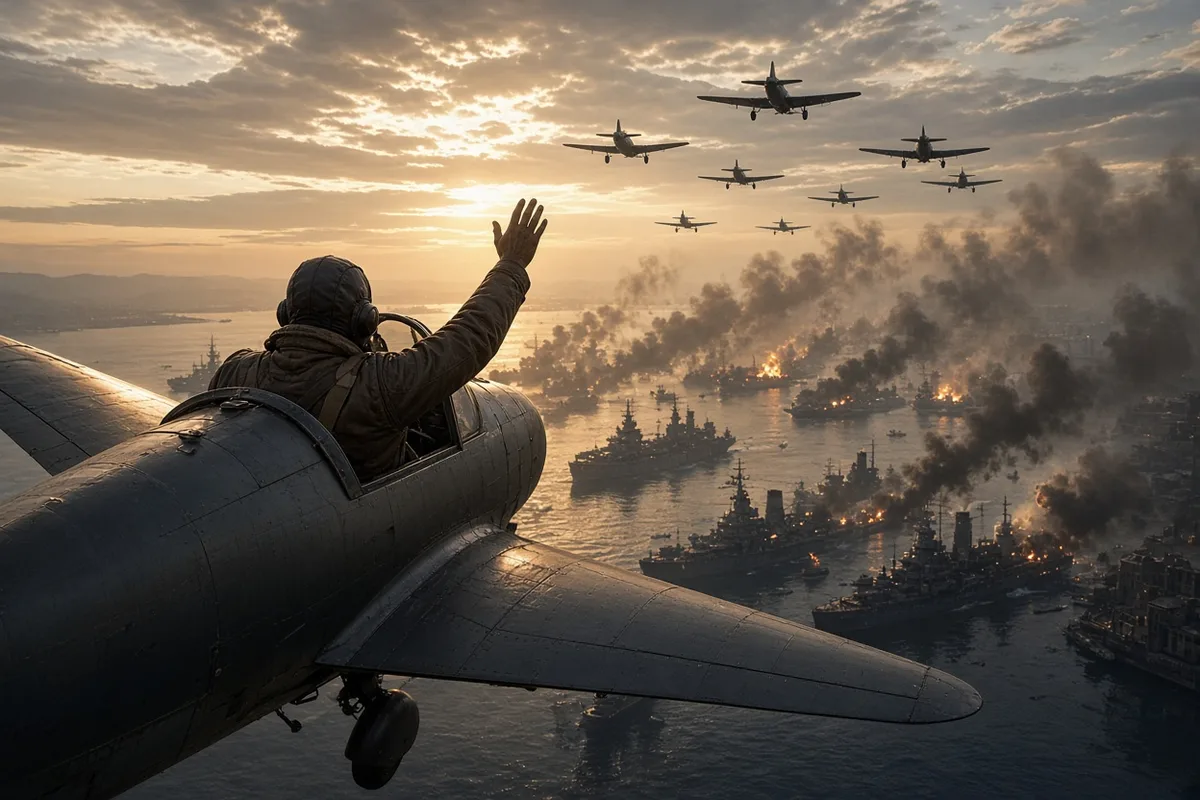
It was into this crowd that Mitsuo Fuchida came, not as a returning prisoner but as a visitor, moving among the repatriated men with a hard, searching look on his face. I knew who he was before anyone told me. Everyone in Japan by then knew the name, even those of us who had spent the war years far from any cockpit. He had been the one who gave the order over Oahu six years before, the one whose coded signal — tora, tora, tora — had gone out to the fleet to say the surprise had worked. He had circled above the burning harbor long after the rest of his squadron turned home, sketching what he saw, refusing to leave until he had it right. Some said he had personally put a bomb into the battleship Maryland. Afterward he had lived through Midway with his legs broken by a blast that threw him into the sea, through six separate crashes into open water, through an appendectomy performed on a heaving deck days before the greatest defeat of his life. Men who flew beside him did not survive the war. He did, again and again, in ways that even hardened sailors called uncanny.

By 1947 he was retired from the Navy and angry. The occupation authorities had called him to testify at the war crimes tribunals, and it had left him bitter, convinced the trials were nothing but the victors writing history to suit themselves. He had come to Uraga that day looking for proof of the opposite story — proof that American captors had treated Japanese prisoners with the same cruelty Japan stood accused of. He moved along the lines of returning men with a notebook, asking questions, waiting for someone to tell him what he wanted to hear.
I watched him stop dead in front of one man. The man's name was Kazuo Kanegasaki, and he had flown as Fuchida's own engineer years before. Everyone, Fuchida included, had believed Kanegasaki dead since Midway. For a moment neither of them spoke. Then Fuchida gripped him by the shoulders the way you grip something to be sure it is real.
He asked Kanegasaki what the Americans had done to him. Whether they had beaten him. Starved him. Whether they had treated their prisoners the way the tribunals said Japan had treated its own. I stood close enough to hear the answer, and I watched Fuchida's face change as he heard it. Kanegasaki told him no. He told him of decent treatment, of camp life that, while hard, held none of the horror Fuchida had come to document. And then, almost as an aside, he told him about a young woman who had served the prisoners' meals with a gentleness none of them had expected — a woman whose own parents, Christian missionaries, had been killed by Japanese soldiers on the island of Panay in the Philippines.

Fuchida did not write that down. He simply stood there. In the code he had been raised on, a man whose parents were murdered owed those murderers a debt of vengeance that could never lawfully be set aside. That a daughter of the dead could pour rice for the countrymen of her parents' killers, and do it with what Kanegasaki called love, was not a detail Fuchida could file away as helpful or unhelpful to his case. It sat wrong in him, like a bone that would not set.
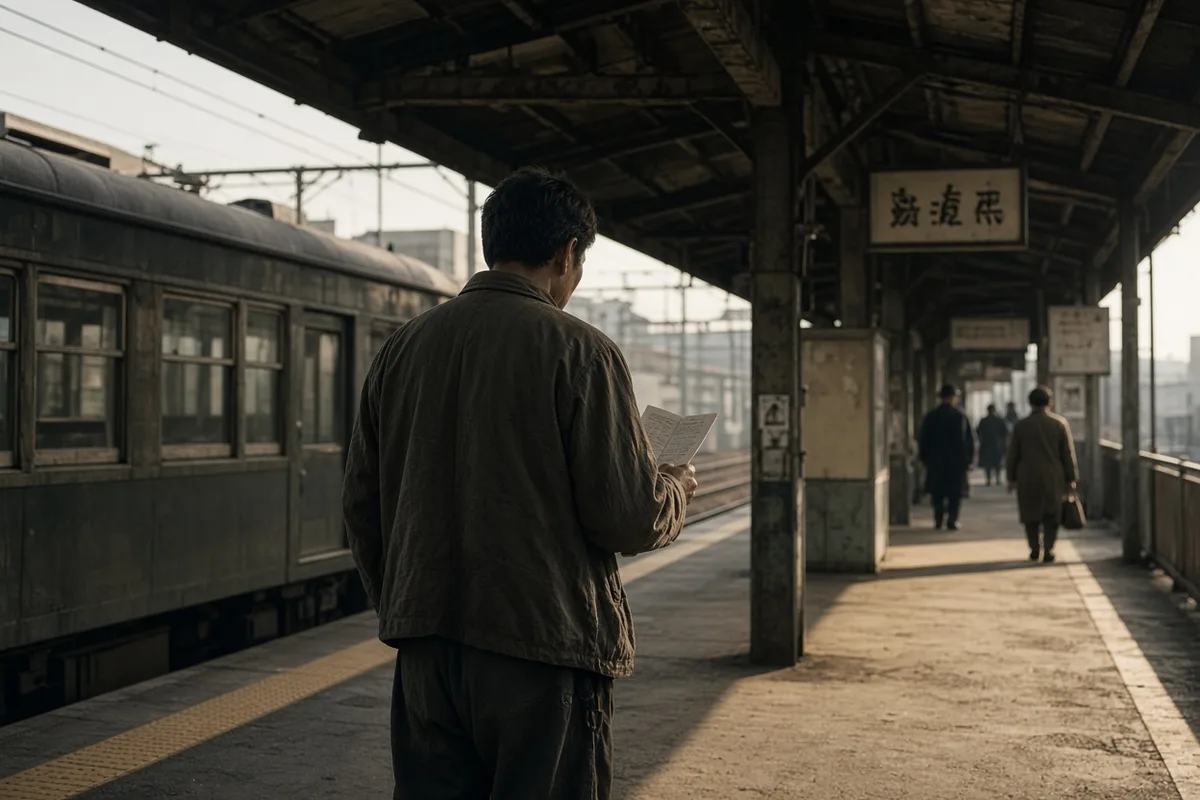
I did not see him again for the better part of two years. Tokyo in those years was a city stitching itself back together block by block, the great avenues still scarred, the crowds around Shibuya Station thick with men selling whatever they had left to sell. It was there, near the little bronze statue of the dog Hachiko, that I next caught sight of him, in the fall of 1948, a folded pamphlet in his hand that someone had pressed on him in the crowd. He read it standing still while the trains came and went behind him.
The pamphlet told the story of an American named Jacob DeShazer, a bombardier who had flown with the Doolittle raiders, whose plane had run out of fuel over occupied China and who had been taken prisoner by the very army Fuchida had served. DeShazer wrote of torture in that captivity, of despair, and then of a change that came over him reading a borrowed Bible in his cell — a change he called being born again. Fuchida read of an American who had suffered at Japanese hands and had answered it not with hatred but with faith, and it must have struck him with the same unwelcome familiarity as Kanegasaki's story. Two testimonies now, from opposite sides of the same war, describing forgiveness he did not have a word for.
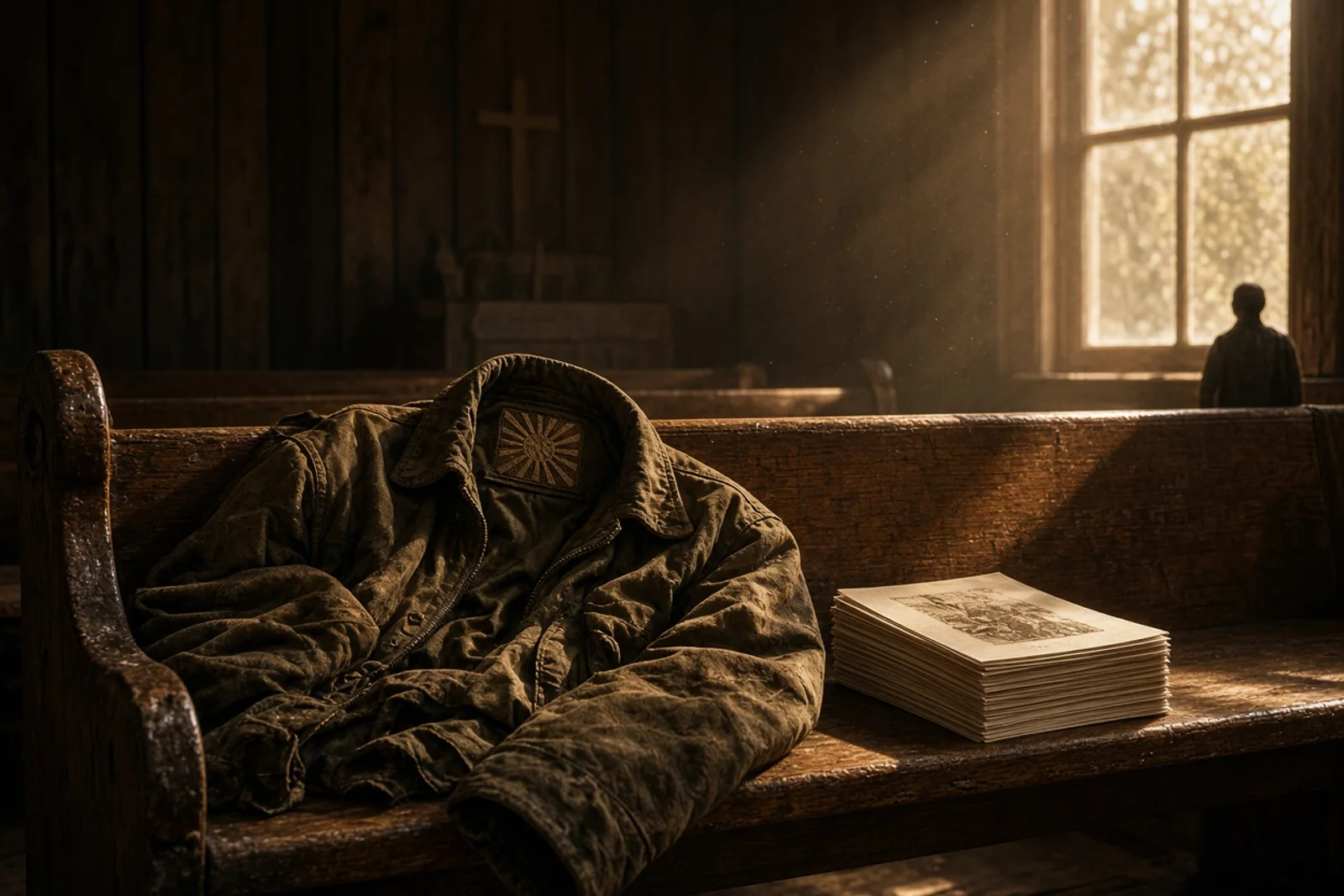
He wanted a Bible after that, and in the Japan of 1948 that was no small thing to find. Paper was scarce, presses were slow, and whatever stock of Scripture had existed before the war had mostly burned with everything else. Months passed. I heard, secondhand, that he had asked at bookstalls and been turned away. It was the following spring, in 1949, back at that same statue of Hachiko where he had first taken the pamphlet, that he finally found a man selling Bibles from a stack at his feet, and bought one.
I think of that spot often — a dog cast in bronze, waiting for a master who never came home from Shibuya Station, and beneath it two chance meetings, a year and a half apart, that between them turned a man who had once given the order to bomb a fleet toward the book he would spend the rest of his life handing to strangers.
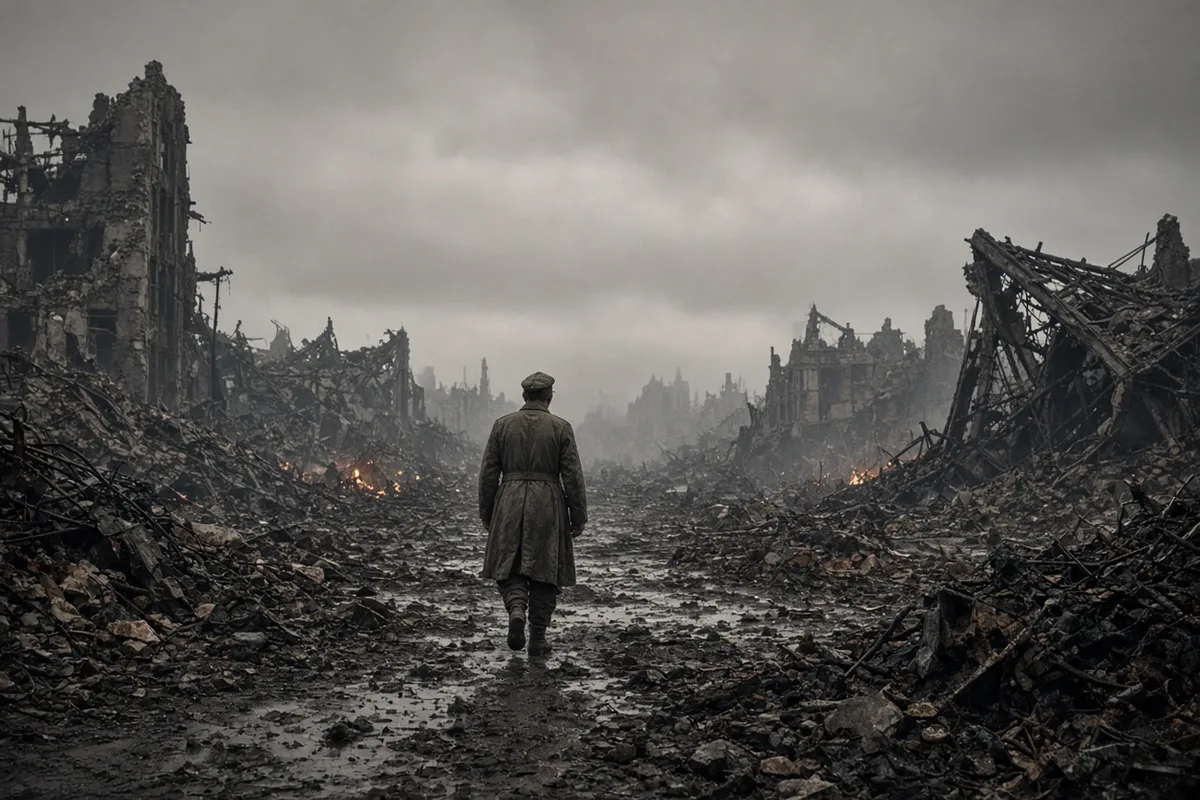
He did not open it right away with any hunger. By his own account the years after his discharge had been lonely and hard. Twenty-five years in the Navy had left him with no trade for peacetime. He took up farming, built a house, dug his own well, and found himself, in his words, living something closer to the story of Robinson Crusoe than to the life of a retired officer. He had trusted, in those years, in nothing beyond a man's own strength and cunning, because that was the only doctrine the Navy had ever given him. He said later that farming had shown him how little that doctrine was worth, how unreliable other men could be, how thin his own resources felt against the plain work of the earth. It was in that thinness, working the soil day after day, that he found himself thinking, for the first time in his life, about the maker of the earth itself.
He was not an unbeliever exactly. He had simply never been given a religion to hold, raised as he was in a household with little of it, and formed as a young officer entirely by what he called the war catechism — duty, honor, the absolute authority of the mission. Now he had a Bible bought from a stranger's stack of books near a train station, and in the fall of 1949 he began, alone, to read it.
I heard, through the small circle of people who by then knew him, what it was that stopped him. He came to the story of the crucifixion, to the words spoken from the cross asking forgiveness for the men doing the killing, and something in him recognized it. It was the same thing Kanegasaki had described in the missionary's daughter at the prison camp. It was the same thing DeShazer had found in his cell in China. Two years of turning it over, and now here it was written plainly, the explanation for what he had refused to understand — why an enemy would choose love instead of the vengeance his own code demanded.
He did not announce this to crowds. It happened quietly, the way most real turns in a life happen, without an audience, in a farmhouse he had built with his own hands. But it did not stay quiet for long. Within months he was speaking of it to anyone who would listen, and in May of 1950 he traveled to meet, for the first time in person, the American whose captured testimony had first cracked something open in him. Jacob DeShazer, the bombardier who had once been his country's prisoner, stood in front of him not as an enemy and not as a curiosity, but as a friend, and the two of them, who had come to the same conclusion from opposite ends of the same war, began speaking together across Japan.
By then I had gone to work with the Pocket Testament League, distributing small paper Gospels in stations and marketplaces much like the one where Fuchida had bought his first Bible, and it was through that work that I heard him give the testimony that would carry him, in time, across Japan and America and Europe. He gave it in a flat, unadorned voice, no pulpit theatrics, describing himself in the third person the way soldiers sometimes do when the memory is too heavy to claim in the first. He would say that he had sat in the first plane, that he had led three hundred and sixty aircraft toward Pearl Harbor, that he had confirmed the American fleet lying at anchor and given the order that opened the war in the Pacific. He would say his heart had been ablaze that morning with pride at what he had accomplished, and that everything the world now knew as tragedy had flowed from that pride. He was, by then, the last of the seven wing commanders and thirty-two squadron leaders who had flown that raid still living to say so.
He told, too, of how strange his survival had been even before the farmhouse and the Bible. Six times his aircraft had gone down over water and six times he had come out of it alive. He had been cut open for an emergency appendectomy on a pitching deck just before Midway, unfit to fly the battle that broke the back of Japan's carrier fleet, and so escaped the fate of officers who, fit and able, went on afterward to the meat grinder of Guadalcanal instead. A bomb blast at Midway had thrown him into the sea with both legs broken and still he had been fished out alive. Later in the war he had been in Hiroshima only a day before the bomb fell, called back to Tokyo at the last hour by an order from headquarters that spared him a second time from a fire he had not started.
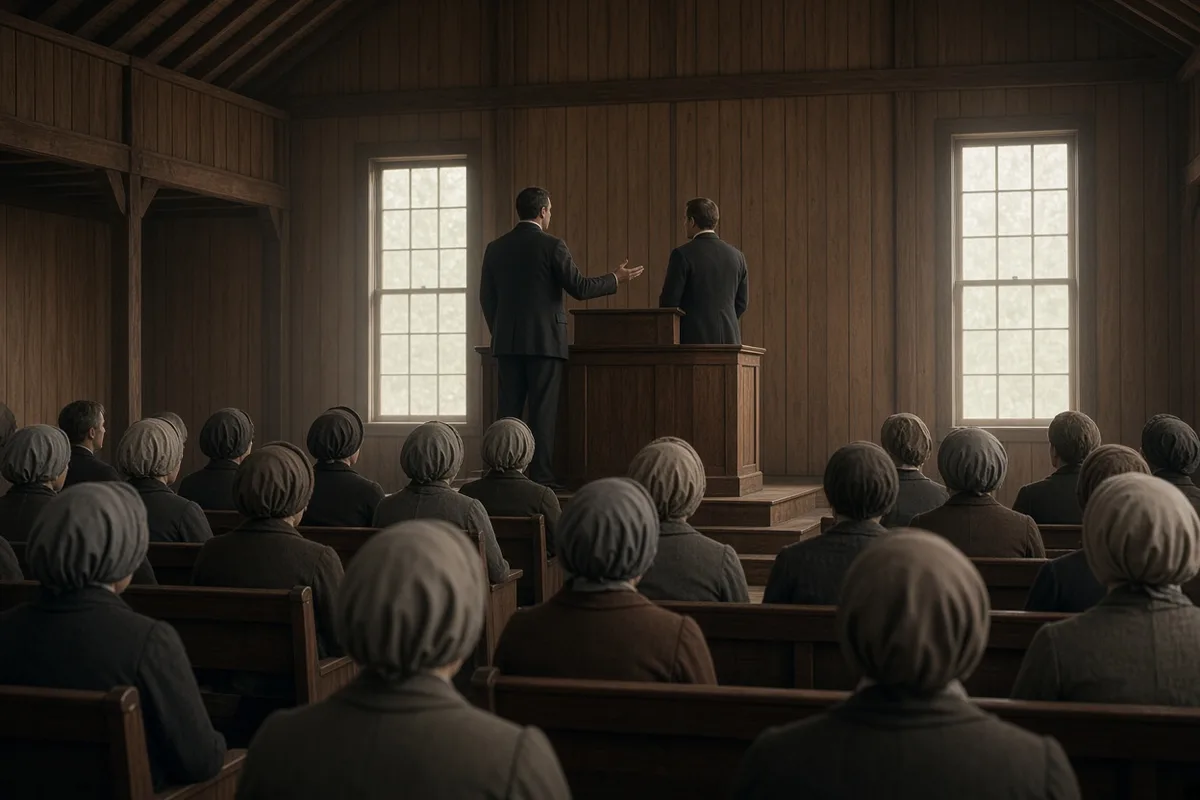
He carried all of that with him onto the small stages and street corners where he began to preach, a man who by every reasonable accounting should have died a dozen times over, holding a paper Gospel instead of a flight order, telling strangers that the hatred which had put him in that cockpit over Oahu could not be dug out of a human heart by will alone. He said it plainly, without embellishment, because embellishment was not required. He had been the man in the first plane. Now he was a man on a street corner, and both of those things were true at once.
He kept at it for the rest of his life, into the 1970s, traveling far beyond the islands and the ocean he had once commanded from six thousand feet, carrying his testimony to people who had grown up on the very newsreels that made his name a byword for treachery. He died in 1976, an old man by then, three and a half decades removed from the morning the world remembers him for.
Long after, the little map he had drawn that morning above the burning harbor — the coded, careful record of where each American ship lay stricken — surfaced again, sold at auction for a price no one in that farmhouse could have imagined, and found its way at last into the Library of Congress, filed among the nation's permanent memory of the day he started the war he later spent his life trying to answer. Somewhere in the same century's paper trail, folded far more quietly, sits the record of a stranger's Bible bought beside a bronze dog at a train station, which did the work the map never could.