Carver and God's Little Workshop
A dramatized first-person retelling of documented events
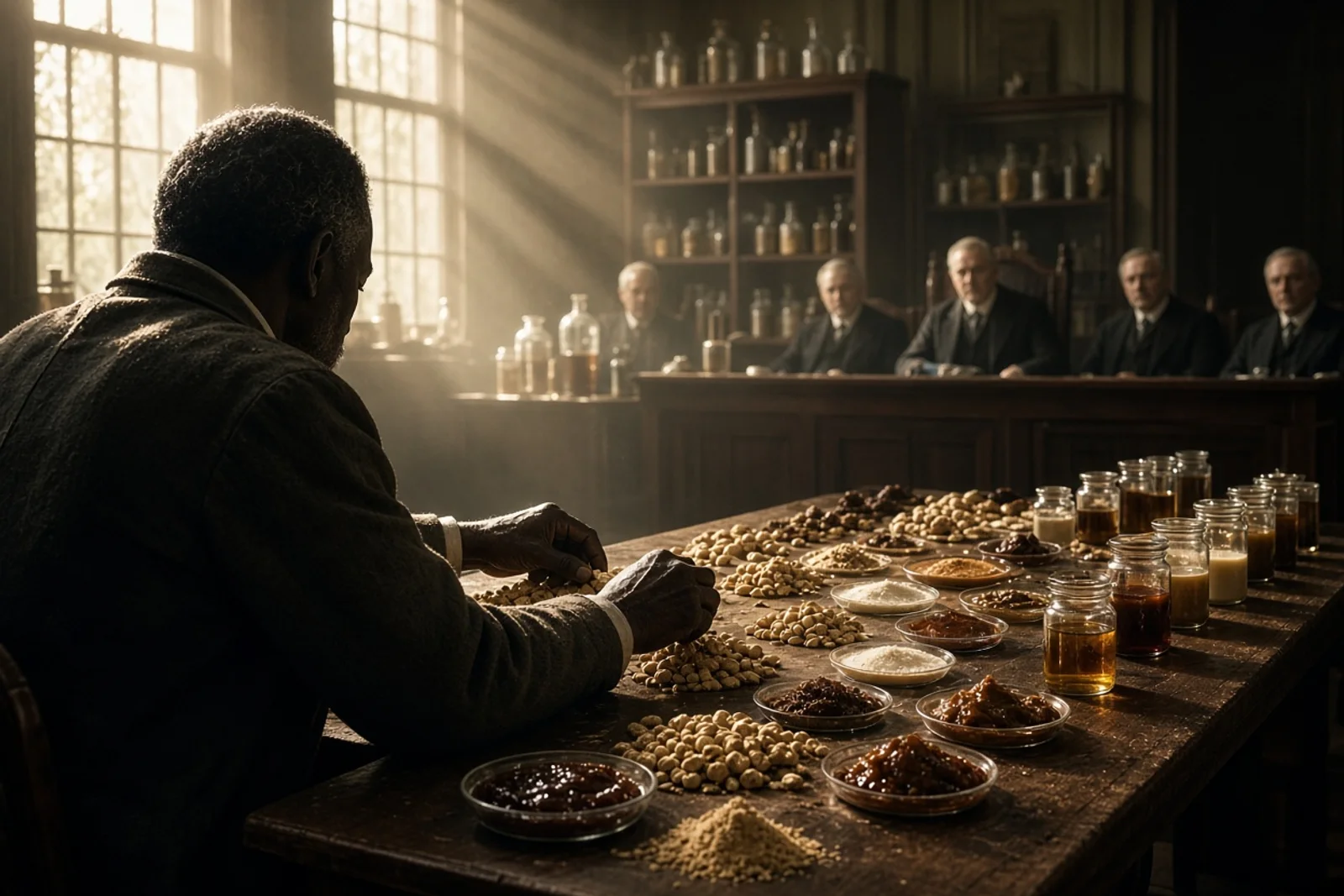
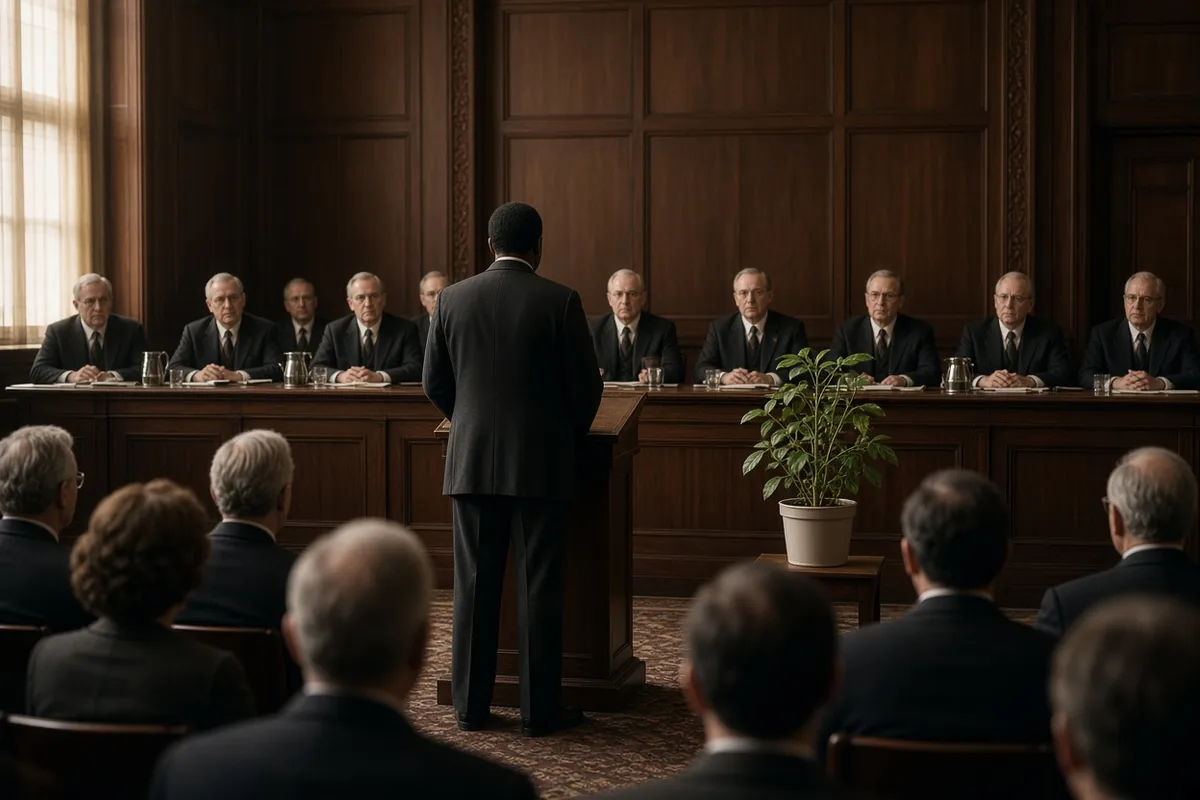
The train from Alabama had shaken the crates the whole way north, and by the time we hauled them up the marble steps of the House building on the morning of January 21, 1921, I was more worried about broken jars than about anything the congressmen might say. I was carrying two wooden boxes of peanut samples — oils, milks, a paste the color of clay, some kind of dye Professor Carver had cooked up the week before — and my hands ached from the cold. He walked ahead of me in his old suit, the one with the shine at the elbows, a fresh flower pinned crooked in the lapel because he never could get it straight without a mirror. He looked, if I am honest, like a man who had wandered into the wrong building. Ten minutes, the clerk told us at the door. Ten minutes for a colored professor from a peanut growers' association nobody on that committee had bothered to look up beforehand.
I set the boxes on the table at the front of the House Ways and Means Committee room and stepped back against the wall, because that was where a Tuskegee assistant belonged, and I watched the members settle into their chairs with the bored patience of men who had already decided how their day would go. One of them, early on, made a remark about whether the professor had brought along a watermelon to go with his peanuts. I remember the small laugh that went around the table. I remember Professor Carver's face did not change at all. He said he had not thought to bring one, and he opened the first jar.

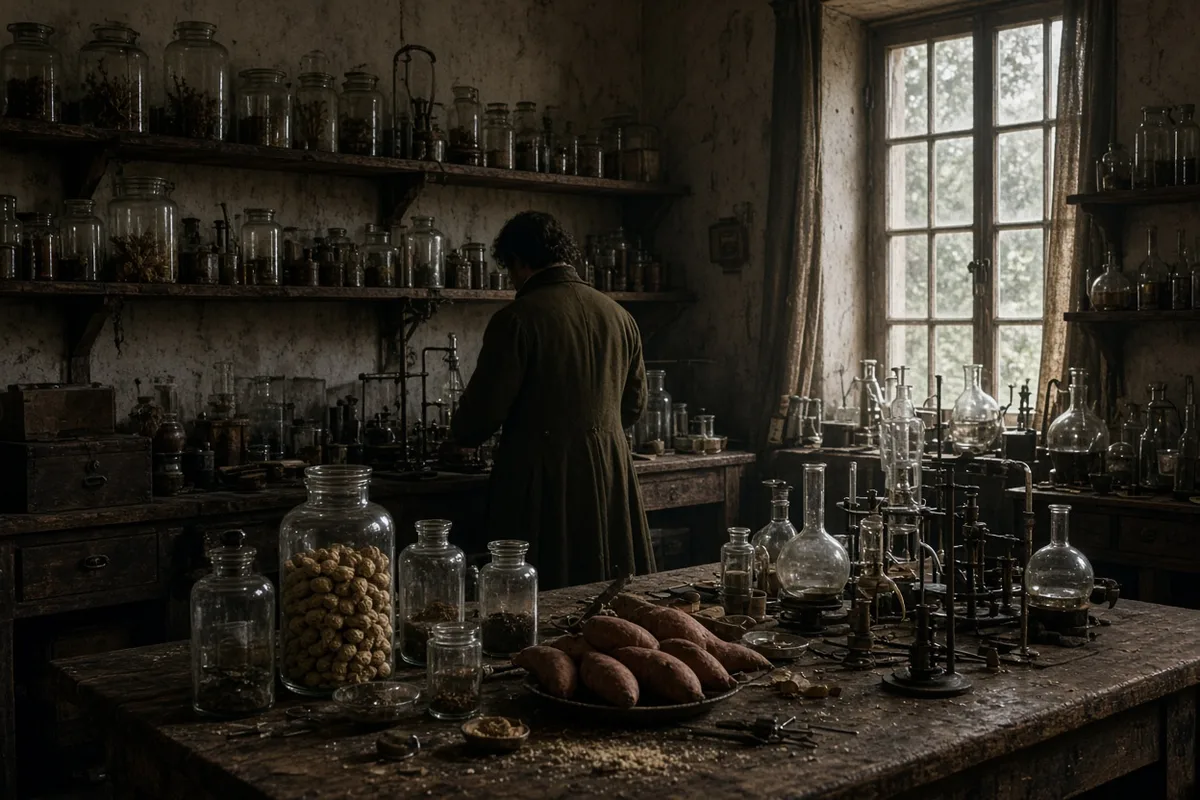
He had been opening jars like that for twenty-five years by then, ever since a letter came to him at Iowa State in the spring of 1896 asking him to give up money and position and fame he did not have yet, in exchange for hard work at a school in Alabama that could not even pay him what he was worth. Booker T. Washington had written it plainly, no flattery in it, just an offer of degradation and poverty and waste to be turned into something like manhood, and Carver had written back within days saying he was glad to cooperate in doing all he could. I did not know him then. I only know what the older hands at Tuskegee told me, how he arrived to find no laboratory at all, just an idea of one, and how he sent students out to the town dump with wheelbarrows to bring back broken bottles and rusted pots and bent wire, because a school built to lift men up from nothing could not afford new equipment for the man meant to teach them how to do it.
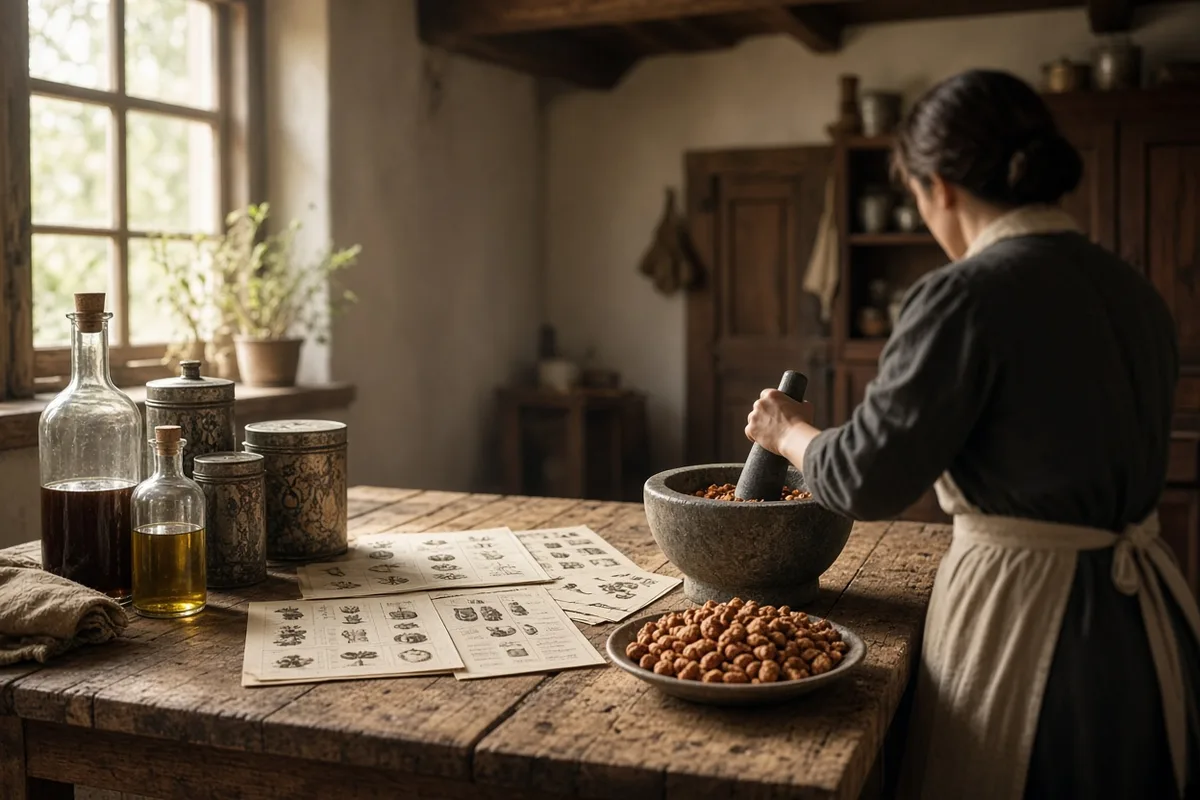
He called that room his little workshop, though nobody else would have called it a workshop at all. It sat behind the dairy building, cluttered with jars nobody could name and instruments cobbled together from the scraps his students dragged in. He was up before the sun most mornings, walking the fields around Tuskegee alone before class, and he told people once that a man cannot draw close enough to God to hear what God wants to say to him if there are other men around making noise. Whatever he found on those walks, he carried it back into that clutter of broken glass and made it answer to a burner flame.
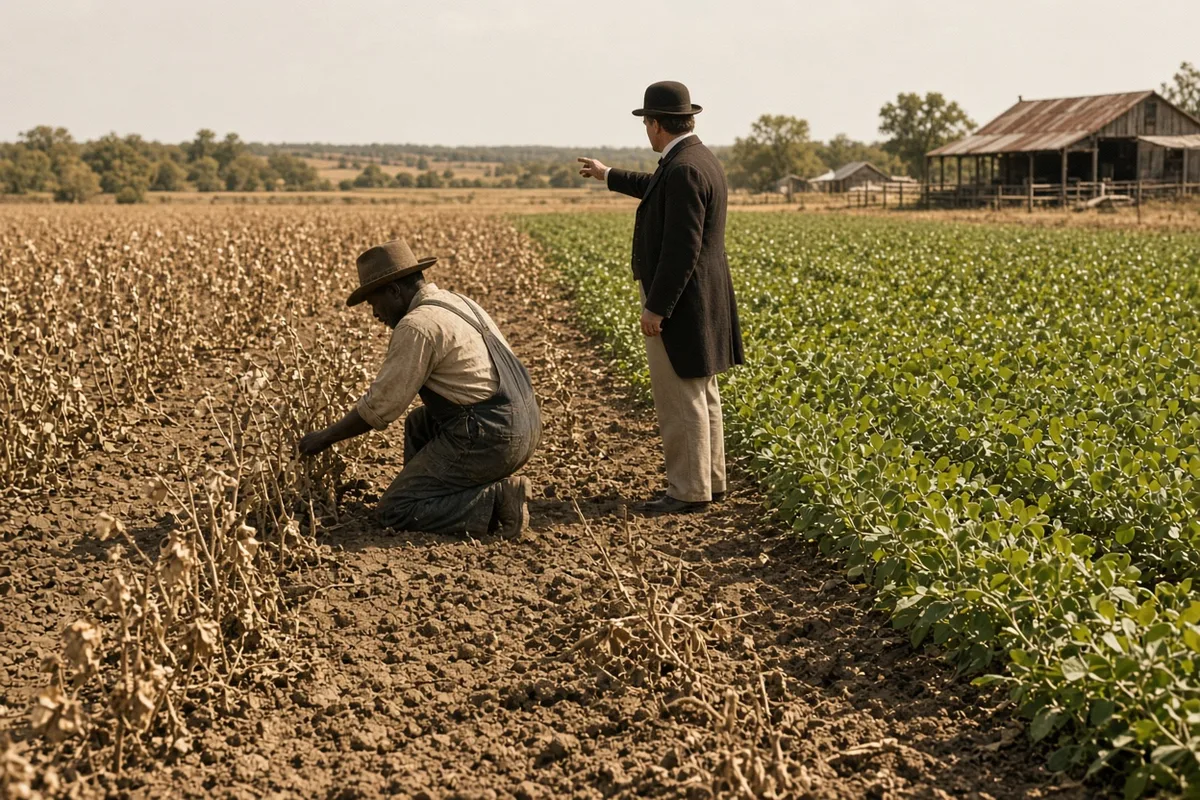
The soil was the trouble, and everybody in Macon County knew it before Carver ever said a word about it. Cotton had eaten the land for a hundred years, and the boll weevil was crawling up from Mexico to finish what the cotton had started, and the farmers around Tuskegee, black and white both, were staring at fields too tired to grow anything worth selling. Carver told them to plant peanuts. He told them to plant sweet potatoes. Both crops gave nitrogen back to ground that cotton had stripped clean, and for men with nothing, that seemed at first like advice from a man who did not understand hunger — until it worked, until the soil came back, and the farmers found themselves standing in fields thick with peanuts and no earthly notion what to do with all of them.
Carver said later he took that problem to God the way he took everything, out loud, walking, alone. He liked to tell it almost like a joke on himself — how he had asked his Creator what the whole universe was for, and been told to ask for something smaller, more suited to so small a mind. So he asked what man was made for, and was told again to cut the request down further. Finally he settled on the peanut alone, and even that, he said, seemed almost too large a thing to hand a man, until Genesis came to his mind, the line about every herb bearing seed given for food, and he understood that the answer to his prayer was not going to be spoken to him. It was going to be handed to him in a basket of peanuts and left for him to work out at a bench.
That was the workshop's real business, for years nobody outside Macon County paid attention to. He would take a handful of peanuts and break them down to their parts — water, fat, gums, sugars, starches, the long chemical names he could rattle off without looking anything up — then recombine what he had taken apart, sometimes with heat, sometimes with pressure, sometimes just by leaving two things together on a shelf to see what they made of each other overnight. Milk came out of that bench. Butter, though a Canadian chemist had beaten him to that particular trick years before and Carver never claimed otherwise. Shampoo. Shaving cream. A dye. A kind of glue. By the time I was old enough to be trusted near his equipment, the shelves in that little room held better than three hundred small jars, each one a use for a crop that southern farmers had been calling hog feed a generation before.
None of that mattered to Washington, though, not the political Washington, not in the way that would put a tariff wall around a farmer's peanut crop and keep cheap imports from undoing everything Carver had spent a quarter-century building. That was why we had come — because the United Peanut Growers Association needed somebody who could stand in front of men who had never touched a peanut plant and make them understand why the crop deserved protection, and there was no one else to send.
He had been given ten minutes. He opened his mouth and the ten minutes disappeared somewhere in the first few jars.
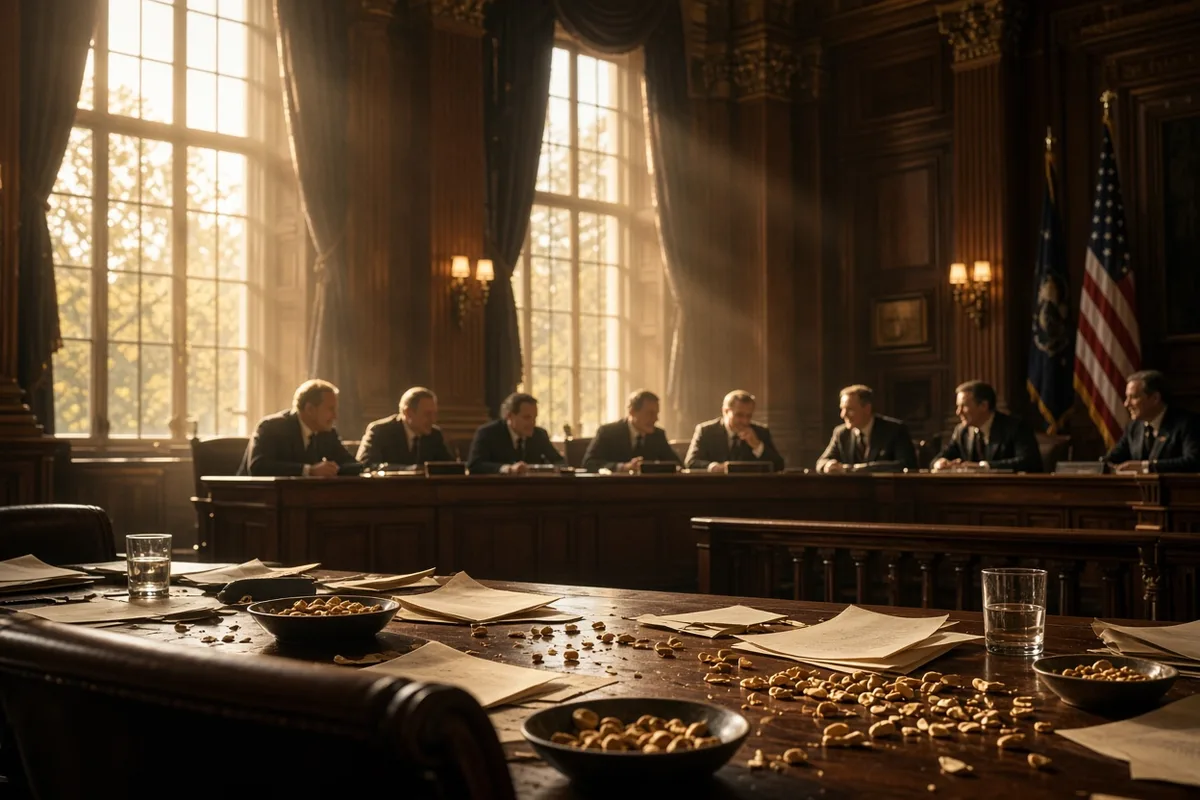
He showed them a peanut roasted, a peanut ground, a peanut pressed into oil thin enough to burn in a lamp. He talked about soil exhaustion in a voice that never rose and never apologized, the voice of a man describing something he had walked over with his own feet a thousand mornings. I watched the committee members lean forward the way men do when they have stopped performing boredom and started actually listening. Somebody asked a question about milk substitutes, and he answered it, and then somebody asked about the oil, and he answered that too, and the ten minutes became twenty, became forty. I stood against that wall with my arms crossed over my chest and felt something in my throat that I did not examine too closely at the time.
He kept a small crate of unopened jars still on the table when the hour mark came and went, and the chairman, instead of cutting him off, let him go on. I have thought since that there is nothing in the official record that quite explains why a room full of powerful men extended courtesy past politeness into genuine attention for a man they had greeted with a joke about watermelon less than an hour before, except that watching him work a jar open was itself a kind of argument, wordless, patient, impossible to interrupt gracefully.
Near the end he set the jars down and folded his hands, and I knew, because I had heard him do it at church suppers and student assemblies more times than I could count, that he was about to preach a little, whether they had asked him to or not. He told them to turn to the first chapter of Genesis, the part where the Creator says He has given every herb bearing seed upon the face of the earth for man's use, and he said that verse held in it everything necessary to strengthen a body and keep it healthy, if a man only had the patience to go looking. Nobody in that room stopped him. Nobody made a joke that time.
When he finished, the applause in that chamber was not loud in the way a crowd is loud, but it did not need to be. I gathered up the jars and packed them back into their crates the way I had packed everything he ever asked me to pack, and outside on the steps the cold hit us both the same as it had that morning, except that something about the shape of the day had turned. Within a week the newspapers were calling him the Peanut Man, a name that would follow him for the rest of his life and outlive him afterward, and the tariff followed not much later, a wall of protection for a crop that a generation earlier had barely been worth planting.
I want to say something here about the years before that room, because a man does not walk in off a train and become that steady by accident. He was born in Missouri, on the farm of Moses and Susan Carver, sometime near the end of the war, though no one ever wrote the date down and he went his whole life without one to claim. His mother, Mary, belonged to the Carvers, who were old and childless and had taken her in mostly for the help she could give around the house. When George was still an infant, night riders came through and took him and his mother both, and though Moses Carver sent a man out with the offer of his best horse to buy them back, the raiders kept the horse's worth in mind longer than they kept the boy's mother alive to be found. George came home alone, sick with whooping cough that would mark his lungs for the rest of his life. His mother he never saw again.
Susan Carver raised him alongside his brother Jim in that same farmhouse, and because George was too frail for heavy field work, she taught him instead to cook, to sew, to do laundry, skills a grown man does not usually brag about but that fed him through every lean year of his schooling afterward. He wandered as a boy through the woods around Diamond Grove asking the kind of questions nobody nearby could answer — what gave a stone its color, what gave a flower its scent, what gave a bird the will to fly the direction it flew — and he carried those questions with him out of Missouri into Kansas at twelve years old, because the schools near home would not open their doors to him.
He drifted for years after that, doing laundry to pay tuition, trying his hand at homesteading, failing at Highland College when the administrators discovered by sight what his letter of acceptance had not told them. He found steadier ground finally at Simpson College in Iowa, where a teacher noticed he could paint, and later at Iowa State, where he trained as a botanist under men who knew fungi the way other men knew scripture, and where he fell in with a prayer circle run by a professor named James Wilson, the two of them meeting new students at the train depot to make sure the lonely ones landed somewhere safe. Wilson went on to become the country's secretary of agriculture the year after Carver graduated, and the friendship between them outlasted every mile that came between their offices afterward.
Tuskegee wanted him worse than Iowa State did, though Iowa State offered to keep him and Tuskegee could offer him nothing but the hard work Booker T. Washington had promised in that first letter. He went anyway, because the work was the point, and he spent the following decades turning a shed with no proper equipment into a laboratory known well past the borders of Macon County, teaching farmers who could not read to rotate crops that could save land nobody else believed was worth saving.
I think about that committee room now more than I think about almost anything else from those years, because it was the one place where the whole shape of his life stood revealed at once to strangers who had no reason to give him more than the ten minutes they had allotted. The watermelon joke came from a world that had already decided what a man like him was for. The hour that followed came from a world he had built for himself out of a chicken yard's worth of broken glass and a habit of walking alone in fields before sunrise, listening for whatever it was he believed was waiting there to be found.
He died in 1943, still working, still walking those same kinds of fields when his legs would carry him, the little workshop behind the dairy building long since grown into buildings that bore his name properly. I still have, somewhere in a box I have not opened in years, one of the small jars he handed out that day in Washington, a sample he never got back from the committee table. I have never opened it. I don't know why exactly, except that some things a man keeps sealed simply because of who sealed them first.