William Carey Sails for India

A dramatized first-person retelling of documented events
The tide at Dartmouth stinks of tar and low water when I first see them, three trunks and a milk goat, and a woman crying without moving her face. I am hauling a rope coil across the wet planks of the Danish ship Kron Princessa Maria, and I stop because a crying woman is more interesting than rope. Her name, I will learn within the hour, is Dorothy Carey, and beside her stand four boys, the smallest barely weaned, and a man in a plain black coat who keeps touching the rail of the gangway like he cannot quite believe it will bear his weight.
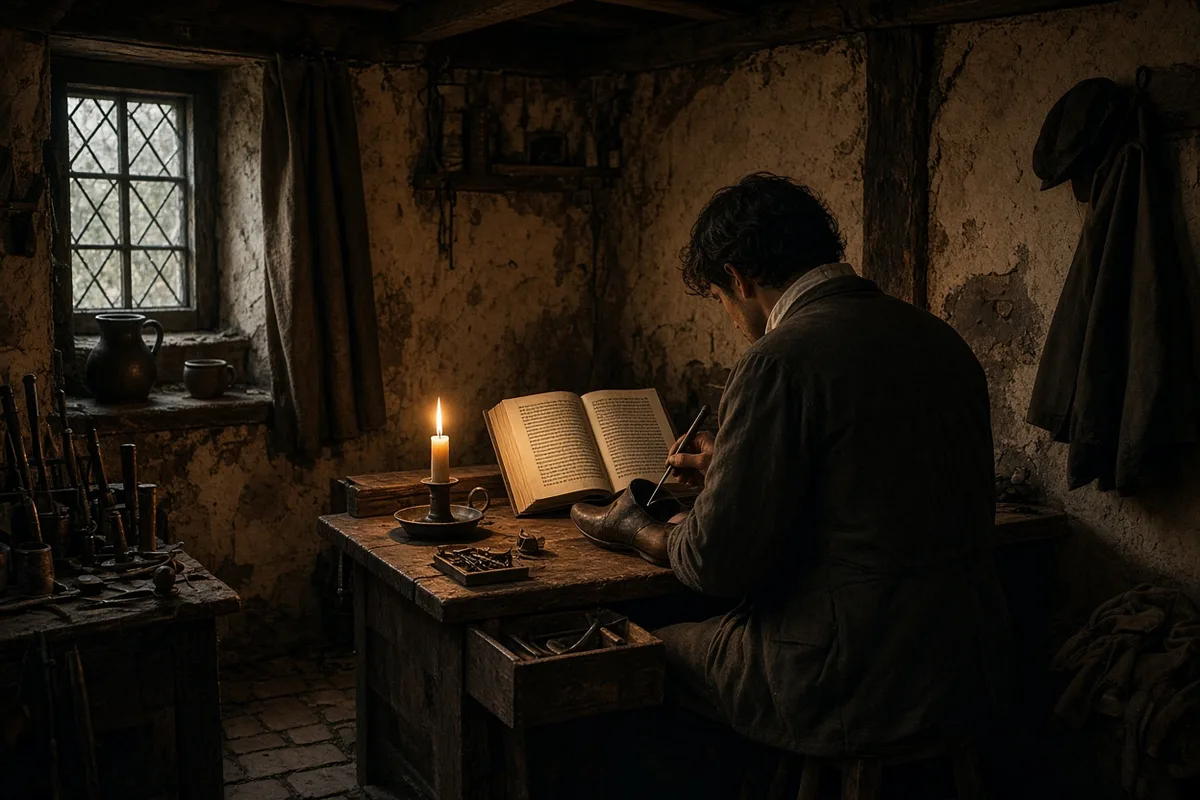
His name is William Carey. He does not look like a man setting out to conquer anything. He looks like what he was before all this, a man who mended shoes for a living and read Greek grammar propped against his cobbler's last, teaching himself letters no one in his village could check him on. I hear this from the ship's mate, who has it from the other Englishman traveling with them, a doctor named Thomas who has been to India before and speaks of Bengal the way other men speak of their own front garden.

It is the thirteenth day of June, seventeen hundred and ninety-three, and the reason this family stands on Danish planking instead of an English deck is a story the crew already knows before the anchor comes up. The English company that rules trade with India, the great East India Company, wants no missionaries crossing to its territory. No ship of theirs will carry a man like Carey. Every English captain who might have taken him has found some reason not to. So the passage falls to us, a Danish vessel under a flag the Company cannot forbid, and I think even then that there is something almost comic in it, that the door to India for an Englishman's gospel opens only through a foreign hull.
Thomas tells it better than I can, later, leaning on a coil of cable in the evening heat somewhere past Madeira. He says the two of them met for the first time back in January, in Mr. Fuller's study in Kettering, a committee sitting late into the night deciding whether Carey should go. He says he had heard of this cobbler-preacher and could not wait for morning, burst into the room while the men were still talking, and when Carey rose from his chair the two of them fell on each other's necks and wept like brothers who had been parted twenty years instead of never having met at all. I did not see it. But I believed him, because I saw the same thing happen a dozen times crossing that ocean, this readiness in both men to weep over the work in front of them.

What I did see, because he told me himself one still night when the wind had dropped and there was nothing to do but talk, was his father's face when he announced he meant to go. Old Mr. Carey said only four words: William, are you mad. Carey laughed telling it, though there was no real laughter in it, the kind of laugh a man makes when a wound has healed crooked but healed. His father had been a parish clerk, and his grandfather too, good Church of England men who thought dissenters beneath contempt, and here was the son gone over to the Baptists and now sailing off the edge of everything they understood as sense.
Dorothy's opposition ran deeper and lasted longer, and I think it is the part of the story the crew spoke of with the most quiet respect, because none of us doubted what it cost her. She had said, flat as a nail driven true, that she and the children would stay in England whatever came. Carey had resigned himself to sailing without her, taking only the eldest boy, Felix, and leaving the rest under the Society's care, a plan that sat in his chest like a stone by every account I heard. It was only at the last, some turn of heart nobody aboard could fully explain to me, that she agreed to come, four children and all, into a heat and sickness she had no way of imagining from a kitchen in Northamptonshire.
I watched her those first days out past the Lizard, gray coast sliding away behind us, and she did not look like a woman glad of her decision. She looked like a woman who had made it anyway. There is a kind of courage that has nothing of eagerness in it, only will, and I have thought of her more than once since, whenever people speak of missionary zeal like it is a fire that only warms and never burns the hand that carries it.
Carey himself was a different case entirely. He carried books wrapped in oilcloth against the salt air, and within a week of open sea he had them out, working through some grammar or other by lantern light while his sons slept in the swinging berth beside him. He told me once, with that same crooked-healed laugh, that he had taught himself Latin, Greek, Hebrew, French, and Dutch inside seven years with scarcely a soul to help him, and I believed that too, because I watched him do something very like it with Bengali before we ever raised the coast of India, working from whatever scraps Thomas could give him, mouthing sounds under his breath at the rail like a man practicing a tune he meant never to forget.
He had a sermon in him he liked to repeat, or rather two halves of one sermon, and Thomas said he had preached it the year before at a gathering in Nottingham, from a text in Isaiah about a woman barren and desolate told to enlarge the place of her tent. Expect great things. Attempt great things. He said it aboard ship sometimes to no one in particular, the way a man repeats a thing that has become the marrow of him rather than a thought he still needs to have.
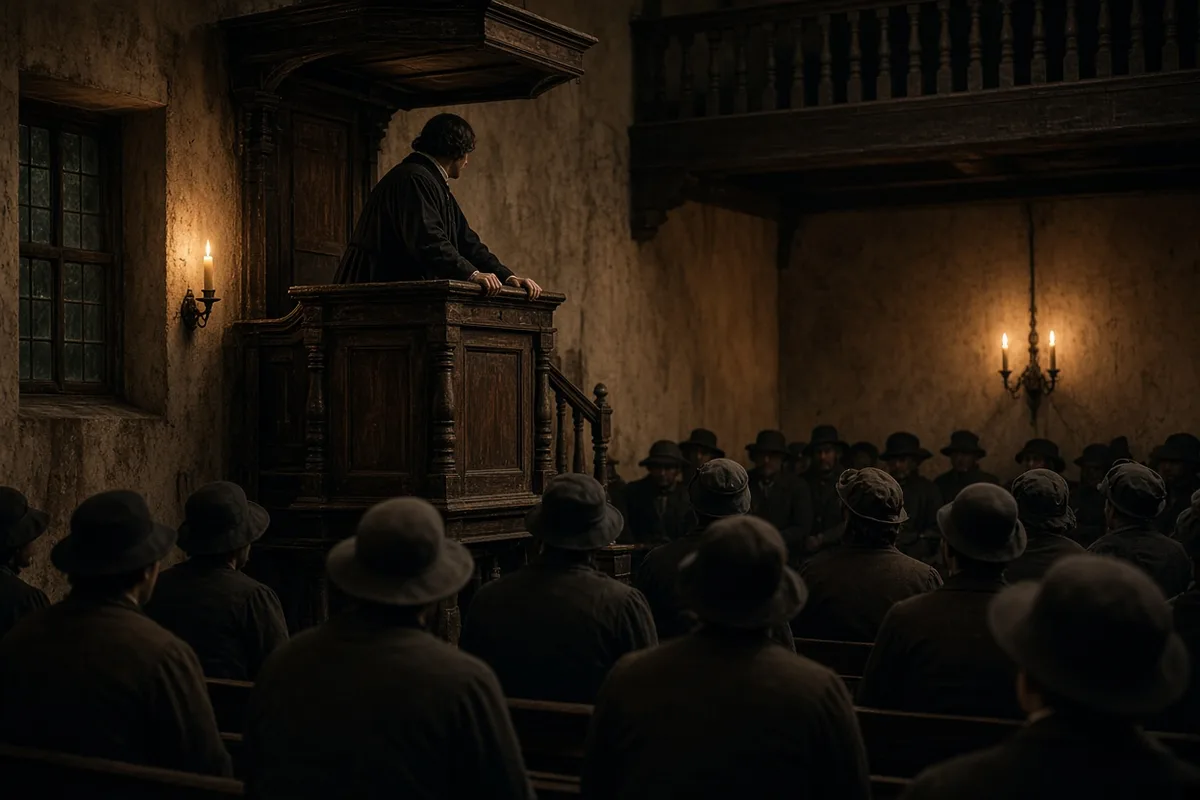
The society that sent him had been born only the previous October, in a widow's parlor in Kettering, a room I never saw but heard described so often I could have drawn it. Deacon Beeby Wallis had died and left his widow that house, and it was there that a dozen or so Baptist ministers, Andrew Fuller chief among them, had pooled what courage and money they had and called themselves a missionary society, the first of its kind in living memory for that whole current of English religion. Fuller himself, Thomas said, had gone begging through London drawing rooms for the funds to send them, and had been turned away more often than not, men telling him to mind the heathen in his own parish first, or the poor starving at his own door, until he was reduced to weeping alone in back streets from the shame and grief of small success. What did come in came often in small coin from plain working people, the kind who understood want.
Money remained a thread pulled tight the whole voyage. Thomas had his own debts trailing him out of England, and there was a night, I remember, when the two men sat with a ledger between them by lamplight and said very little, only added figures and crossed some out and added them again. It was not despair exactly. It was arithmetic done by men who trusted a math beyond the columns, though I would not have put it so finely at the time. I only knew that whatever it cost to keep four children and a wife and two grown men afloat and fed for months, it had been scraped together out of pennies from people who would never see India themselves.
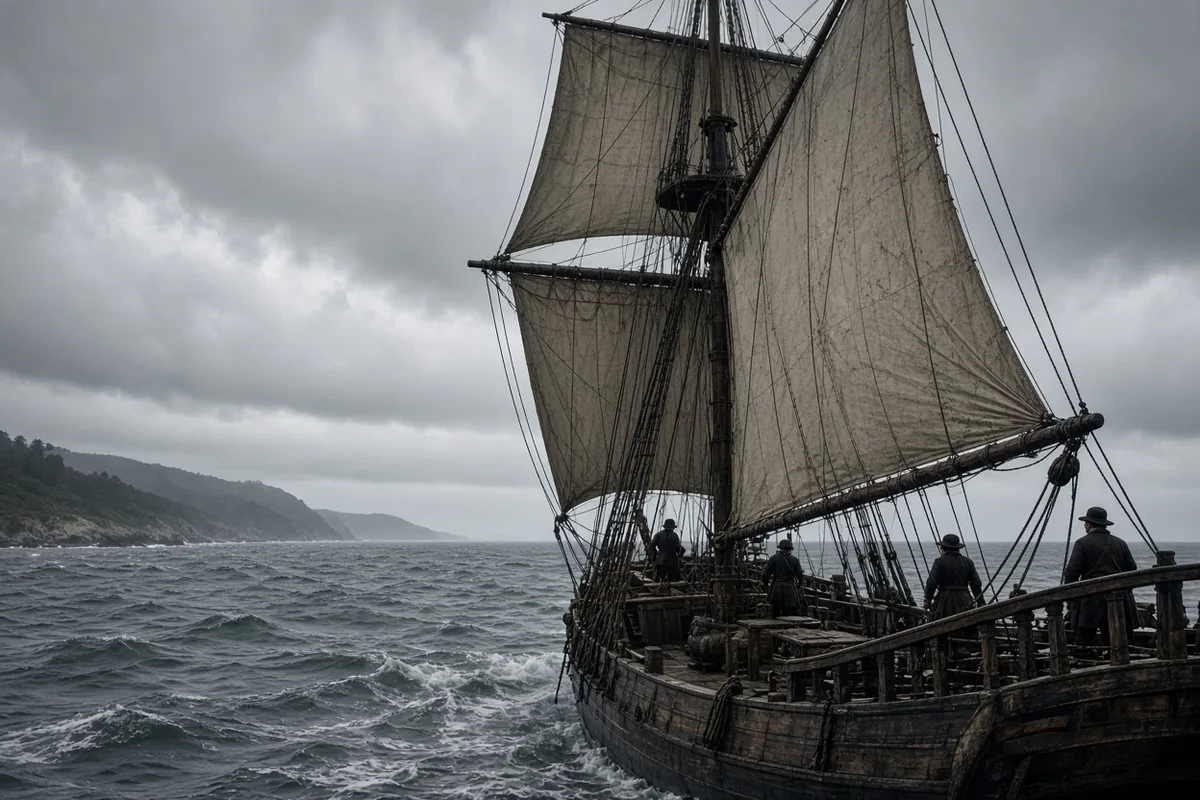
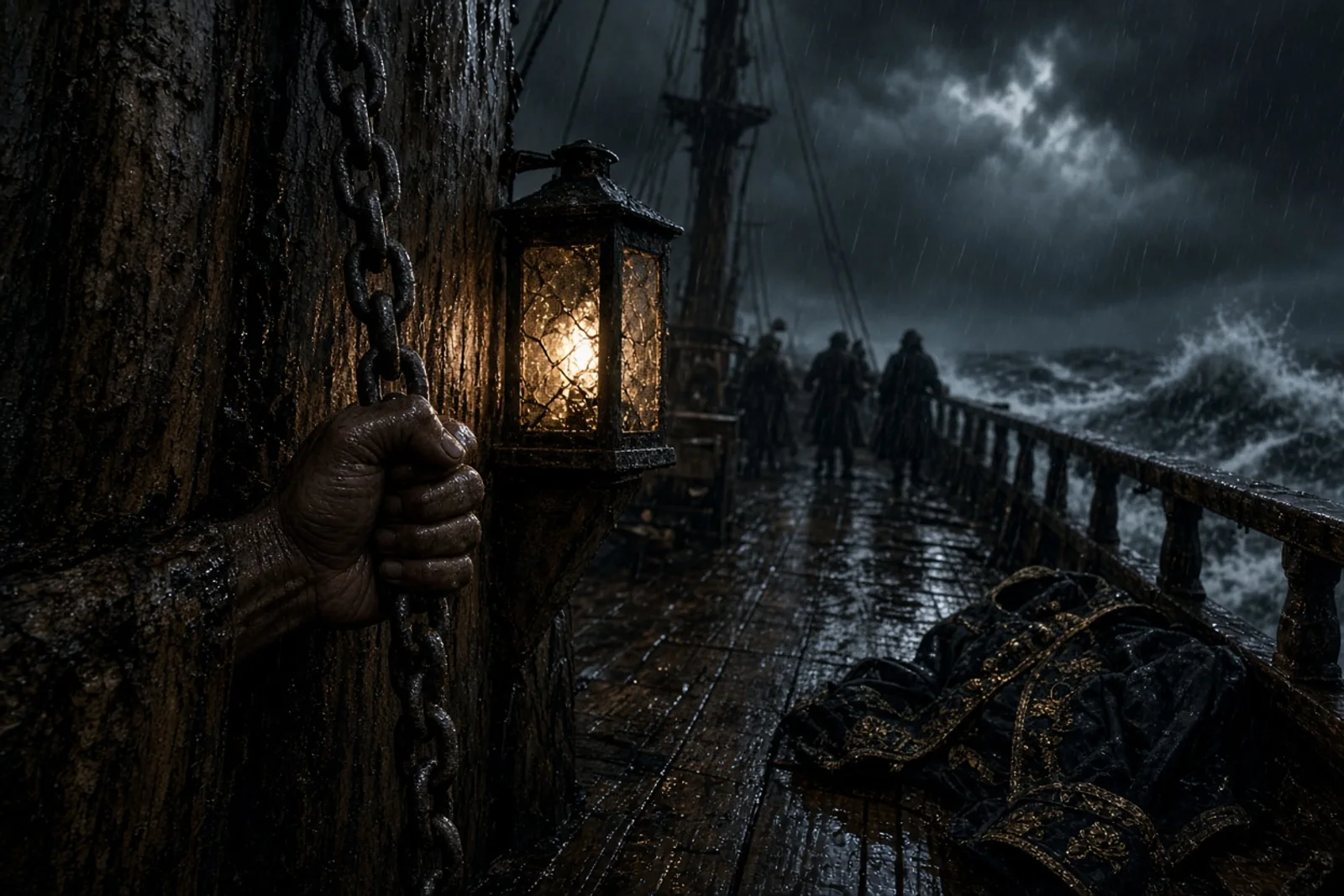
We ran into weather south of the Cape, the kind that turns a ship's deck into something with no floor and no ceiling, only a violent slant that changes its mind every few seconds. A cyclone, the older hands called it, and I have been through gales before and since but never quite that particular terror, water coming over the rail in sheets thick enough to knock a grown man flat, the children lashed below decks screaming in a way that did not stop even when the worst of it passed. Carey did not come up on deck during the worst hours. I found him afterward, when the sea had gone back to its ordinary gray heave, sitting with a child on each knee, praying in a voice too low to make out words, and I remember thinking that whatever else this man was, he was not pretending to a courage he did not have. He was simply staying at his post, which is a different thing.
The ship dried out, the sails were mended, and the weeks that followed had a strange, suspended quality, heat thickening as we came up into warmer latitudes, the color of the sea changing from iron to something closer to green glass. Thomas spent those weeks talking with the sailors, preaching a little when they would stand for it, practicing his Bengali on Carey the way two boys might drill each other in a spelling lesson. Dorothy kept mostly to herself and the children, and I do not think anyone aboard, myself included, understood yet what she was carrying, though we would all understand it better in the years after, when word came back of the toll that country and that climate took on her.
Land came up first as a smell before it came as a sight, a thick vegetable warmth on the wind that none of us had breathed since Madeira, and then the low green coast of Bengal itself, and finally the crowded water traffic of the river leading up toward Calcutta, boats of every size and rig imaginable threading past our hull. I stood at the rail with Carey the morning we came in sight of the city, and he did not say anything triumphant. He said, almost to himself, that the harvest was very great, in that quiet flat voice he used for the things that mattered to him most, and then he went below to gather his family's few remaining things.
Calcutta swallowed them the way a large water swallows a stone, without visible disturbance, though I have since heard what became of the disturbance underneath. The Company that had refused them passage on an English ship ruled that city entire, and a foreign missionary was not a welcome sight to men whose trade depended on leaving native customs and native gods entirely undisturbed. I heard, years later, secondhand and much traveled by the time it reached me, that officials of that same Company would go in procession to a temple in that city and lay money before an idol in thanks for victories in battle, which struck me, when I heard it, as a strange thing for men who called themselves Christian to do, though I suppose trade makes its own theology.
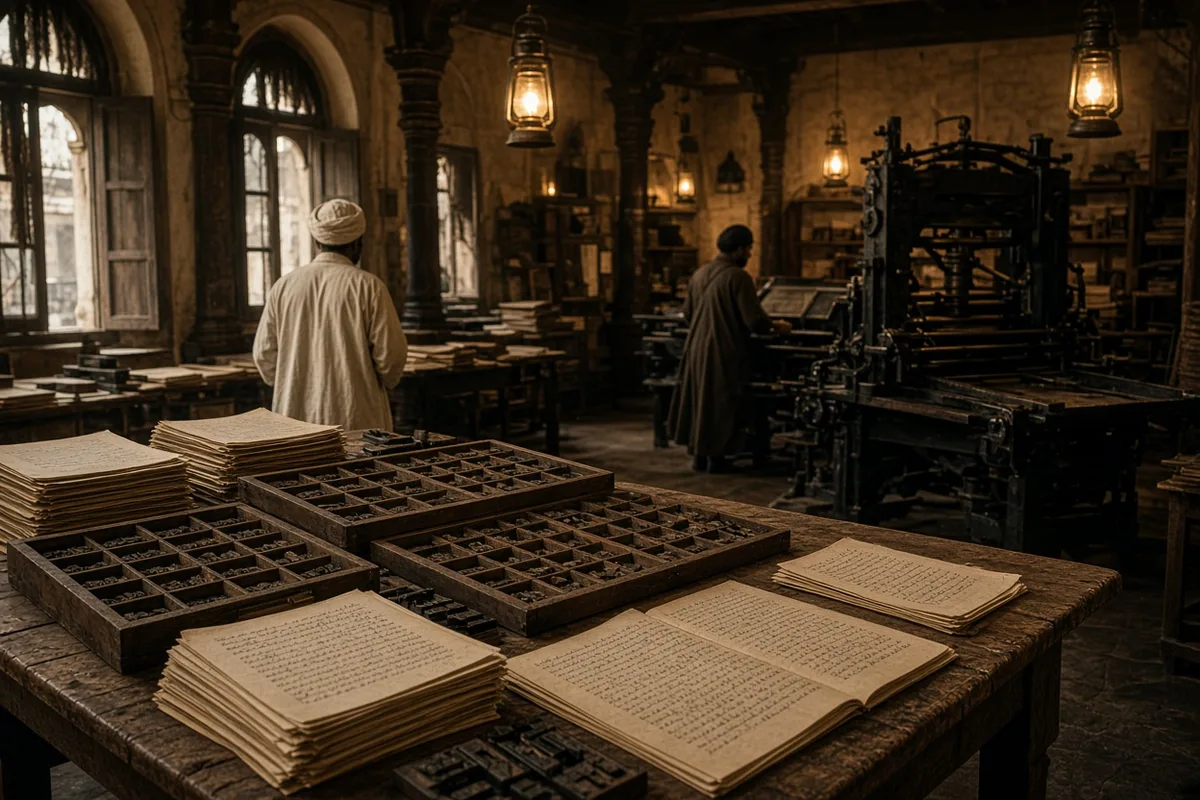
Carey did not stay long in Calcutta itself. Word came back to the docks over the following seasons that he had gone up country to a place called Malda to manage an indigo works, of all things, a preacher grinding out a living from dye plants while he labored at night over a translation of the Bengali scriptures, teaching himself the grammar of a whole subcontinent's tongue the same patient way he had once taught himself Greek over a cobbler's bench. Later still I heard he had settled at a town called Serampore, under a different flag again, the Danish one, the same nation whose ship had first carried him out when his own countrymen would not.
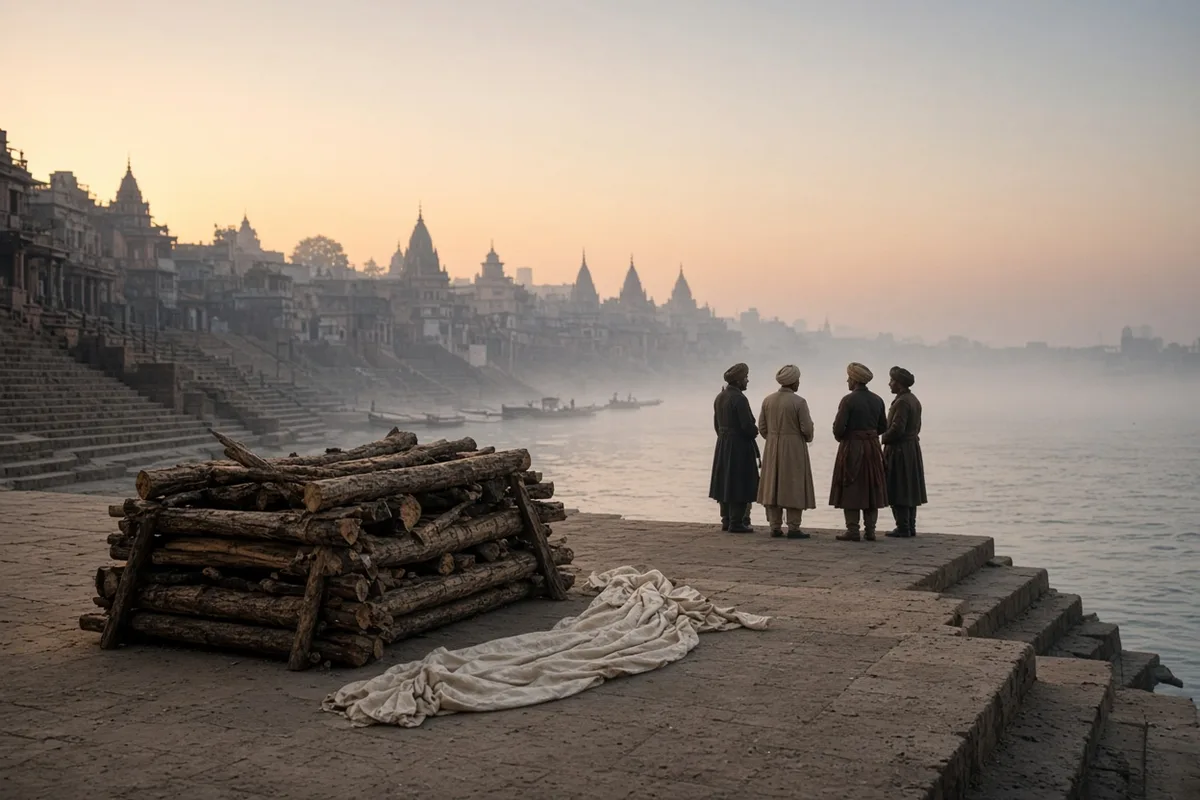
I never went back to that part of the world myself, my trade kept me mostly in northern waters after that year, but a sailor hears things in port taverns, passed along ship to ship the way weather reports are passed, and over the following decades the name Carey came up often enough that I began to understand what had grown out of that gray June morning at Dartmouth. Translations, I heard, dozens of them, whole scriptures rendered into tongues that had never held them before, done by a man who had arrived able to speak none of them. And something else, spoken of with a kind of hushed respect even among men not given to piety, about a custom in that country where widows had been burned alive on their husbands' funeral pyres, and how that same missionary and men who came after him had labored for years to see it outlawed, until at last it was.
I think sometimes of Dorothy on that gangway, crying without moving her face, and I do not know if she ever came to peace with the country that took so much from her. I know only what the record of that place has kept, that the man beside her went on, decade after decade, without ever sailing home again, and that the cobbler's bench and the Greek grammar propped against it turned out, in the end, to have been the first quiet workshop of something far larger than a shoe.