Gladys Aylward Leads 100 Orphans Over the Mountains
A dramatized first-person retelling of documented events
I remember the cold first. Not the mountains, not the fear — the cold, biting through my padded jacket like it wasn't there at all, and Ai-weh-de's voice somewhere ahead of us, steady, calling the smaller ones by name so none would fall behind in the dark.
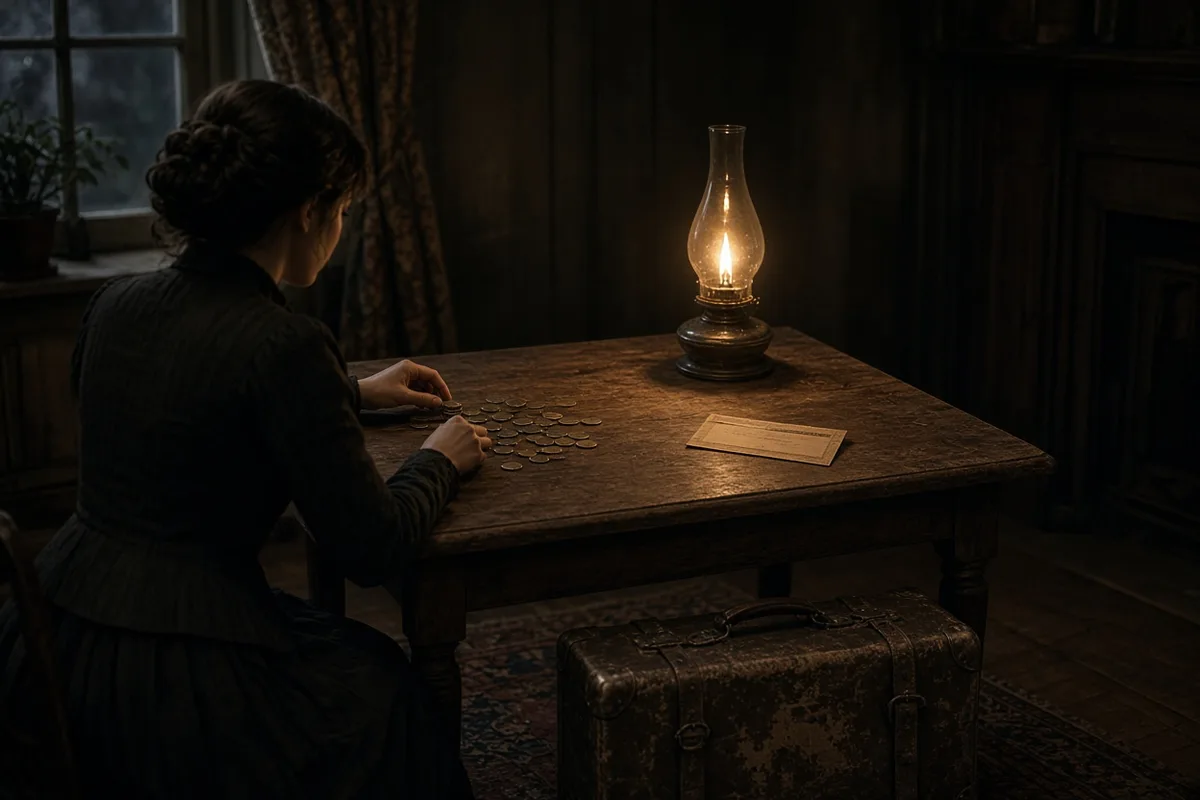
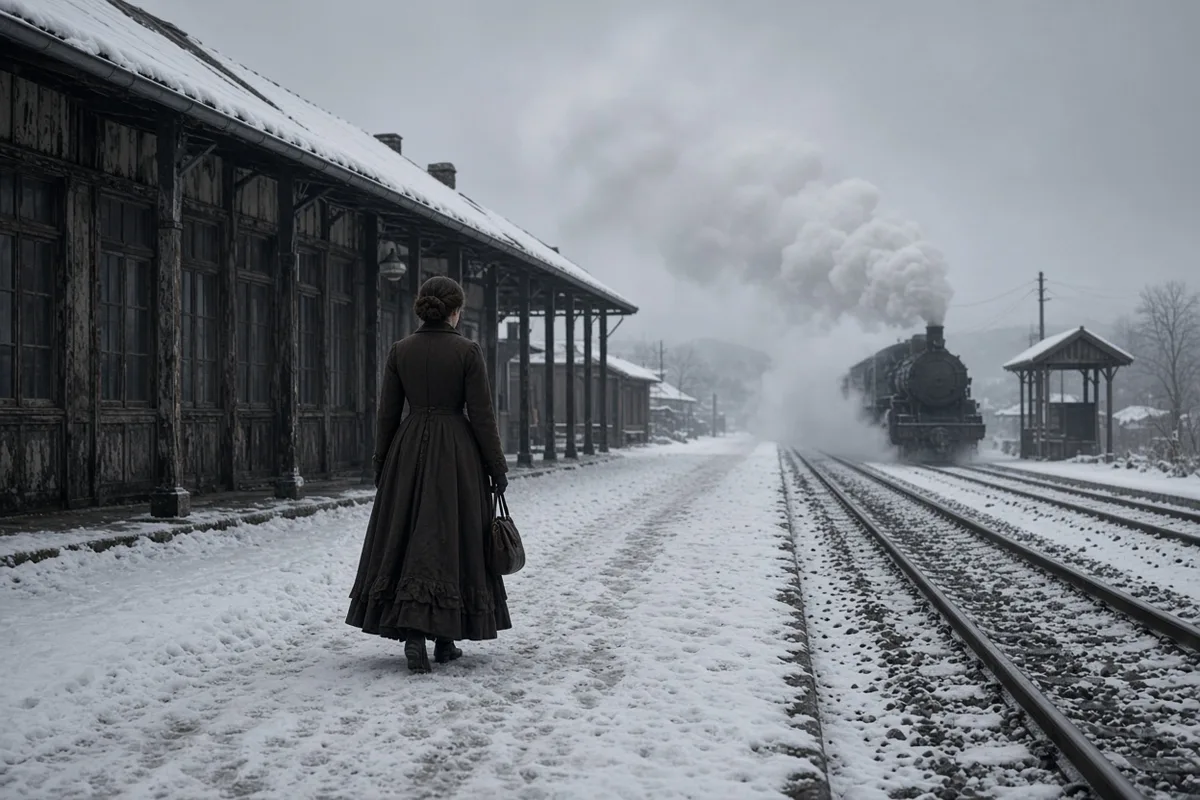
We had not always been an army of children on a road. Before the soldiers came, before the running, there had been the inn at Yangchen, with its broken beams and its smell of mule sweat and boiled millet, and the woman we called Ai-weh-de — the Virtuous One — who had crossed half the world alone to reach us. She had come by train through Russia with almost nothing, they said, two pounds and some coins and a Bible, and had been mistaken for a machinist because her English was too fast for the border guards. I did not know her then. I only knew the inn, and the stories she told after supper about a man named Jesus, and how the muleteers who once had to be dragged in by the reins came back on their own, month after month, just to hear another one.

She had not planned to be our mother. She told us once, in that flat London voice she never lost, that she had only meant to run an inn and preach and grow old the way old Mrs. Lawson had grown old — Mrs. Lawson who had brought her out to Yangchen in the first place, who had trained her, and who had died of a fall not long after, leaving Ai-weh-de alone with only Yang the cook to help her carry the mission forward.
It was the foot-inspection that changed everything, though none of us understood it as a turning point at the time. The Mandarin came in his sedan chair with his escort of soldiers, looking for someone with unbound feet and enough nerve to go into the women's quarters where no man could follow, and Ai-weh-de was the only foreigner for miles who fit the need. She took the job on one condition — that she could tell the women about Jesus while she worked — and the Mandarin, strange as it seemed, agreed. So she walked from village to village with her ledger and her stories, and that was how she became known, before ever a soldier fired a shot, as the Storyteller.
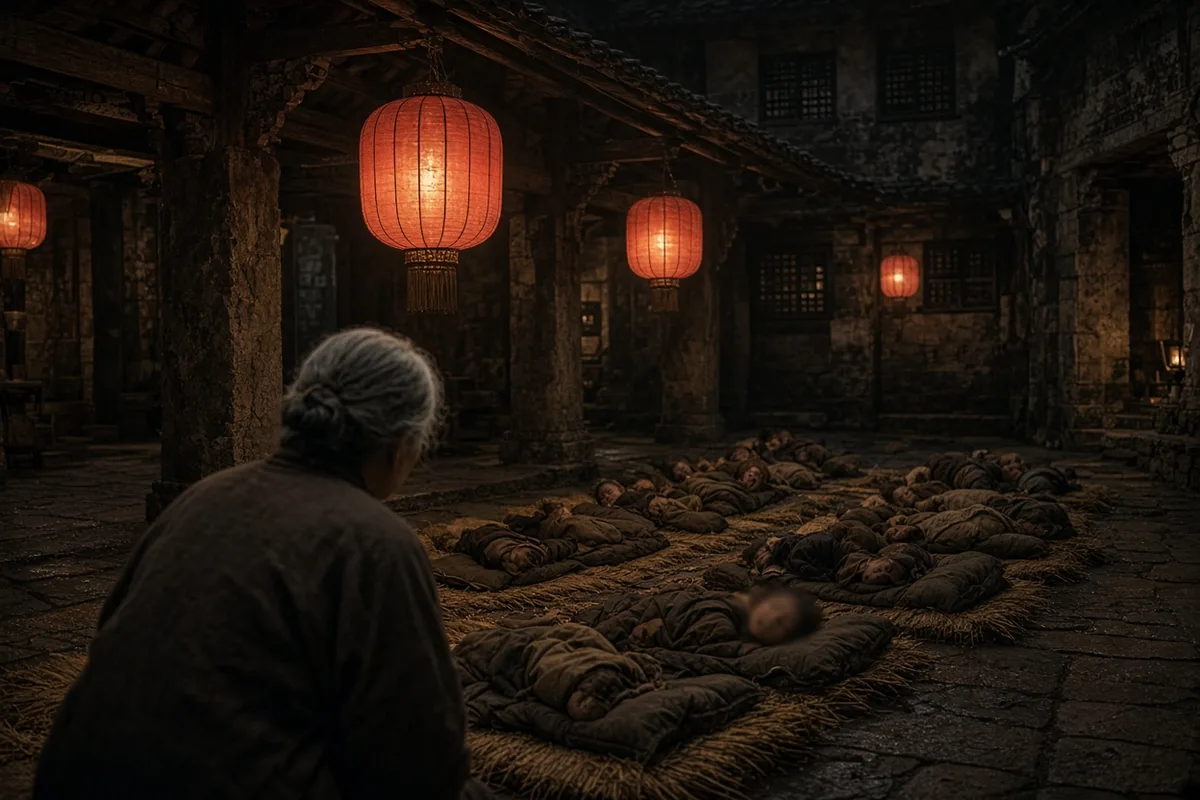
It was on those walks that the children started arriving. First was the little girl left to die at the roadside, whom Ai-weh-de bought for a handful of coins and named Ninepence, for the price she'd paid. Then more came — sold children, abandoned children, the sons and daughters of famine and want, children with no one left to claim them once war reached the province. By the time the Japanese soldiers were close enough that we could hear their planes over the hills, our inn held near a hundred of us, sleeping in rows, fed on rice Ai-weh-de begged and bought and stretched further than rice should stretch.
We felt the war before we understood it. Ai-weh-de had been passing word to Chinese officers about troop movements she saw from the hills — nothing more than a woman with sharp eyes reporting what crossed her path — but it was enough. A price went on her head. I remember Yang telling us in a whisper that the Japanese knew her name now, that they had put money on it, and I remember not understanding why anyone would pay to catch a woman who told us bedtime stories about loaves and fishes.
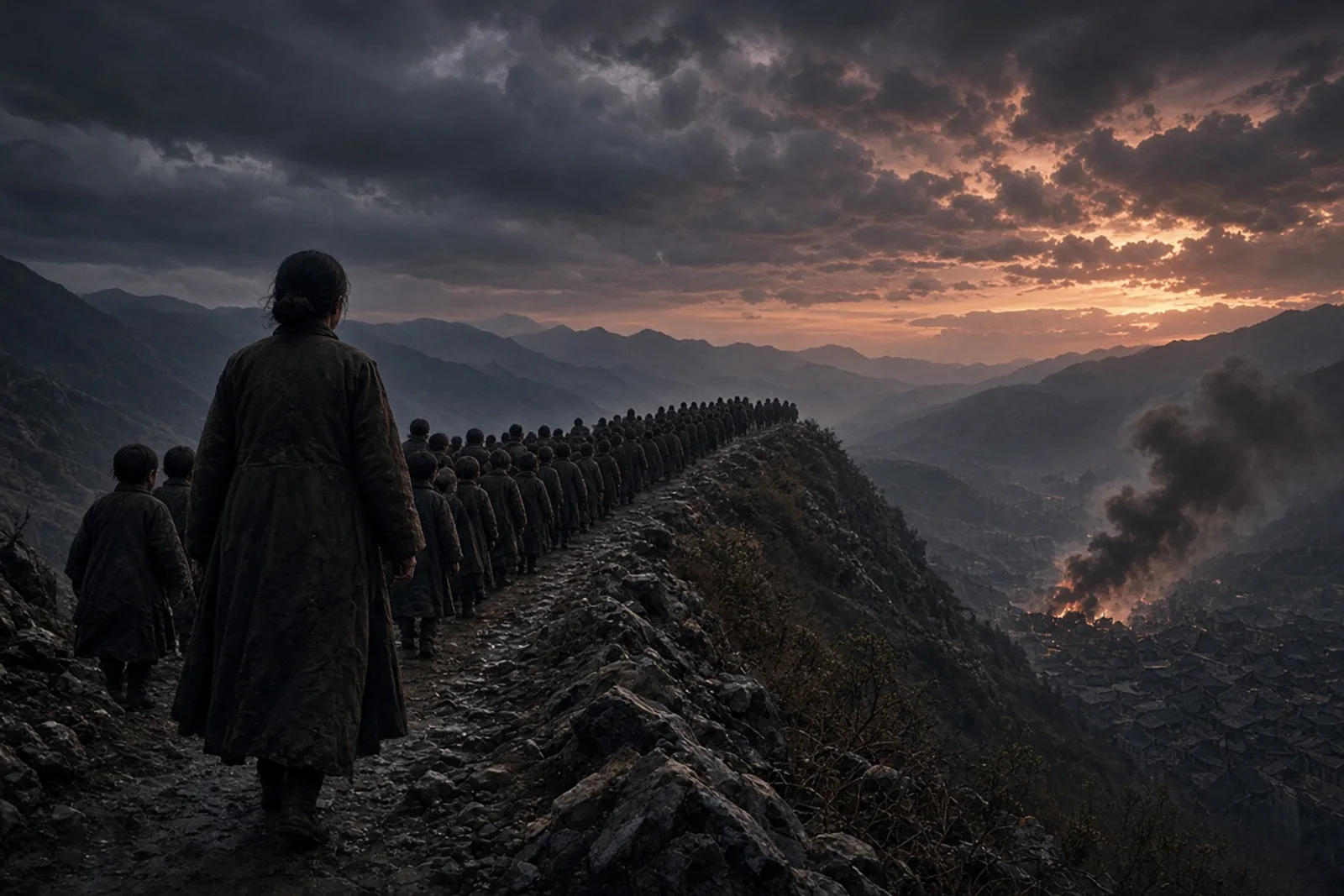
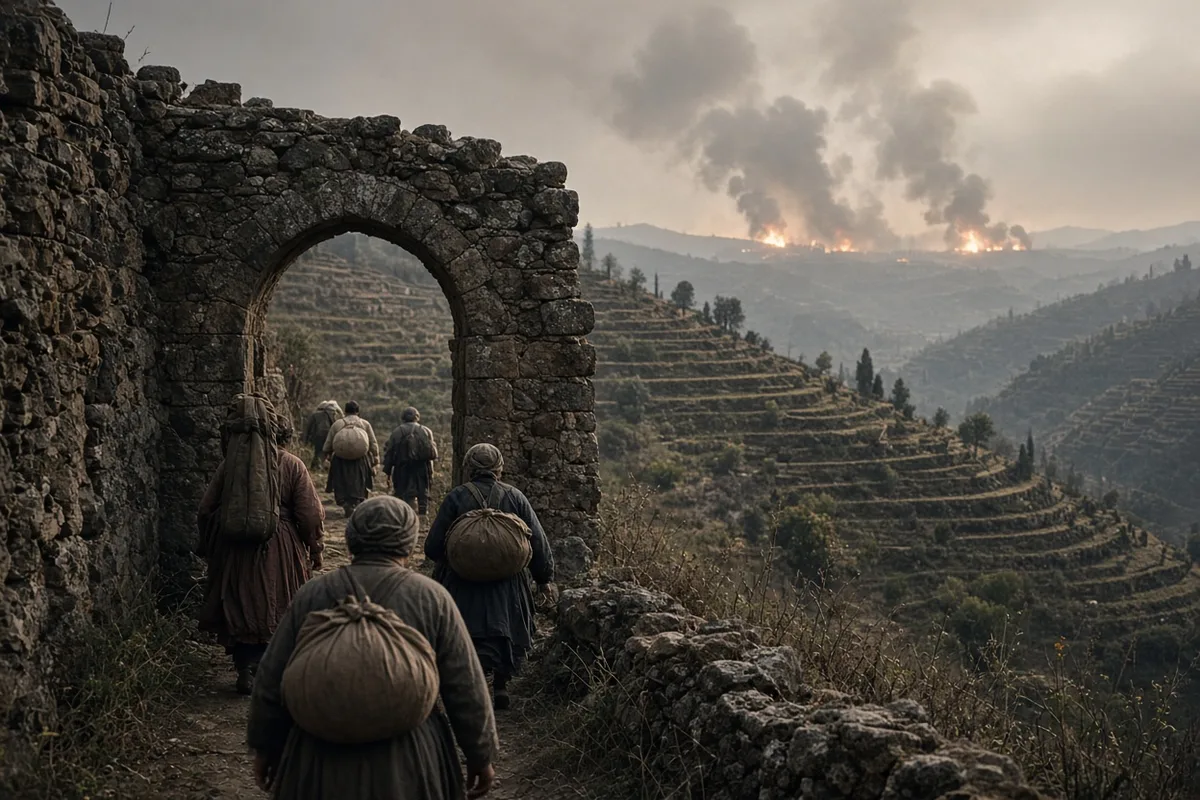
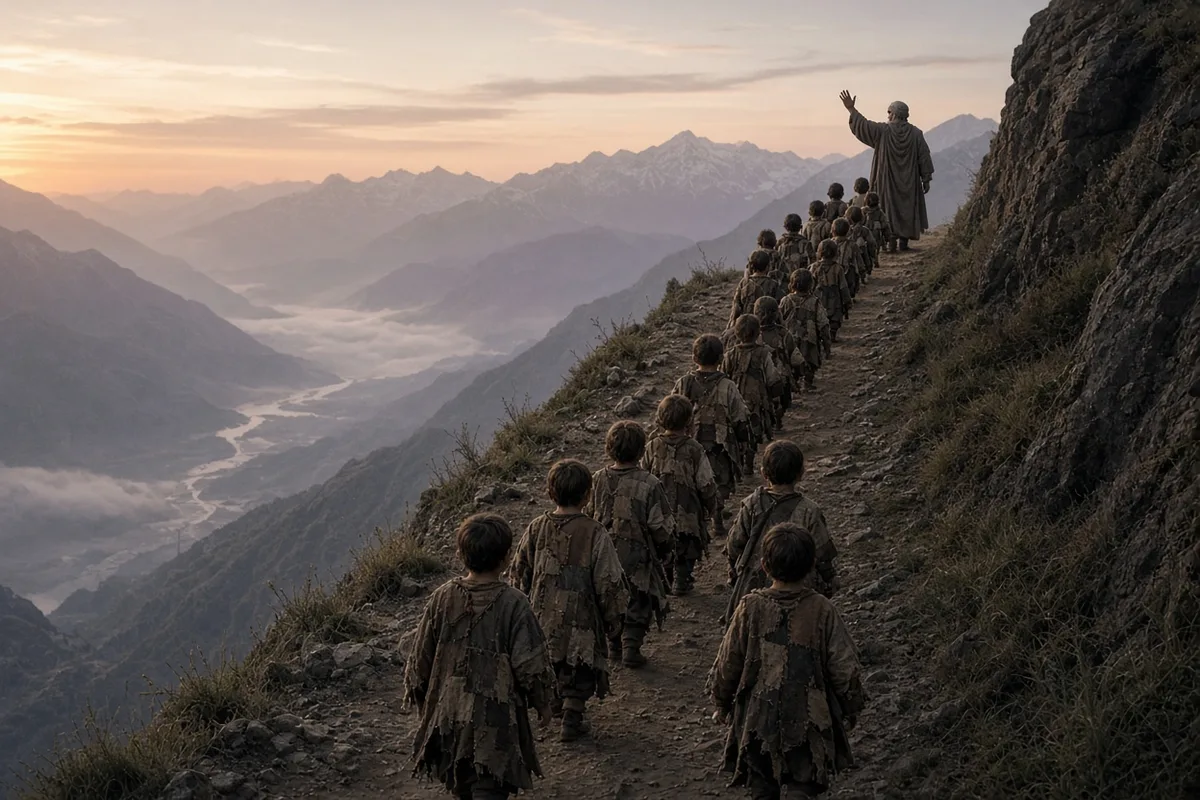
The night we left, there was no ceremony to it. Ai-weh-de simply said we were walking, and that we must walk quickly, and that the mountains were the only road that would not be watched. I was old enough to carry a child on my back and young enough to still believe that if she said we would be safe, we would be. Nearly a hundred of us went out through the gate into the dark, the smallest ones clinging to the hems of the older ones' jackets, and behind us the sound of the guns did not stop, only grew fainter, the way a nightmare grows fainter when you finally wake — except we were not waking. We were only walking further into it.
The mountains of Shansi do not care whether you are running from an army. They rise the same for everyone. We went up paths cut for mules, not for children with bare or badly-shod feet, and the wind came down off the ridges as if it had been waiting for us specifically. I carried the little ones in turns with the older boys, switching off when our arms went numb, and always ahead of us was Ai-weh-de's small shape, moving faster than seemed possible for someone her size, turning back every so often to count us, always counting, as if we were coins she could not afford to lose even one of.
We ate what we could carry and then we ate less than that. There were days the only sound on the trail was feet on stone and someone, somewhere in the line, crying without the strength left to make much noise about it. I remember a boy near me stumbling and Ai-weh-de dropping back through the whole column just to walk beside him a while, telling him — the way she'd told the muleteers years before — a story to keep his feet moving while his mind went somewhere else.
There were planes sometimes, far off, and each time we heard one every child on that mountain went still as stone, pressed into whatever shadow the rock gave us, and Ai-weh-de would go still with us, not moving until the sound had gone all the way past. I did not know, then, what it meant that a woman with a price on her head was flattening herself against the same rock as the rest of us. I only knew that she never once suggested she might go faster alone.
There came a night — I could not tell you which one, they had begun to run together — when we reached water we had to cross and there was no way over it that did not mean going through it. The current took the breath out of the smaller children before they'd even got their feet wet, just from the cold coming off it, and I remember passing a child hand to hand across a gap where the current showed white, someone's foot slipping on a stone underneath, and for a moment — just a moment — I believed we would lose someone right there, that the mountains would take what the soldiers hadn't. But we didn't. Every one of us came out the other side, soaked and shaking, and Ai-weh-de stood counting on the far bank the way she always did, moving her lips over the numbers until she reached the one she needed.
I will not pretend I remember every peak, every gorge, every dry riverbed we slept in without a fire because a fire could be seen. What I remember is the sameness of it — rock, then rock, then rock, and the ache that settled into legs too young to have known an ache like that, and always her voice ahead of us in the dark, not loud, never loud, just enough to reach the back of the line and pull it forward.
There was a stretch near the end where the food ran out entirely, and I remember believing, the way a child believes things absolutely, that we would simply not eat again. Ai-weh-de did not have money for it — she never had had money, not from the day she'd stepped off that steamship at Tientsin with a suitcase and a Bible — but she went ahead into whatever village lay nearest and came back each time with something, a little millet, a little bread, enough to keep near a hundred stomachs quiet another day. I never once saw her eat first.
The turn, when it came, did not feel like a turn. It felt like one more hill after all the other hills, except that at the top of it the ground began, finally, to fall away from us instead of rising, and somewhere below there was a wider road, and word passed back along our ragged line that we were closer now than we were far. I do not think I believed it until I saw, for the first time in what felt like a lifetime of walking, land that did not require climbing.
We came down out of the mountains thinner than we had gone in, our shoes long since worn through or lost altogether, and Ai-weh-de counted us one final time the way she had counted us every night on the trail, her lips moving over each face, and when she reached the last child she did not say anything at all. She simply stood there a moment. I think, now, looking back on it, that it was the only time on the whole journey I saw her stop moving before she had to.
There was a train after that, and other kind hands, and the slow unwinding of the fear that had walked with us the whole way over the mountains. I could tell you it ended the moment we reached safety, but fear does not leave a person that quickly, even a child; it only goes quiet, the way the guns had gone quiet behind us weeks before, fading rather than stopping.
Ai-weh-de did not stop, not really, not for years. The China she had crossed an ocean and a war to reach was not done needing her, and she stayed on long after the mountains, long after most of us had grown into whatever lives the rest of the century allowed us. It was not until 1949, nearly twenty years after she had first climbed aboard that train out of London with two pounds ninepence and a ticket paid off a few shillings at a time, that she finally returned to England.
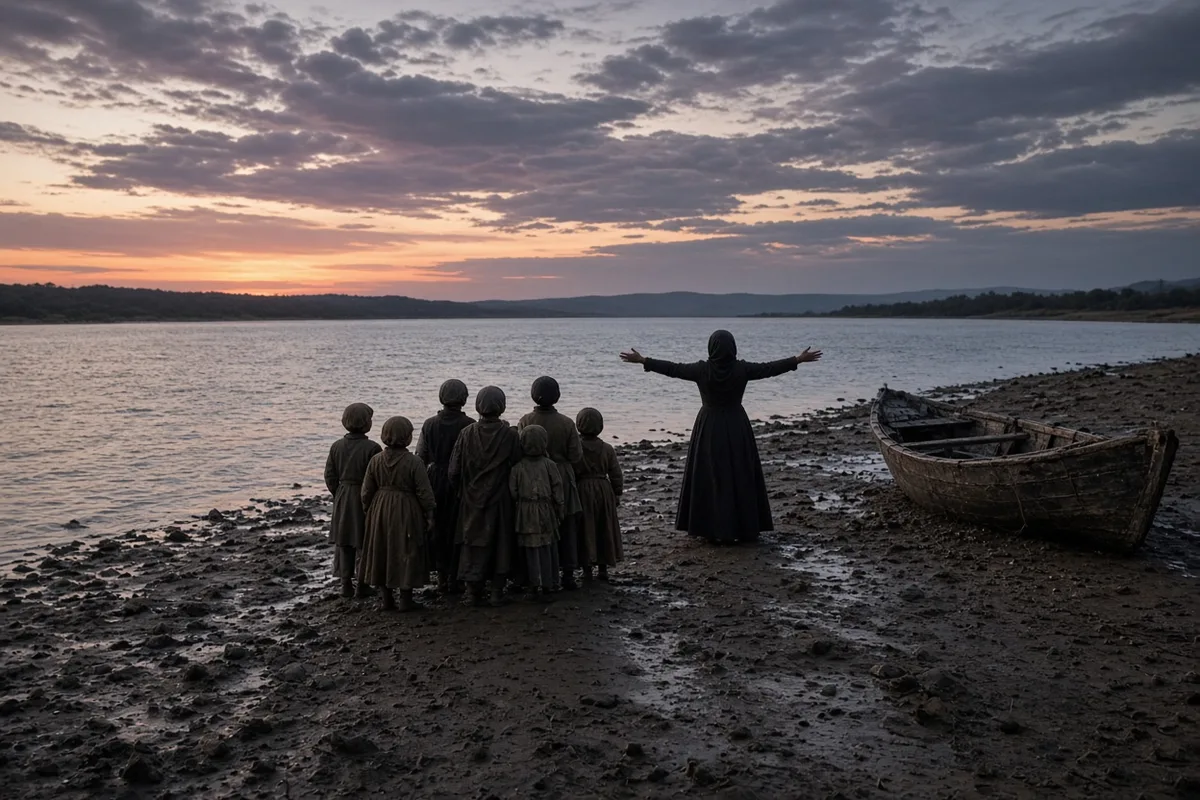
No one there knew her name. She had gone out a rejected mission-board applicant, a housemaid who had failed her examinations, and she came back the same quiet, small woman, with no interest in being remembered for anything beyond the gospel she'd meant to preach in the first place. It was only when a writer named Alan Burgess sought her out and heard the shape of what she had actually done — the inn, the foot-binding decree, the children, the mountains — that anyone outside China understood what that walk had cost, and what it had saved.
His book carried her name further than she ever wanted it carried, and the film that followed carried it further still, turning the small woman with the flat London voice into a face on cinema screens under a title she never asked for. She was, by every account of those who knew her afterward, unmoved by the fame of it. She had not walked those mountains to be remembered. She had walked them because there were children behind her who could not walk them alone.
I think of her still on the cold nights, the way you think of the people who once counted you when you were young enough to need counting. I think of the sound of a hundred pairs of feet on mountain stone, and a small woman's voice going back down the line to find whoever had fallen behind, and the way she never once, in all that walking, let the count come up short.