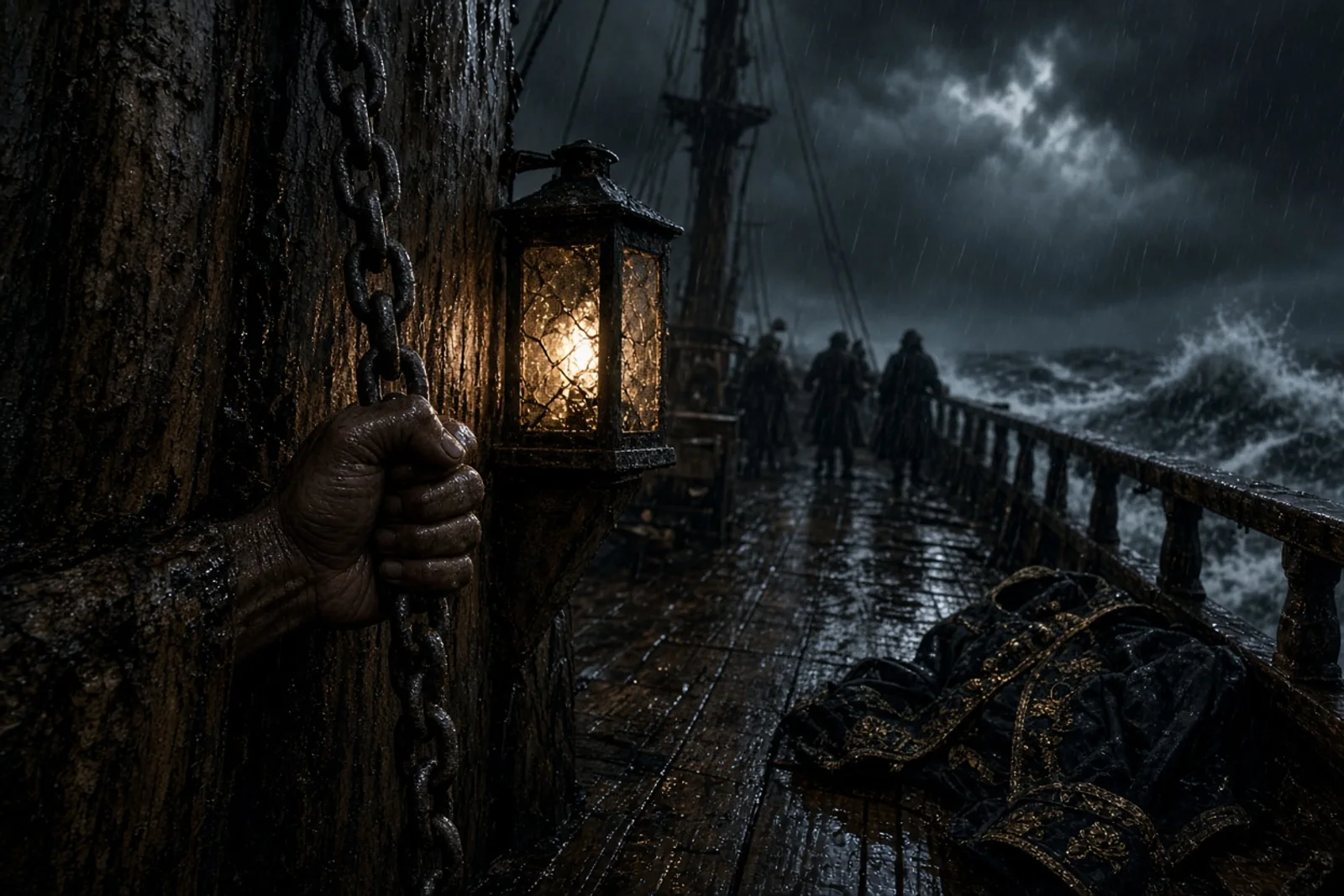
Adoniram Judson's Bible Buried in a Pillow
A dramatized first-person retelling of documented events
The door came off its hinges before it ever opened properly, and I remember thinking, in that first useless heartbeat, that the rice would go cold. Adoniram and Ann were still at the table, the lamp between them, when the Burmese officer filled the doorway with his shoulders and his voice cracked over the room like a whip. Mr. Judson, you are under arrest. I was standing near enough to see Ann's hand go still over her plate. I was near enough to see Adoniram's face change from a husband's face to something else, something braced.
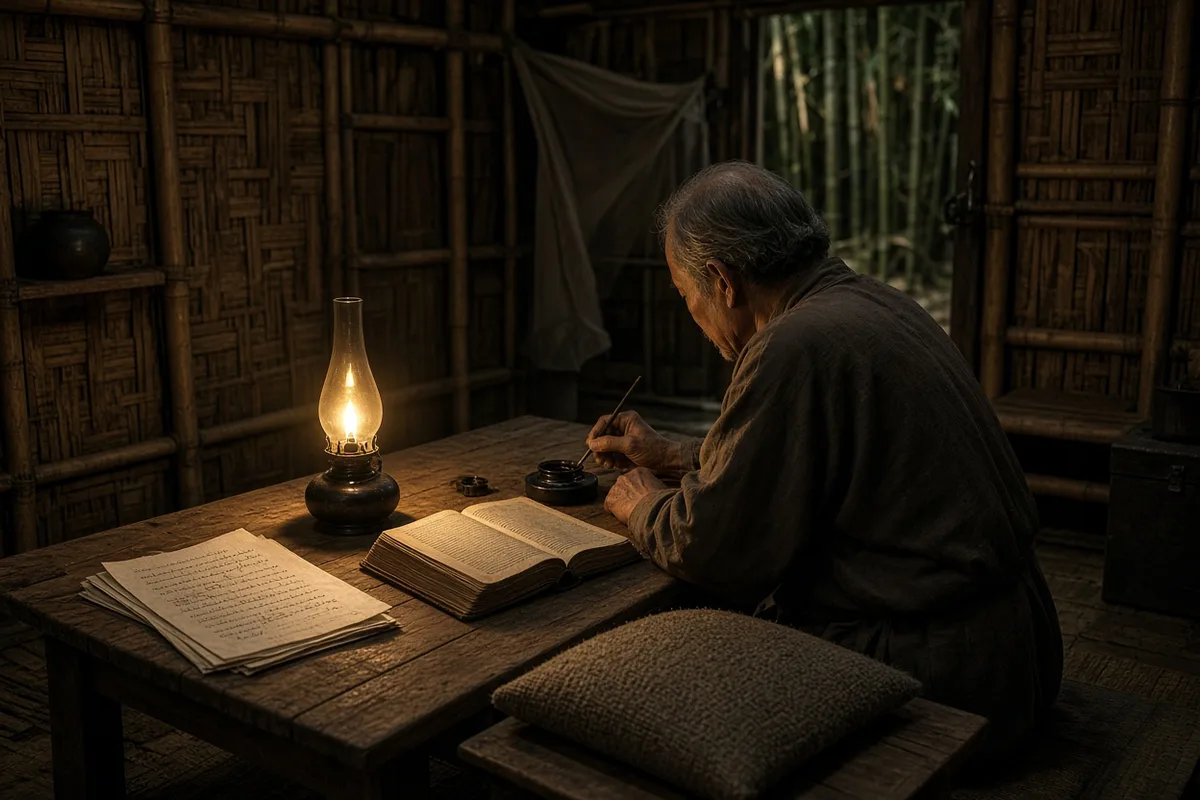
I had come into that household two years after the Judsons landed at Rangoon, back in the July heat of 1813, when the mission was young and the language was still a wall Adoniram was learning to climb one brick at a time. By the summer they took him, he had given ten years to it — ten years bent over paper, testing Burmese words against Greek ones, praying the meaning would not slip through his fingers on the way from one tongue to the other. I had watched him write by lamp oil until his eyes burned. I had watched Ann copy pages in her clear hand so there might be two of everything, in case fire or flood or carelessness took one. None of us imagined it would be soldiers.

They dragged him out with a rope looped under his arms, the way you'd haul a criminal too dangerous to walk on his own two legs, and Ann stood in the doorway with her hands pressed to her mouth. I stood beside her. Neither of us said anything for a long while after the sound of him was gone down the road. Then she turned back into the house, and I saw her eyes go straight to the writing table, to the stacked pages that were the whole of ten years, and I understood before she said a word what she meant to do.
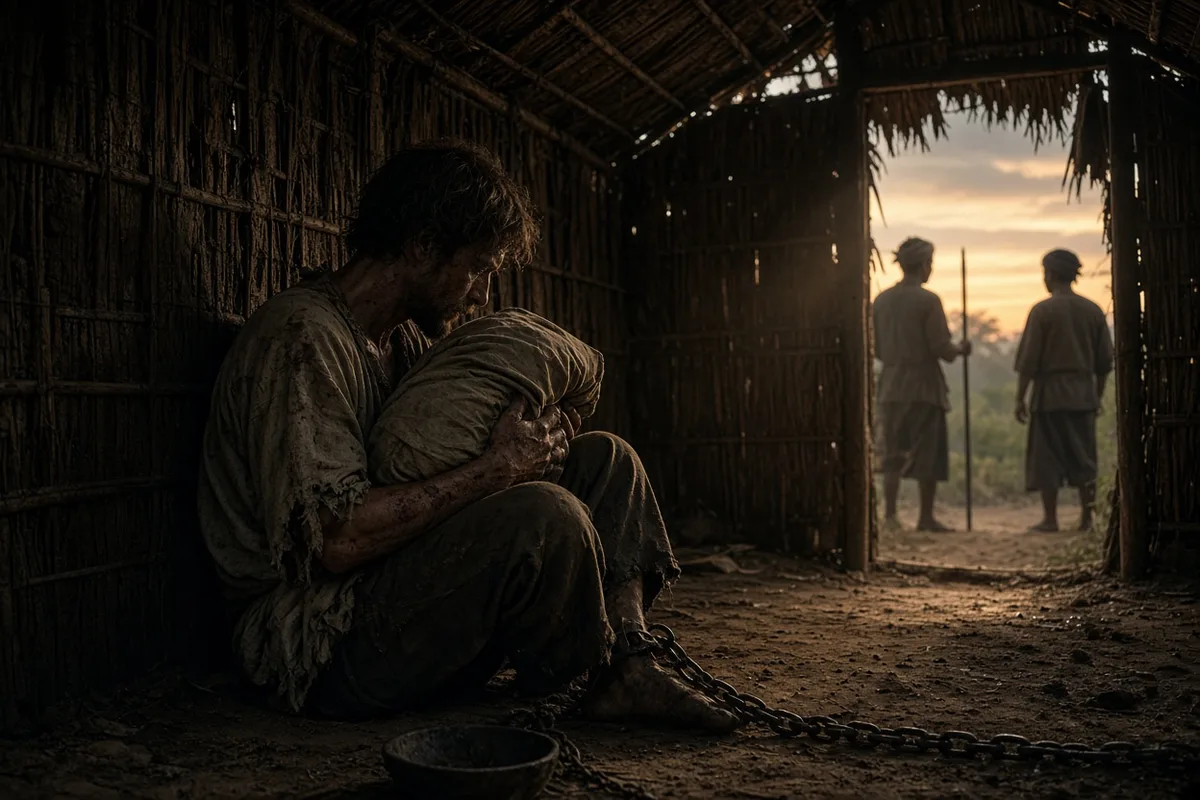
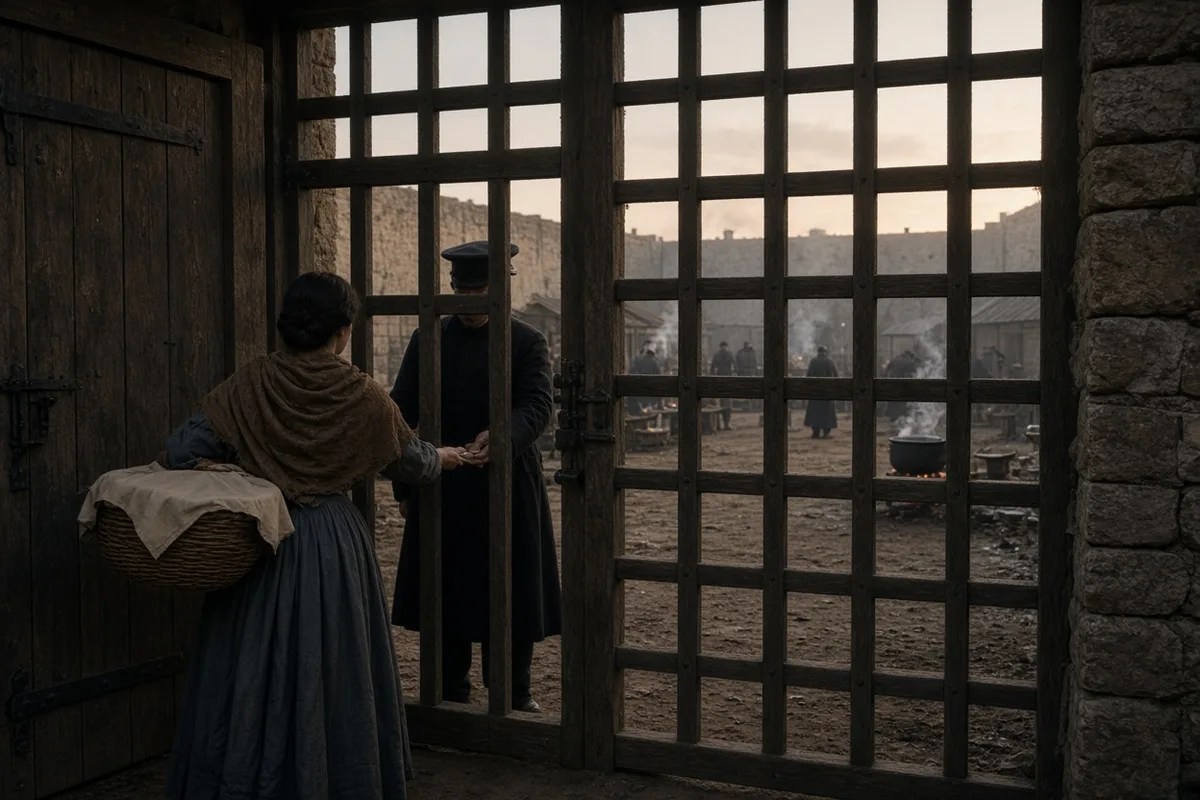
They took him to Let-Ma-Yoon, the prison whose name the Burmese spoke the way you'd speak of a grave already dug. Three sets of fetters. A room with no window worth the name, and heat that sat on a man like another body pressed against his. I went with Ann more than once to the outer gate, carrying whatever food or cloth the guards would allow past them, and I smelled that place before I ever saw the walls of it — a smell you did not forget, of old blood and unwashed men and river mud baked hard by the sun.
Ann did not weep in front of the guards. I want that remembered. She would straighten her shawl and speak to them in the Burmese she had labored over nearly as hard as her husband had, asking, bargaining, refusing to be turned away entirely even when they refused her everything she asked. But at night, back in the house that no longer had a husband and father sleeping in it, I heard her, and I understood that the calm at the prison gate cost her everything she had.

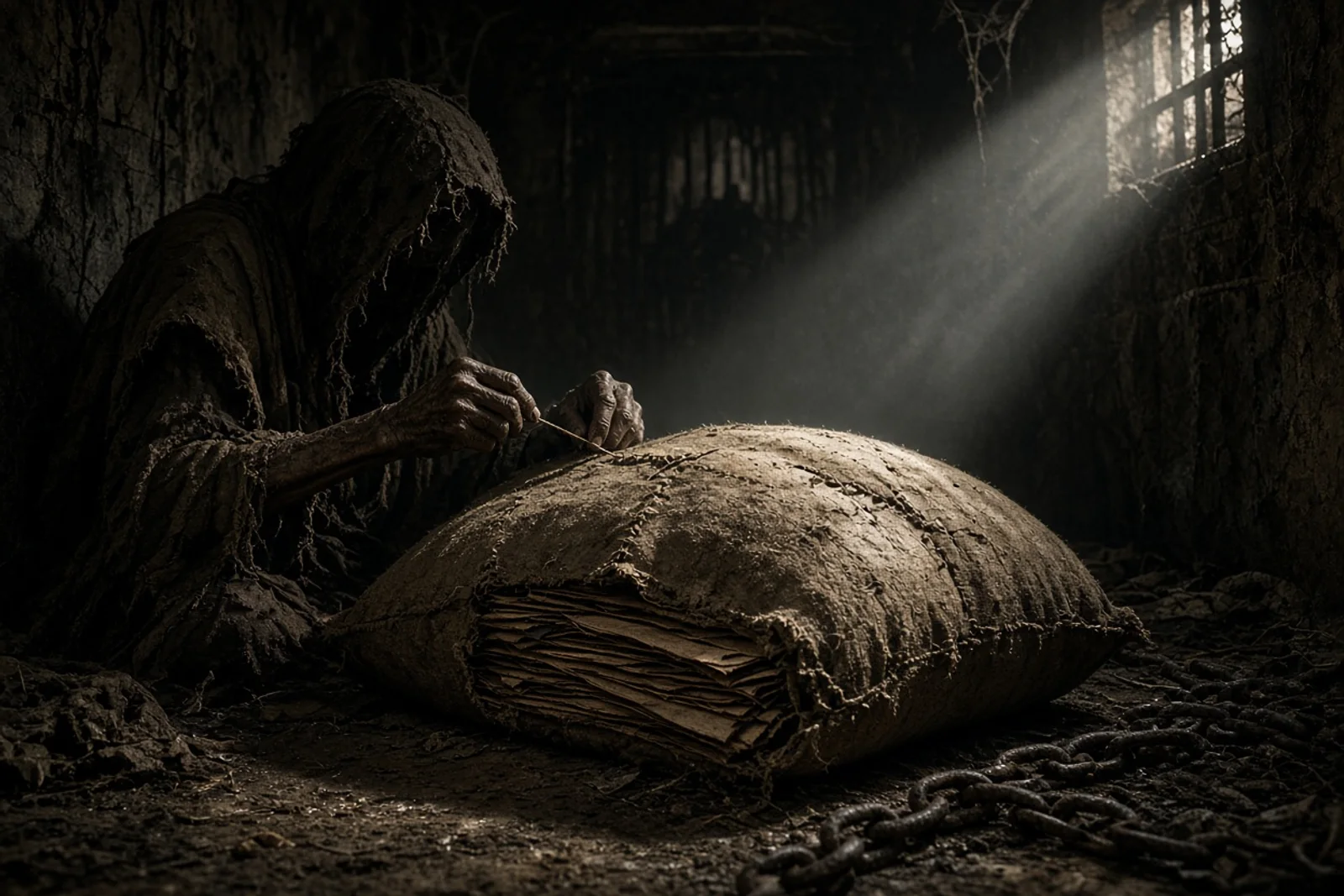
It was during those first weeks that she came to me with a pillow in her hands — an ordinary, lumpy, unremarkable pillow, the kind no soldier would look at twice — and asked for my needle. I did not ask what she meant to do with it. I had already seen her gathering the loose sheets of the translation from the table, the Gospels and the parts of the Old Testament Adoniram had carried furthest, and I understood that whatever she was building, it was meant to hide something too precious to leave lying where hands might find it.
We worked by lamplight, the two of us, easing pages flat and folding them small, packing them into the pillow's belly the way you'd pack a wound, and then closing the seam so that no line of thread betrayed what it held. When she was finished it looked exactly like what it pretended to be — something a man rests his head against, nothing more. She carried it to the prison herself, past the guards who searched the food baskets for coins and never thought to press their fingers into stuffing. She left it with him, so that at night, in that furnace of a room, Adoniram Judson slept with the Burmese Bible under his skull and did not know, some nights, if it was the last soft thing he would ever touch.

I think of him there through the whole stretch of that first year — through fever, through the swelling in his feet that came from irons no one had thought to loosen, through news that reached him in fragments about the war outside those walls, a war between his own countrymen's cousins across an ocean and the kingdom that now held him. Nearly two years he spent inside Let-Ma-Yoon, and for a long stretch of it Ann came almost daily, thinner each time I saw her, carrying whatever she could scrape together to keep him from starving outright.
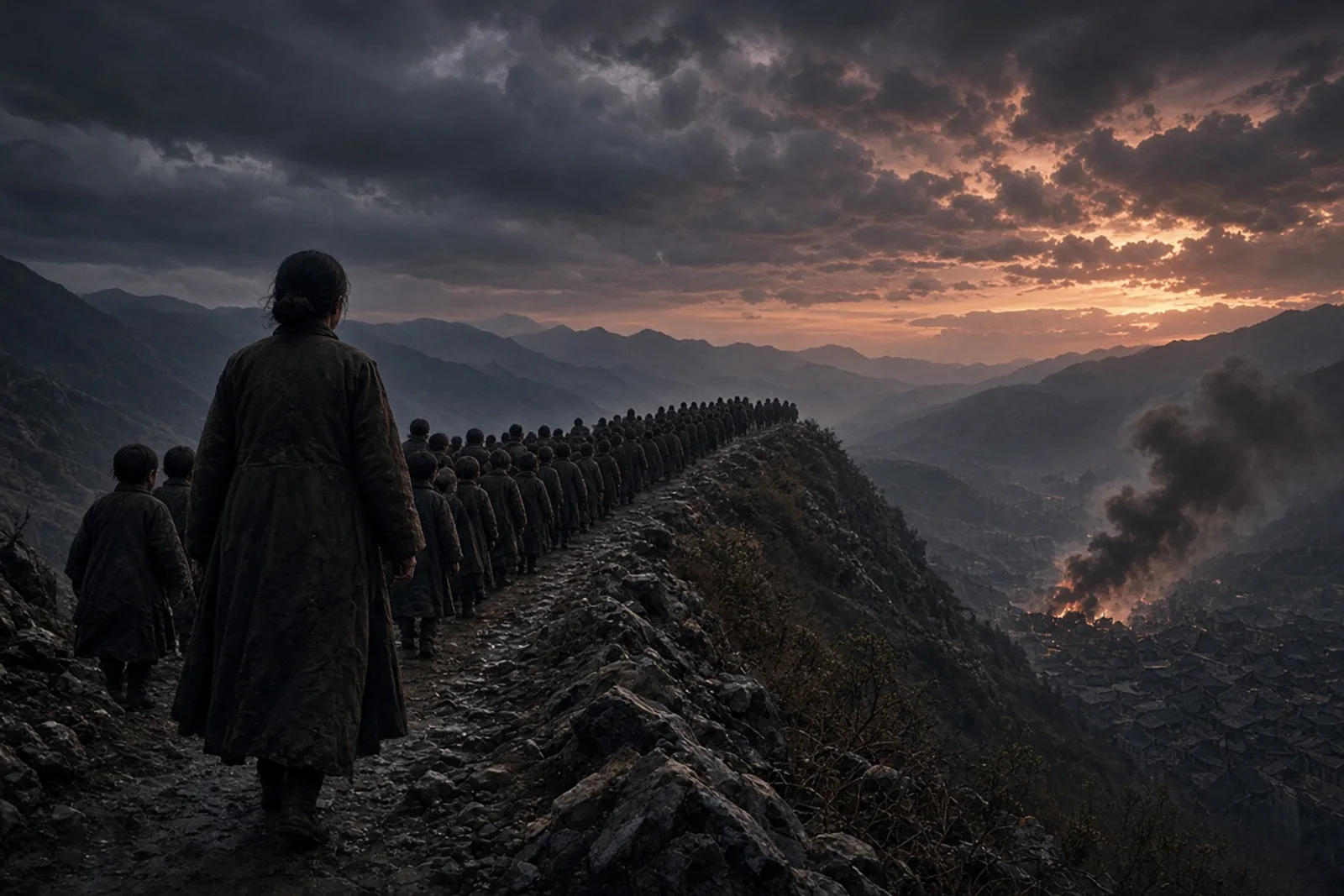
Then came the morning the prisoners were driven out in a line and marched away from Rangoon altogether, toward a place called Oung-pen-la, and nobody could tell us with any certainty whether it was toward mercy or toward execution. I remember the road that day, the dust the guards raised, the way Ann ran alongside as far as they would let her go, and how afterward she came home and simply sat, for a long time, not speaking, because there was nothing left in that direction to hope toward except silence.
Six months he was held at that second place, and for all six of them none of us in Rangoon knew if the Bible had traveled with him or been left behind in the wreck of Let-Ma-Yoon, tossed wherever the guards discarded what a starving, chained man could not carry on a forced march. I confess there were nights I believed it lost — that ten years of a man's labor, and the risk Ann had run to save it, had ended in some ditch along that road, trampled under other men's feet.

What none of us knew, in those months of not-knowing, was what had happened back at the empty prison the guards had abandoned. Once the last of the prisoners were gone, the men left behind went through Let-Ma-Yoon the way men go through a battlefield — turning over anything that might carry value, kicking aside whatever didn't. A pillow, filthy and shapeless by then, drew no interest from a guard hunting silver or good cloth. He tossed it into the yard and moved on, and it lay there through the heat of the day like refuse nobody would claim.
It did not stay refuse for long. That same night, a Burmese believer named Maung Ing, a man who had come to faith through Judson's own preaching in better years, walked into that ruined prison hunting for anything at all that had belonged to the missionary — a scrap of clothing, a broken cup, some small thing to hold onto if the man himself never came home. He found the pillow lying where the guard had thrown it. He did not know what it held. He only knew it had been his teacher's, and so he carried it back through the dark streets to his own house and kept it, the way you keep a relic of someone you're afraid you've already lost.
Word of Adoniram's release reached the house before he did, and I remember Ann's hands shaking so badly she could not finish tying her own hair. Nearly two years since the door had come off its hinges. When at last he came up the road toward home, he did not look like the man who had left it — starved down to bone and sinew, his skin gone the color of old paper, walking like a man who had forgotten what it was to walk without the drag of iron at his ankles. But he was walking. That much God had given back.
Inside, the house was smaller than I remembered it being, the way rooms shrink around a grief that has lived in them too long. And there, on the table, where Maung Ing had at last brought it once the danger had passed and the truth of what it carried could safely be told — there lay the pillow, split open now, its secret spread flat in the lamplight. Adoniram stood over it a long moment before he touched it. I have never forgotten his hands on those pages, the way a man's hands move when he is greeting something he had given up for dead.
He did not speak for a while. When he did, it was not to any of us in the room, not exactly — it was the kind of speech a man makes toward heaven when there is no other direction large enough to hold what he feels. Ten years of work, carried through two prisons and a forced march and the carelessness of a guard's boot, had come back to him whole. I watched him turn the pages one by one, checking, I think, not really believing yet that nothing had been lost, and finding, each time, that it had all survived.
The rest of that year did not turn gentle simply because the manuscript had been spared. Ann, who had spent herself utterly in those two years of visits and pleading and midnight sewing, did not have much strength left to give. Within months of his release she was gone, and Adoniram was left to grieve a wife who had risked everything to save the one thing he had left to give her people, and to grieve her without the comfort of knowing how many years he might still have to finish what they'd started together.
He did finish it. He carried that rescued translation forward across the years that followed, refining it, comparing it against the Hebrew and the Greek line by line, adding what the prison and the pillow had spared until at last the whole of the Bible stood complete in Burmese, a language that ten years earlier had held not one verse of it. He would marry again, and grieve again, and bury more children than any father should be asked to bury. But the book itself, the thing three governments and two prisons and one careless guard's boot had all had the chance to destroy, went on being copied and printed and carried into villages where, before Adoniram Judson came ashore in 1813, no one had ever read a word of Scripture in their own tongue.
I think sometimes about the guard who threw that pillow aside. He never knew what he was throwing away. He was hunting silver, and there was none in it, only stuffing and thread and, hidden inside like a heartbeat under a ribcage, the labor of a decade and the hope of a nation's soul in its own language. He walked on. He never looked back at it.
I think, too, of Maung Ing carrying it home in the dark, not knowing either — only knowing that it had touched hands he loved, and that this alone was reason enough to save it. Sometimes the whole of a rescue rests on a man who understands only a fraction of what he is rescuing, and does it anyway, because love asks for nothing more than that.
Adoniram Judson would go on to be called the man who gave the Bible to the Burmese, and in the histories his name sits alone at the top of that sentence, the way names do. But I was there long enough to know it was never his hands alone. It was Ann's needle in the lamplight. It was a pillow nobody thought worth stealing. It was one man walking into a ruined prison in the dark, hunting for nothing more than a memory, and carrying home, without knowing it, the whole of a people's Scripture tucked inside a lump of cloth and feathers.
I still see it sometimes, if I close my eyes — the table, the lamp, the split seam, and a starved man's hands moving slowly across pages he had given up for lost, counting them the way you'd count the fingers of a child you'd feared drowned, and finding, each time, that every one of them had come home.