Mother Teresa Starts With One Rupee
A dramatized first-person retelling of documented events
The stick in her hand made thin lines in the dust, and I remember thinking it was strange that a grown woman would kneel in the dirt of Motijhil like that, her sari already gray at the hem, her knees pressed into the same mud we children walked through barefoot every day. She was drawing letters. Bengali letters, one after another, patient as a tide coming in, and she looked up at us with an expression that made none of us want to run away, which was rare, because grown strangers usually meant trouble in our part of Calcutta.
I did not know her name that first week. Someone said she had been a teacher once, at a proper school, the kind with walls and a gate and girls in clean uniforms. It was hard to believe, looking at her sandals worn through at the sole, her white sari with no ornament on it at all, nothing but the plain cotton and the blue thread at the border that every poor woman in the city wore. But it was true. Her name, we learned later, was Teresa, and before she came to kneel in our dust she had spent eighteen years behind convent walls not far away.

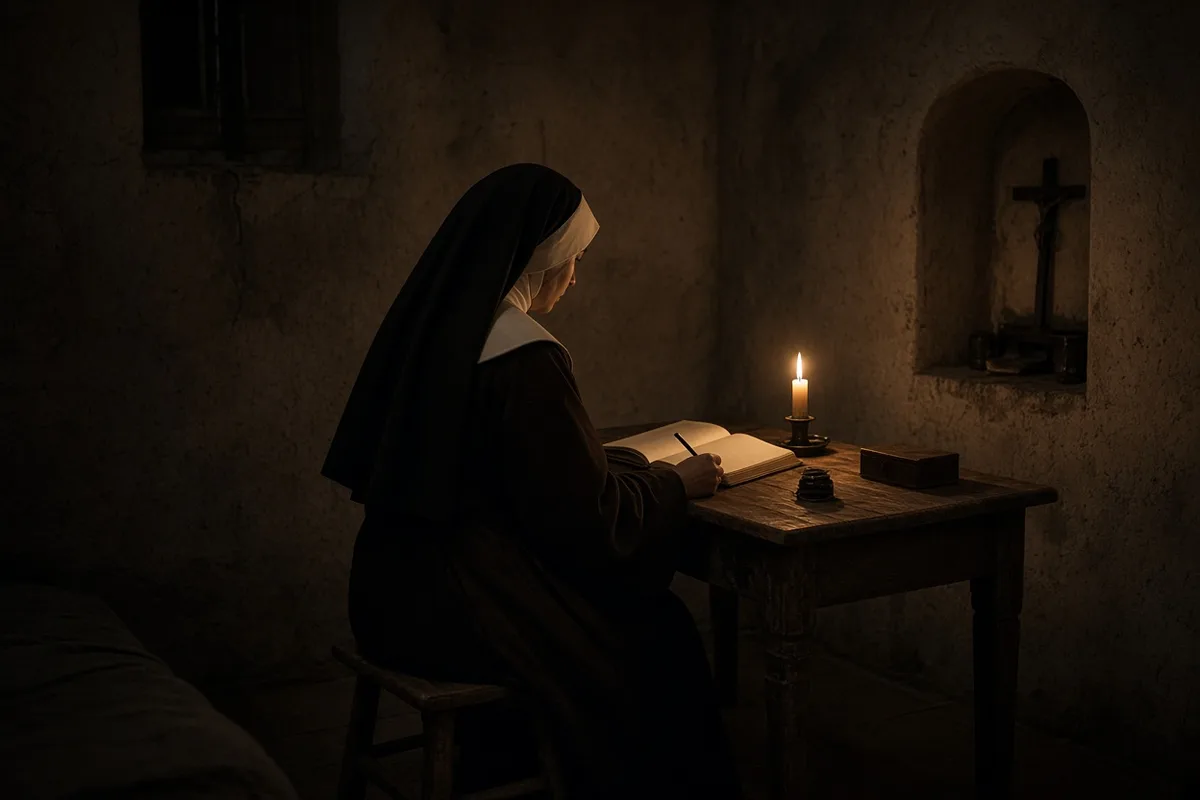
She had been born far from India, in a town called Uskup, under a name that meant nothing to us then — Agnes Gonxha Bojaxhiu. At twelve years old, in that distant town, she had felt something she described as a call, a certainty that would not leave her alone. At eighteen she said goodbye to her family and did not look back, sailing first to Dublin to train with the Sisters of Loreto, then onward to India, where in 1931 she took her vows and became, officially, a nun of the order. For seventeen years after that she taught geography and catechism to the daughters of Calcutta's better families at St. Mary's High School, and by every account she loved it. She loved the girls, loved the discipline of the classroom, loved the high walls that kept the world's worst hunger at a comfortable distance.
But the walls had windows, and from them she could see the city as it actually was. Bodies on the pavement that did not always get up in the morning. Children with swollen bellies picking through refuse a few hundred yards from where her students recited their lessons in clean pinafores. She told people afterward that something in her would not let that image go, no matter how she prayed over it, no matter how she told herself that her calling was already fulfilled inside those walls.
The break, when it came, took a particular date. On the fifteenth of August in 1948, the Church kept the feast of the Assumption, the day Mary's body was said to have been carried whole into heaven, and Teresa spent it in prayer, deliberately, choosing it as the last full day of her old life. She wanted the ending and the beginning bound together, the poor and their bodies — bodies that the world called filthy, worthless, better left in the gutter — set beside the teaching that every human body was sacred enough to rise. The next morning, the sixteenth, she walked out of the convent that had been her home for eighteen years, and for the first time since she was a girl, she was not wearing the habit of Loreto.
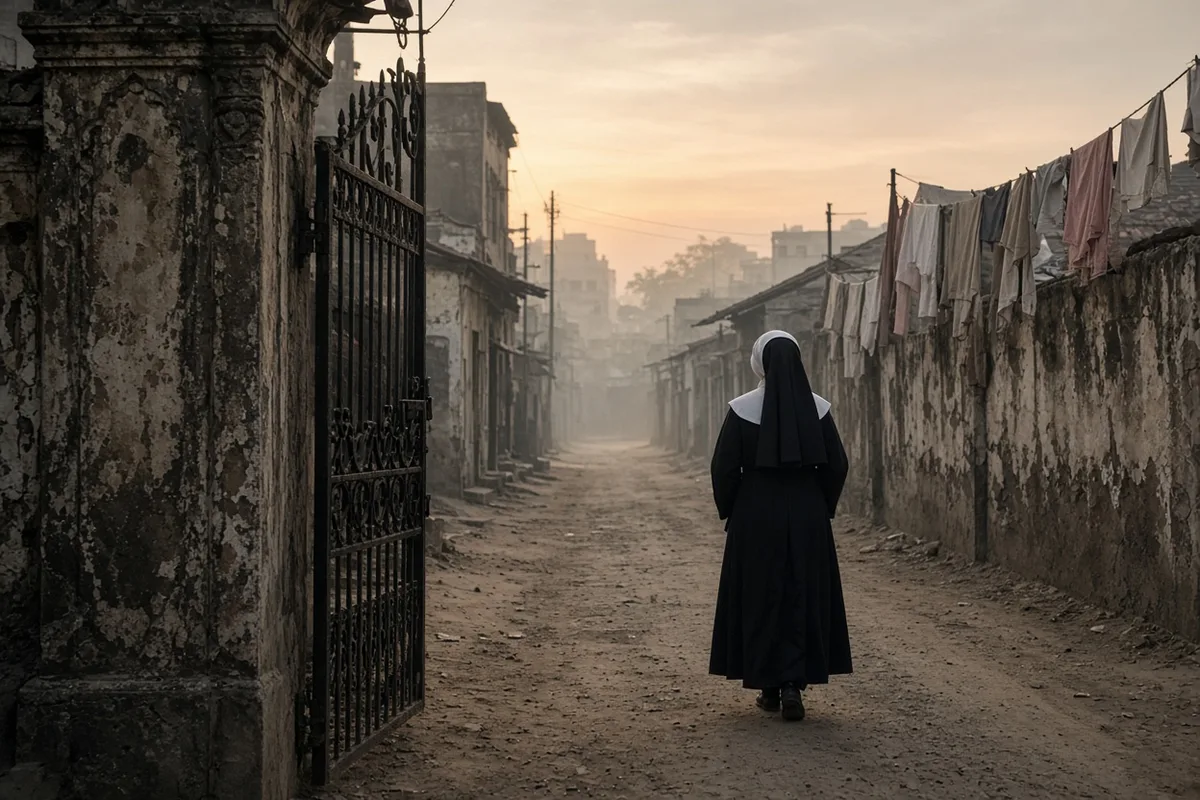
She told an interviewer years afterward that the sacrifice of leaving her family for the convent had been the hardest thing she had ever done — until this. Walking down that street in Calcutta, she said, she had barely gone a few dozen steps before the fear caught up with her. No house. No income. No community around her. She was a nun still, bound by her vows, carrying nothing but the Pope's temporary permission to live outside convent walls long enough to try something new. She did not know, in that moment, where she would sleep that night. She had become, for the length of one terrifying morning, exactly what she intended to serve: a person with nothing.
She could not go straight to the slums and start healing anyone. She barely knew how. The people she meant to serve were not simply hungry — they were often sick past anything comfort alone could touch, bodies marked with sores, disfigured by leprosy, dying of tuberculosis on cardboard in the open air. So before she ever knelt in Motijhil with her stick and her alphabet, she took a train to Patna, in the flat green delta country along the Ganges, and enrolled with the Medical Missionary Sisters under a woman named Mother Dengel. For four months she studied wounds, fevers, the discipline of a ward. The sisters there remembered her afterward as quick — she absorbed in months what nurses usually took far longer to learn, because she intended to use every hour of it.
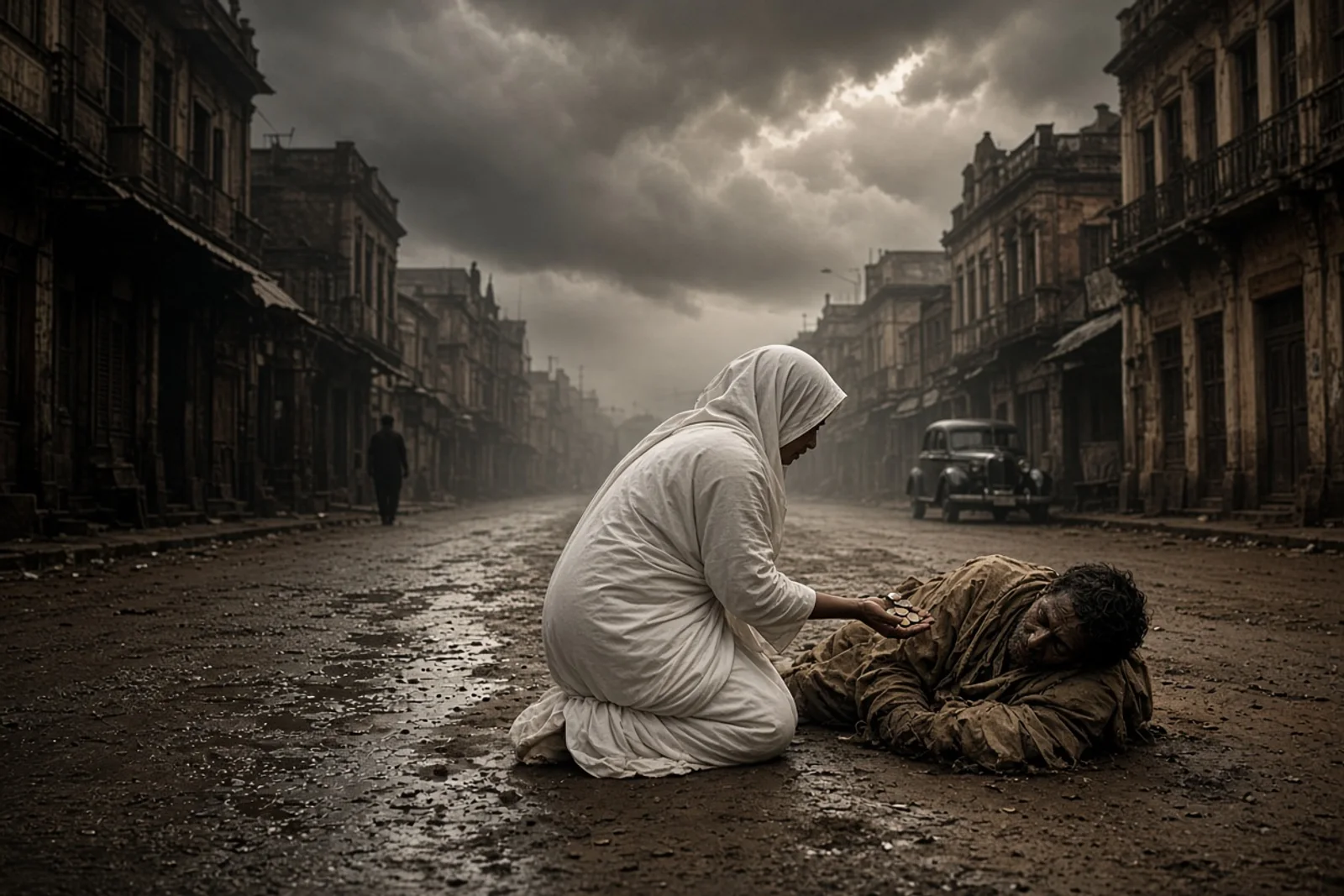
She came back to Calcutta with clean bandaging technique and almost no money. What she had, by every account, amounted to a handful of coins — a few rupees, no more, the entire treasury of the mission she was starting. I think of her sometimes counting them in her palm the way we counted our own scraps of change in Motijhil, turning them over, doing the arithmetic of survival. There was no convent now to feed her, no salary from St. Mary's, no guarantee from Rome beyond a signature granting her leave to try. She had decided, before she ever taught a letter of the alphabet, that she would depend on nothing but what turned up. People later called it trust in providence. It looked, from where I stood as a child, like a woman with almost nothing choosing to give away what little she had left.
The open-air school began simply because there was no roof to put it under. She gathered whichever children would sit still — and in that neighborhood, with parents working from before dawn until after dark, there were always children loose in the lanes with nothing to do — and she taught them what she could with a stick and a patch of bare ground, because paper cost money she did not have. Hygiene came next, then arithmetic, then whatever fragments of scripture and comfort she could offer between the lessons. She was not the only person in Calcutta who pitied the slum children. She may have been the only one who moved in among them to teach.
Word travels fast in a poor quarter, faster than in any drawing room, and it was not long before other young women started to appear at her side — some of them, I heard, her own former students from St. Mary's, girls who had sat in clean classrooms and now knelt in the same dust she did. Small gifts of money began to arrive too, a few rupees here, a sack of rice there, nothing dramatic, but enough that the school did not collapse in its first months the way it easily could have. She never asked for guarantees before she started something. She started, and the guarantees, when they came, came late and small and just barely sufficient.
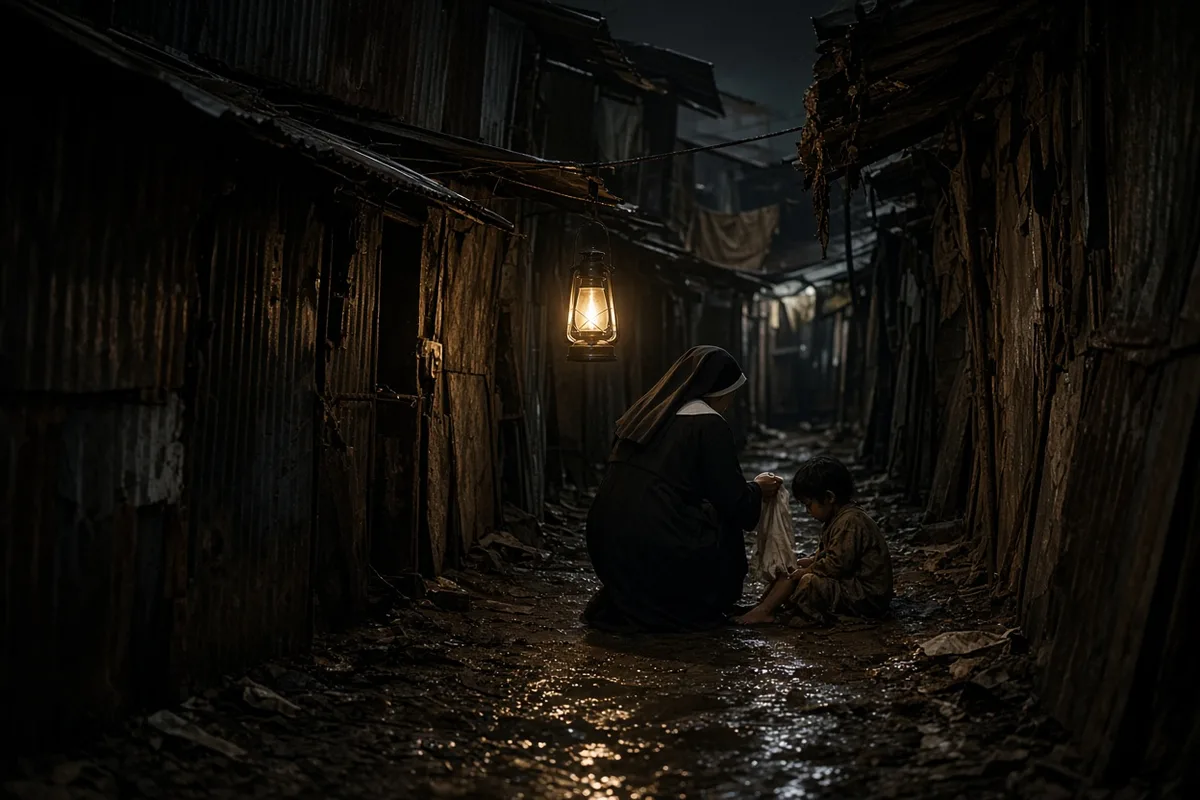
I remember the year the sickness took hold in our lane worse than usual — fever season, when the drains ran high and nobody had the coin for a doctor who would come to a place like ours anyway. She was there with her bandages and her basin of water, doing work no properly trained nurse from a hospital would have chosen, work considered beneath dignity by people who had dignity to spare. She did not treat it as beneath anything. I watched her wash a man's feet who had sores no family member would touch, and I understood, without being able to say it in words at the time, that something had shifted in what people in that city believed was possible for one woman with a stick and a bandage roll to attempt.
Two years passed like that — teaching in the dirt, nursing in doorways, a slowly growing handful of young women choosing to stay rather than leave — while behind the scenes, in Rome, paperwork moved at its own patient pace. She had never intended merely to run an unofficial mission indefinitely. She wanted a religious order, recognized, permanent, bound by vows the way her old life in Loreto had been, except this time built entirely around the poorest people any city could produce. The application went to the Holy See. It required patience she had already spent two years proving she possessed.
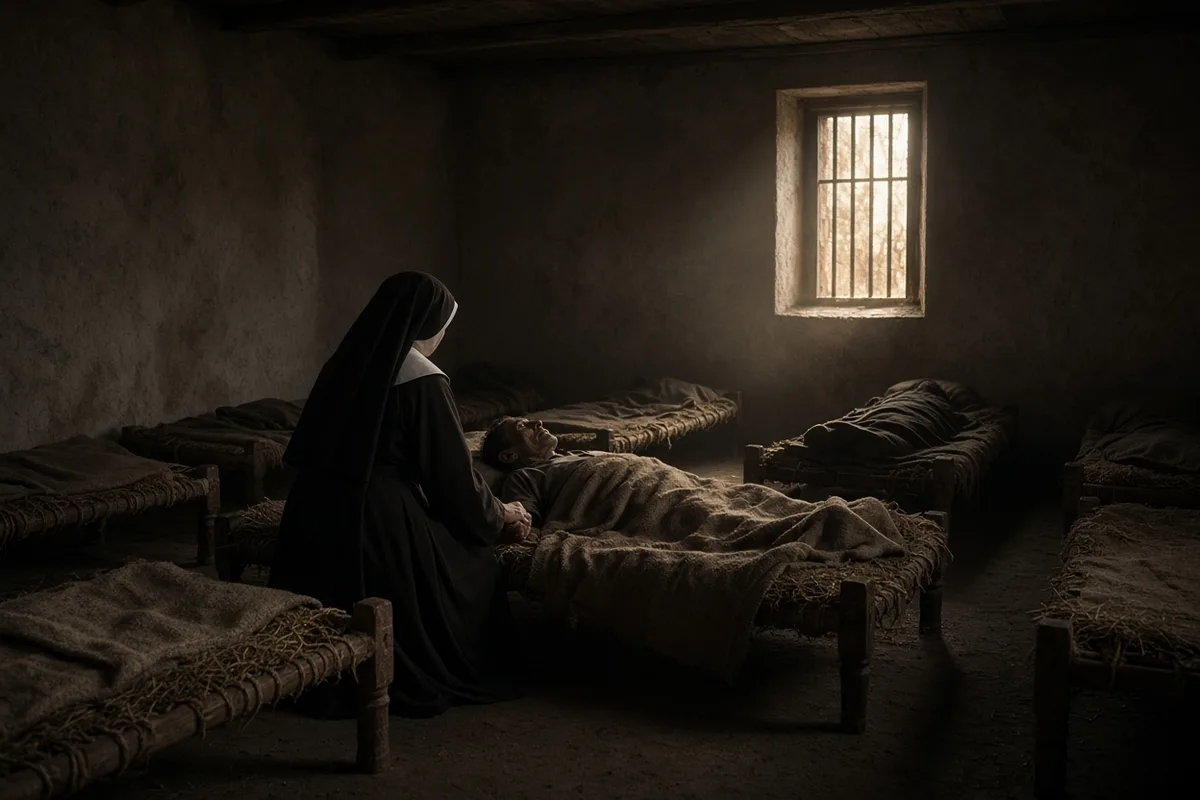
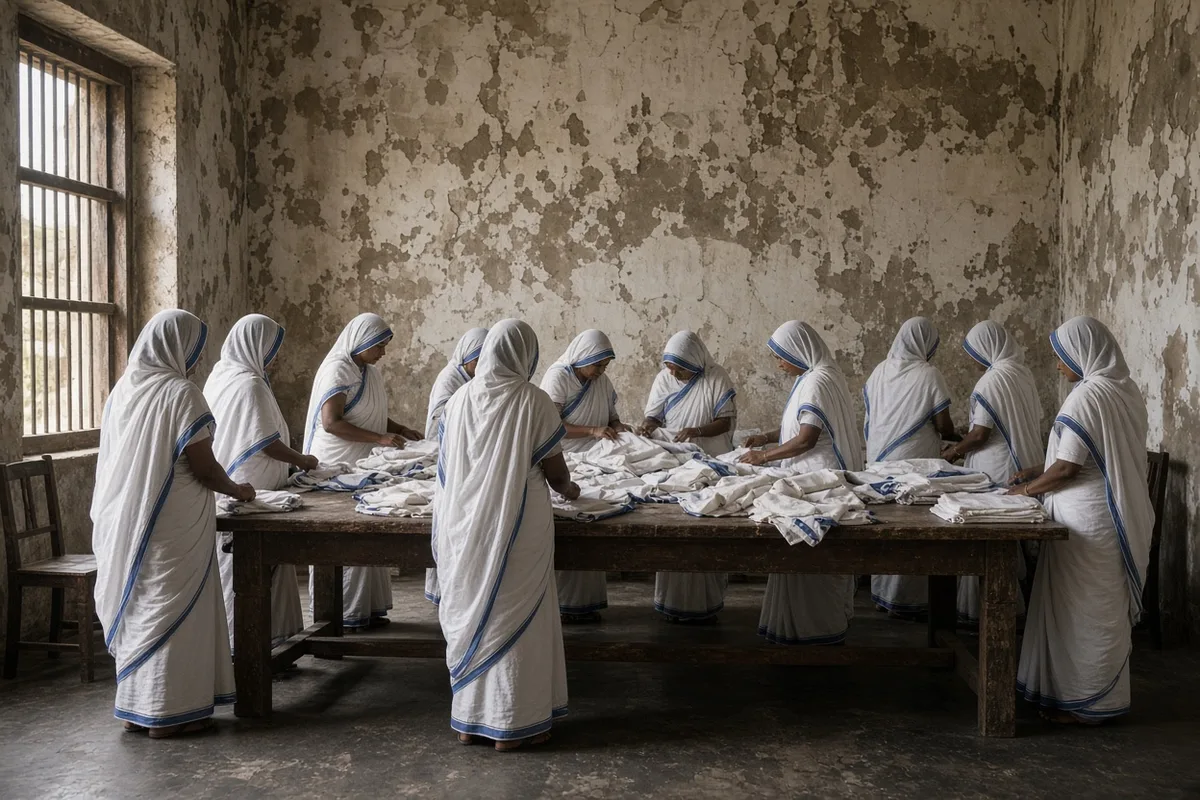
On the seventh of October, 1950, the permission arrived. The Missionaries of Charity existed now as an order in its own right, with its founder as its first Superior, its purpose stated plainly as caring for those nobody else was willing to look after — the dying, the abandoned, the diseased, the ones every other institution in Calcutta had already given up on by the time they reached her door. It was not a large order that morning. It was Teresa and a small circle of companions in white saris with blue borders, standing where two years before there had only been one woman, alone, with a few rupees and a fear she had walked straight through.
I have thought often, in the years since, about how small that beginning looked from the ground. No building. No endowment. No blessing yet from Rome when she first knelt in our dust — only a hope that the blessing would eventually come, and a willingness to work as though it already had. It is easy, decades later, to describe October 1950 as an inevitable next step. It did not feel inevitable while it was happening. It felt like a woman betting everything on a conviction nobody else could verify, in a slum where most people were simply trying to survive until nightfall.
The order did not stay small for long. Within years the Missionaries of Charity had opened homes for the dying in Calcutta itself, then hospices, then orphanages, then leper colonies, spreading first through India and then, as decades passed, into countries whose names the slum children of Motijhil could never have located on a map. In 1965 Pope Paul VI made the society an international religious family by decree, and it grew branches — an active order of sisters, then brothers, then a contemplative branch, then, later still, priests, until the structure that had begun with a handful of women and a few borrowed rupees stretched into dozens of countries across Asia, Africa, Latin America, even into the old Soviet bloc once its borders finally opened.
Recognition came the way it comes to people who never sought it for its own sake — slowly, then all at once, and always somewhat beside the point of the work itself. There was the Pope John XXIII Peace Prize in 1971, the Nehru Prize the following year, later the Templeton Prize, the Balzan Prize, the Magsaysay Award, and eventually the kind of global acclaim that put her face on the front pages of newspapers in cities she would visit only once, if at all. Co-Workers organized themselves formally into an international association in 1969, and by the 1990s more than a million people across upward of forty countries counted themselves as part of an effort that had started with one woman's stick tracing letters in wet dirt.
She herself never seemed, by any account I heard, terribly interested in the medals. What she wanted was more houses, more hands, more coins turned into rice and bandages and beds for people the rest of the world had stopped counting. Every prize that came with money attached, she treated as more fuel for the same fire she had lit in 1948 with nothing.
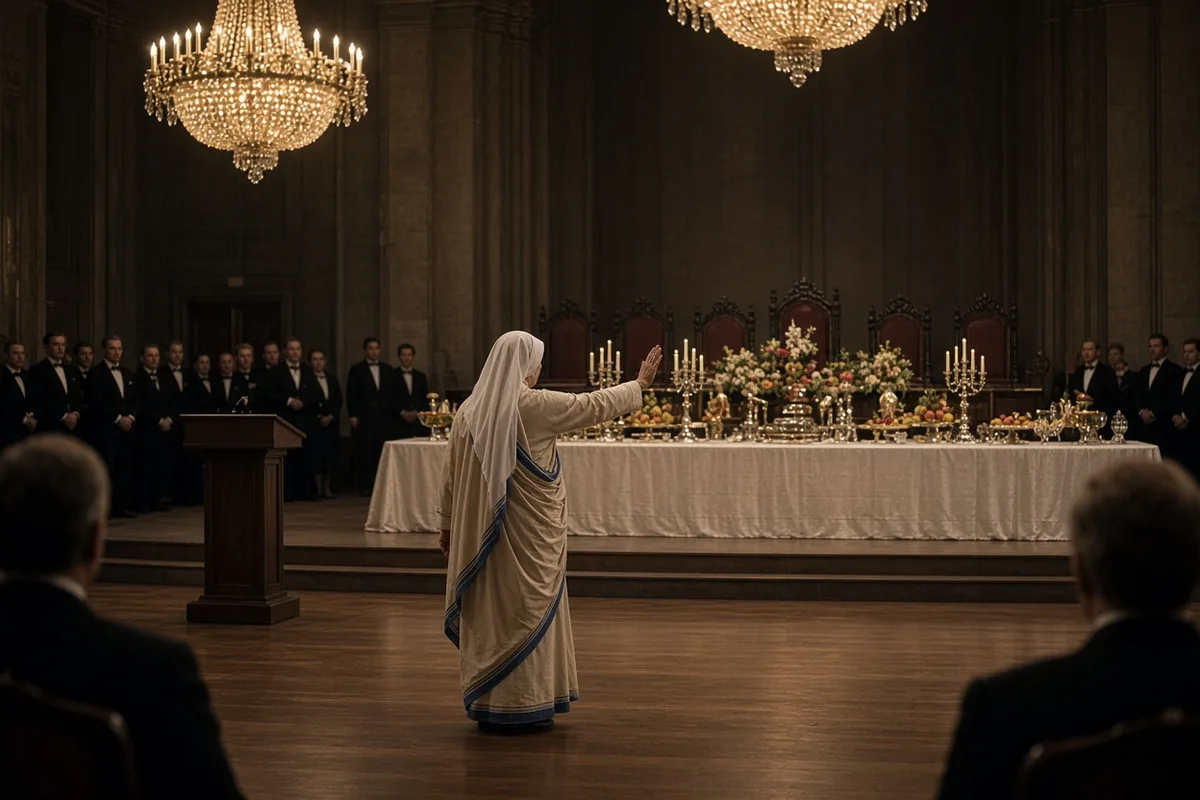
She died in 1997, an old woman by then, the order she had begun with a few rupees having grown into a presence on nearly every continent, run by thousands of sisters and brothers who had taken the same vows she once carried alone through the dust of Calcutta. The Church, in an unusually short span of time, opened the process toward sainthood only two years after her death. She was beatified in 2003.
I was an old woman myself by the time the last step came, in September of 2016, when a Pope with a different name — Francis, from a different continent than the man who had first granted her a fledgling order back in 1950 — stood before a crowd in Rome and declared her a saint. Teresa of Calcutta, canonized on the fourth of September, sixty-six years and eleven months after a stranger with almost no money had knelt in a slum lane and drawn her first letter in the dirt for children who had never had a lesson in their lives.
I think, still, of that first coin count in her palm — however many rupees it truly was, whether one or a handful, it hardly matters now — because the sum was never really the point. The point was that she opened her hand and started anyway, in a lane where nothing else that poor had ever been allowed to grow into something the whole world would eventually have to reckon with.