Harriet Tubman Goes Back Thirteen Times
A dramatized first-person retelling of documented events
The pine needles under my knees were wet through before the moon rose, and still we waited. Somewhere off past the tree line a dog barked twice and went quiet, and I did not breathe until it stayed quiet. My brother's hand found my shoulder in the dark, and neither of us spoke, because she had told us: no talking once the signal comes, no matter what.
I had grown up hearing her name spoken low, the way you speak of weather that might turn bad or might turn to blessing, you never know which until it is on you. Moses, some called her. Others just said she, and everybody in Dorchester County knew who they meant. She had been a girl here once, hired out to trap muskrats in the marsh at six years old, whipped for not learning to weave, struck in the head with an iron weight thrown at another slave and catching her instead, so that for the rest of her days she would fall asleep sudden and hard, standing up, mid-sentence, and come back to herself as if she had only blinked.

I never saw that happen to her on the road. Whatever visited her in the daylight hours left her alone at night, when the work was hers to do.
She had gone north herself the year before the trouble with the Fugitive Slave Act got bad, in 1849, after word came that she and her brothers Ben and Henry were to be sold. Sale was always the threat hanging over a Dorchester County slave the way frost hangs over a late garden, and everybody understood it could come without warning, the way it had already come for three of her older sisters, Mariah Ritty and Linah and Soph, sold away south and never heard from again by anyone who loved them. She ran with her brothers first, the three of them together, but the brothers turned back. One of them had a baby new in the world and could not make himself leave it. I understood that. I did not blame him for it. But she went on alone after that, through Delaware, into Pennsylvania, and she told people afterward that when she understood she had crossed that line she looked down at her own hands to see was she still the same woman, because everything had gone to gold around her, sun coming down through the trees like something poured, and she said she felt she was already in heaven walking on the earth.

Then she came back. That was the part nobody could account for. A body escapes bondage once, you call that fortunate. She came back, by my best counting and what I have heard traded around fires and church pews since, thirteen separate times over about ten years, and every time she came back it was into the same slave country that had already taken so much from her, and every time she brought people out with her, and never once, not one single time, did she lose a passenger on the road.
Her father, Ben Ross, had taught her things a woman was not supposed to need to know — how to read the sky for weather, how to walk without leaving a clean track, which stars held still through the whole turning night so a lost person could find north even under cloud. He had worked the timber for Anthony Thompson, been promised freedom in the old man's will, and finally got it, some five years after the promise, the way promises to Black men on that shore were kept slow if they were kept at all. I think she carried her father's woodcraft in her like a second set of bones. But when you asked her straight out how she found her way in the dark, past patrol and dog and river, she did not talk about the stars first. She talked about prayer. Thomas Garrett, the Wilmington man who helped hide so many of us moving through Delaware, said he never met a soul who trusted the voice of God speaking direct into her more plainly than she did, and he had met a great many people by that point in his life.

The 1850 law had changed the whole shape of the risk before I ever laid eyes on her. Before that year, a runaway who reached a free state might still be looked for, but the law up north was not required to hunt so hard for you, and plenty of free people looked the other way without breaking any statute to do it. After the act passed, that was finished. Any person could be seized on suspicion alone, protections stripped away, and money put down as bait for anyone willing to catch a Black man, woman, or child and swear to a magistrate they had once been property. Freedom did not stop at the Mason-Dixon line anymore. It had to be walked all the way to Canada to mean anything solid. She knew that better than anyone, and she went back into Maryland anyway, again and again, into the teeth of a law built specifically to make her kind of work into a hanging risk for everybody who touched it.
The night she came for us, the signal was a hymn, sung low and off in the trees the way a person might sing to keep themselves company walking home late, nothing in it that would catch a white ear as anything but a tired field hand humming. When it came, my brother's hand tightened on my shoulder and we rose up out of the wet pine needles together, and there she was, small, a kerchief tied close over her head, a pistol I never saw her use but always knew she carried, because she told us once, plain, that any man among us who lost his nerve halfway and wanted to turn back and go tell what he knew, he was going to go on to freedom or he was going to go on to the grave, one or the other, because a live coward could hang every soul in the party.

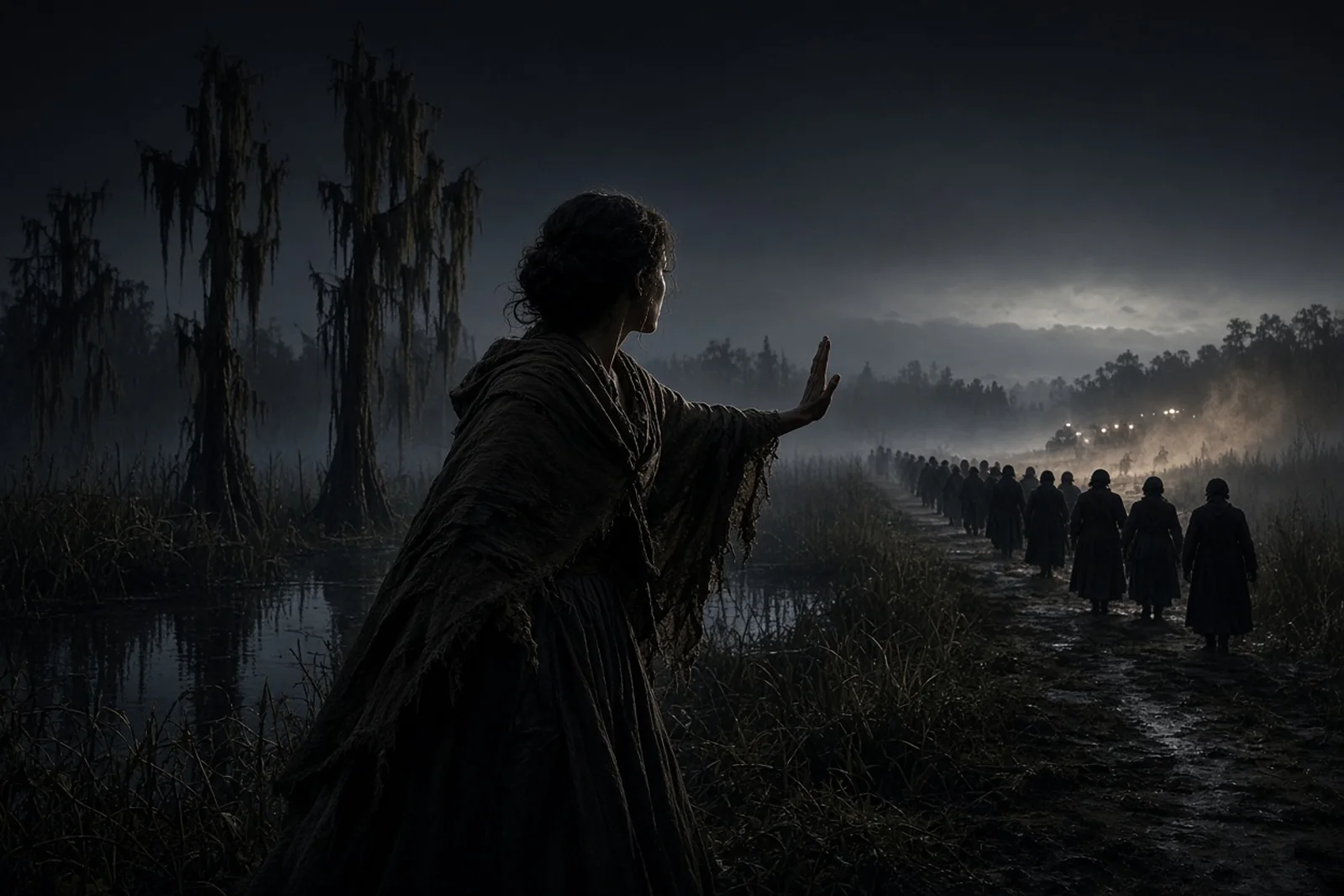
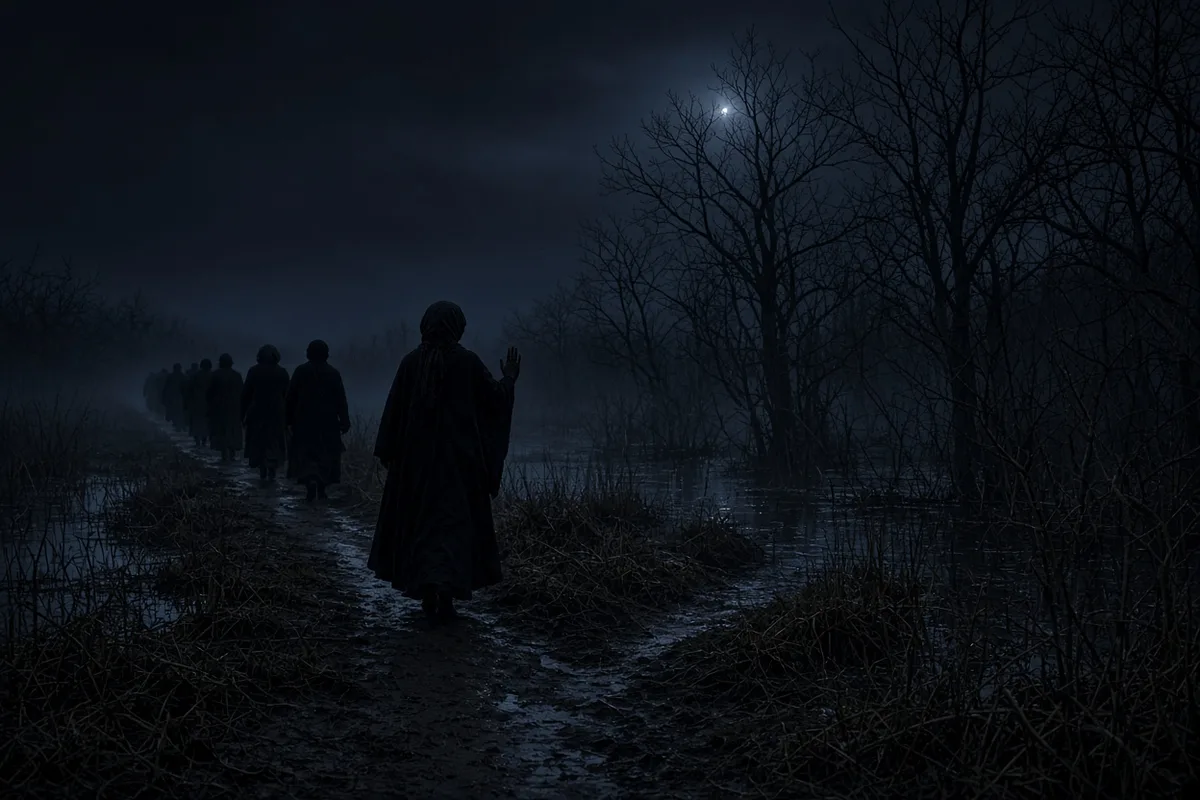
Nobody turned back that night. We went on our stomachs through part of the marsh with the mud sucking at us and stars caught trembling in the black water, and she moved ahead of us like she already knew where the ground gave way and where it held, because she likely did know, she had lived and moved through that country the whole of her life before she ever thought of leaving it. Twice we lay still long enough that a horse went by close enough I could hear the leather of the saddle creak, and both times she had us down before I even understood there was a horse coming at all.
We crossed into Delaware before the false dawn, and it was there the network took hold of us the way water takes hold of a thing falling into it, hands reaching out of barns and cellars that I never saw faces attached to, food passed without a word, directions passed the same way. Thomas Garrett's name got spoken once, quiet, like a password rather than a man. I did not meet him myself that night, but I understood I was moving through rooms he had a hand in keeping safe, the way you understand a fire is banked somewhere in a house even from another room.

We crossed the Pennsylvania line two nights later, at an hour I could not have named, and I did what she said she had done herself the first time she crossed it: I looked down at my own two hands in the gray light, turning them over, half expecting them to look different, belonging to a different person now. They looked the same. But something behind my eyes did not feel the same, and I have never since found the right word for what that was, only that the fields on the other side of that line did not look like any fields I had walked before, though I am certain now, looking back with an older man's sense, that they were simply fields, and it was only my own self that had changed shape crossing over them.
She did not stay to enjoy it with us long, any of those times. That was the thing that took me longest to understand about her. She had earned that gold morning for herself once and could have kept it, stayed north, built a life out of the profit of her own survival the way plenty of others who reached freedom did, and nobody living could have called that a failure of nerve. Instead she turned around, more than once with the frost still in the ground, and went back down into the same darkness she had just climbed out of, because somewhere behind her were her brothers, Henry and Ben and Robert and Moses, their wives, nieces and nephews and their small children, and her own mother and father getting old on land that did not belong to them and never intended to let them go easy.

Her husband, John Tubman, was a free man when she married him, and she went back once hoping to bring him north with the rest, only to learn he had taken another wife in her absence and had no wish to leave the life he had built in her place. I do not know what that cost her to learn, standing in the very county she had risked the noose to reach. She did not speak of it to us on the road. She simply gathered up other kin instead and kept walking, as if grief was a debt that could be paid down later, once the living were all safely somewhere else.
The trip for her parents came later, in the summer of 1857, and I heard the shape of it from others long after, the way you hear a story that has already become something people repeat to their children. Her father, Ben Ross, freed years before by the old will, had been sheltering a group known after as the Dover Eight, escaped people passing through, and word reached him he stood in danger of arrest for it despite his own free papers, because free papers protected a Black man in that country only exactly as far as some white man's convenience allowed. Her mother, Rit Green, had been bought free only two years earlier, Harriet herself having raised the money for it. Freed people were not safe people, not there, not then, and her father knew it, and so at an age when most men are done with hard roads, Ben Ross and Rit Green went north with her too, carried more than led, by the daughter who had once been small enough to be handed off to strangers to be hired out for the price of her labor.
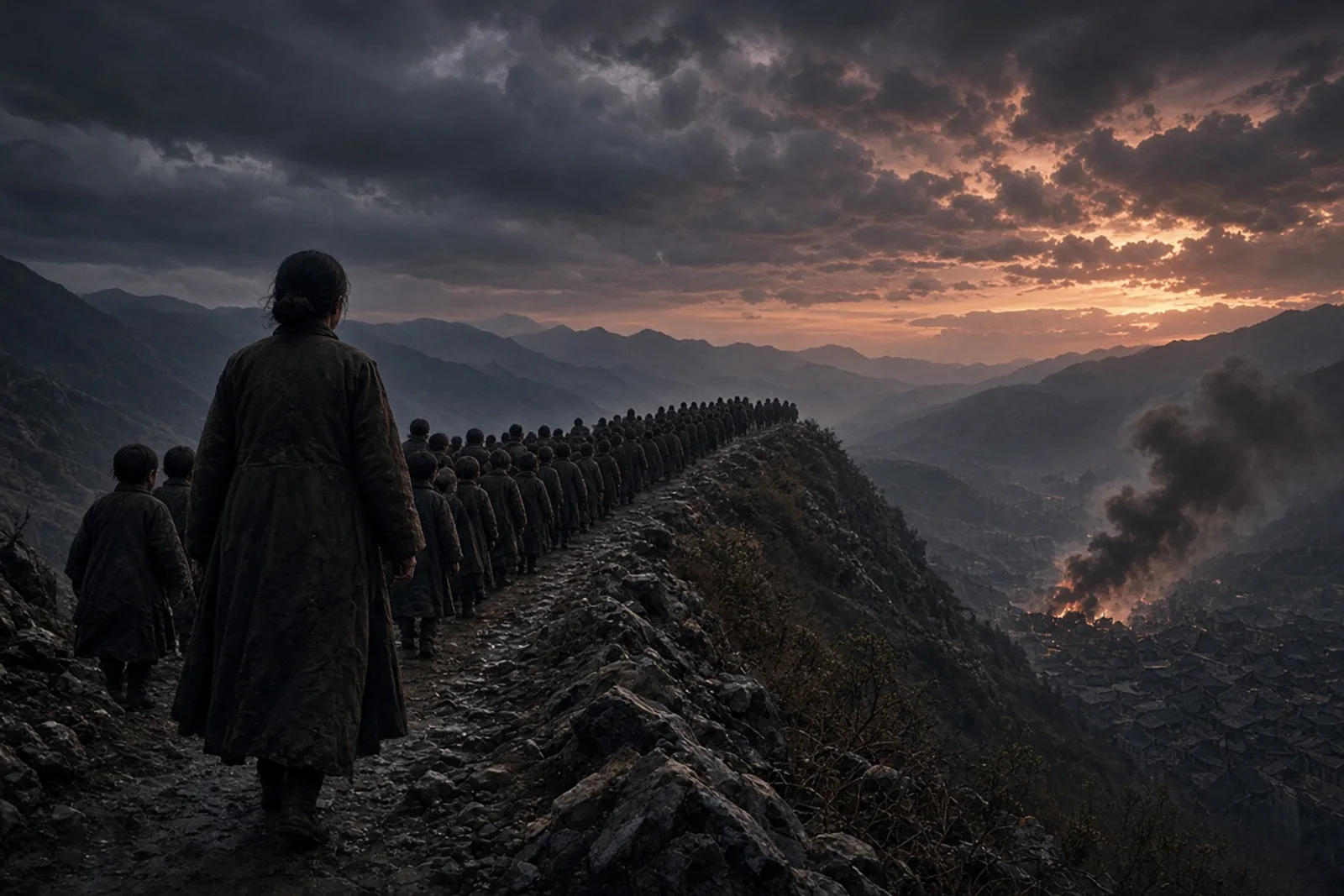
By the time it was over, ten years and about thirteen trips laid end to end, she had led something near seventy souls the whole distance out of bondage with her own hands on the road, and had given directions and instruction to fifty or sixty more who found their own way north by the paths she had described to them. William Lloyd Garrison took to calling her Moses in his papers, and the name stuck to her harder than her own given one ever had, so that men and women who never once laid eyes on her face knew that name and understood exactly what work it stood for.
I think of her sometimes now the way I first saw her, kerchief tied close, pistol at her side, standing at the edge of a marsh at an hour when decent people were long asleep and only the desperate and the hunting were awake. Decades on, an old woman by then, she stood up in front of a hall full of women arguing for their own right to a vote and told them plainly what she had done and for how long, that she had been conductor on that road for eight years running and never lost a passenger, and she said it not as a boast but as a fact laid down flat on a table for anyone who cared to argue with it. Nobody ever did, then or since.
I did not ask her, that night in the marsh, whether she was afraid. I have wondered since whether the question would even have made sense to her, whether fear and the work had simply become the same motion in her body after so many crossings, so many nights reading the same stars her father once pointed out to a barefoot child who could not yet imagine what use they would be to her. What I remember clean, clearer than the cold or the mud or the dog that barked twice and went silent, is her back moving just ahead of us in the dark, small and certain, never once turning around to see if we still followed, because she already knew that we did, and because there was, somewhere further on, another river to cross, and beyond that one, always, another.