Eric Liddell Refuses to Run on Sunday
A dramatized first-person retelling of documented events
The knock came at seven in the morning, hard enough to rattle the pane, and I was the one who went down the stair to answer it because Eric was still at his books. Three men stood on the step with notebooks already open, hats pushed back, breath fogging in the Edinburgh cold, and I knew before they spoke that this was not going to be a quiet term.
We had trained together for three years by then, out on the university track with the cinders biting through thin shoes, and I had watched him run so many times that I could have drawn the shape of his stride from memory — head thrown back like a man staring at something only he could see, arms working, legs eating the ground in that ungainly, unstoppable rhythm that made grown men laugh the first time and then stop laughing once the tape went past his chest. He was the fastest man in Scotland. Everybody said so. The Glasgow Herald had said so in print. And now here were newspapermen on our doorstep because the fastest man in Scotland had just told the world he would not run his best race at the Olympic Games.

It had been decided back in January, at some committee table in Paris none of us ever saw, that the heats for the 100 metres would fall on a Sunday. To the men who drew up that timetable it must have seemed a line on a page, nothing more. To Eric it was the Lord's Day, and the Lord's Day was not a day for racing, however far he had come, however many years of training sat behind it. He said it plainly enough when we asked him straight out in the clubroom — that he would not go back on it, that this was not a thing he had decided lightly and would abandon under pressure. I remember the quiet of him saying it. No heat in it at all.
The reporters did not take it quietly. Within days there were letters to the papers calling him a fool, calling him worse, and I heard the word traitor shouted up at our windows more than once by men who considered themselves patriots. Greville Young, who trained alongside us and knew Eric as well as any man alive, told me afterward that the newspapermen were almost menacing about it, pressing at the door, wanting a scene, wanting him to crack. He never did. He would just say, in that same level voice, that it was his belief, that he judged no other man for running on a Sunday, but that he himself was not going to do it. Nothing more to add. Then he would go back to his books or out to the track, and leave the row to burn itself out in the newsprint without him.
I think what unsettled people most was that he did not look tormented. A man wrestling with his conscience in public is a story anyone can understand. Eric simply was not wrestling. He had already decided, months before the timetable was even a rumour among us, and the decision cost him nothing further to hold, whatever it cost him to have made.

What it cost him, in the plainest terms, was his best event. The 100 metres was his race — the dash, the burst, the thing his body was built for. He had broken the British record over 100 yards at Stamford Bridge the year before, come from behind in the final strides to snatch it in 9.7 seconds, and taken the 220 the same afternoon for good measure. Everyone in the stands that day understood they were watching a sprinter, pure and simple, not a man built for the long bend of the 400.
So he turned to the quarter-mile instead, an event he had barely touched at that level, where he had never once gone under 49 seconds in his life. I watched him take up that training in the months after the announcement with the same face he'd worn answering the reporters — steady, unbothered, as if changing the whole shape of his Olympic summer were simply the next thing on the list. Tom Riddell trained alongside him through those weeks, watched him learn to pace himself round a full lap instead of hurling himself down a straight, and it was not a natural fit for a body built like his. He ran the 400 the way he ran everything, head back, arms flailing, as though the technique manuals had never been written for him. It looked wrong and it worked.

By the time we sailed for France that summer the row at home had mostly gone quiet, worn down by newer headlines, though I don't think Eric noticed it either arriving or departing. In Paris the heat sat heavy over the Stade Olympique de Colombes, and the British contingent moved through those first days of July with the whole business of Abrahams and Liddell already being talked up in the press as some kind of rivalry, though the two men were running, by Eric's own choice, entirely different races now.
Harold Abrahams went through his rounds in the 100 with the cool calculation of a man who had measured every risk in advance, and I remember hearing how in the semi-final he was left at the start, actually left, and still came through to win it — the kind of thing that happens once in a career and gets talked about for the rest of it. He took the final on the Monday, the seventh of July, beating Jackson Scholz and Arthur Porritt in 10.6 seconds, a Games record, the first Briton ever to win that title. I thought of Eric watching it from the stands, if he watched it at all, and wondered what it did to a man to see the race that had once been his run and won by somebody else in his absence.
If it did anything to him he never let it show. Two days later he was out in the 200 metres himself, first appearance of his Games, and though it was not the event anyone expected him to shine in he came through with a bronze, 21.9 seconds, third behind two Americans, and it should have been enough of a consolation for most men. For Eric it was simply the warm-up act. The real test was still ahead of him, on the eleventh of July, over a distance he had mastered only because the distance he loved had been closed to him by his own hand.

I stood in that crowd at Colombes on the day of the 400 final with a throat gone dry, because whatever calm Eric carried in himself, none of the rest of us carried it for him. He was drawn in the outside lane, which some called unlucky, unable to see the runners inside him for most of the race, running blind against the clock and his own instinct instead of against the men beside him. There is a story that before the race someone slipped him a piece of paper with a line from scripture on it, about those who honour God being honoured in turn, though I only have that the way it was told to me afterward, folded into the legend the way legends fold things.
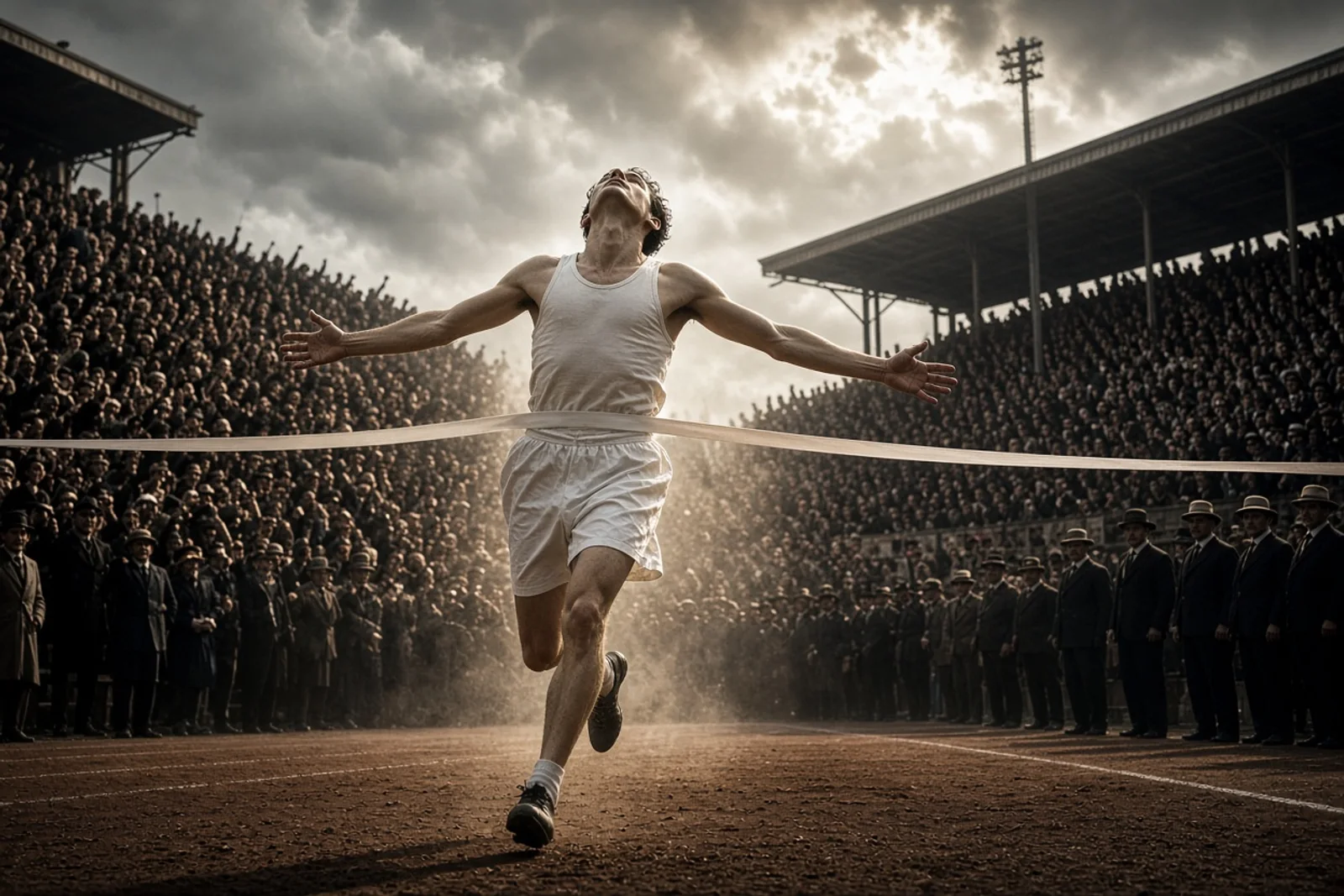
What I saw with my own eyes was the gun, and the head going back the instant it fired, and that same wrong-looking, unstoppable action carrying him off the outside bend faster than any man had any right to go that early in a lap he'd been running seriously for only a matter of months.
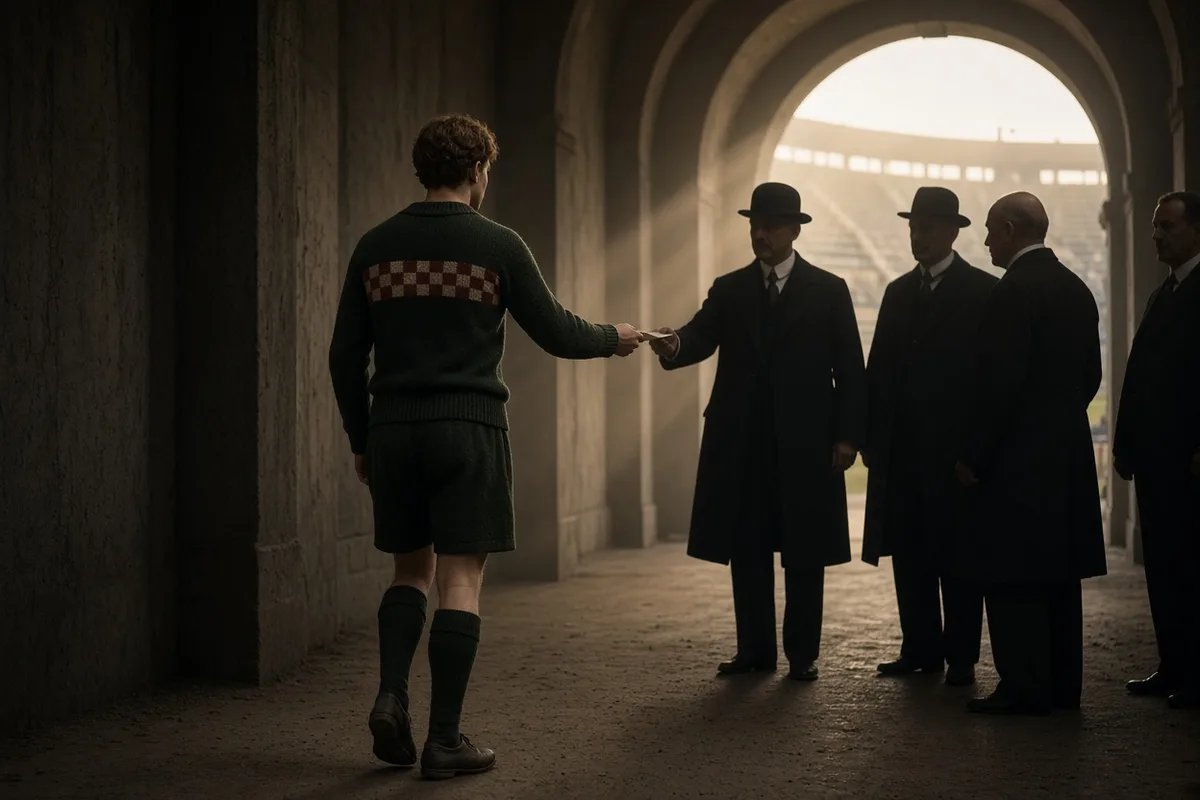
He did not slow. That was the thing nobody in the stands could quite credit, watching him tear round the far turn at a pace built for a sprint half the distance, because the accepted wisdom of the 400 was that you held something back for the final straight and Eric Liddell held nothing back anywhere, ever, and by the top of the home straight the gap behind him had become the kind of gap you don't close.
He crossed the line inside forty-seven seconds, a new world and Olympic record both, and the roar that went up around Colombes had the strange edge to it that comes when a crowd is cheering something it does not fully understand — a man winning gold in a race he was never meant to be good at, by way of a decision that had made half his own country furious with him six months before.
I found him afterward in the press of bodies near the trackside, still getting his breath, and there was no triumph on his face that looked like the triumph you'd expect. It looked more like relief settling into something quieter than that, a private matter he had squared with himself long before the starting gun and which the record books were only now catching up to. He had given up his best race on principle and won a race he wasn't supposed to win at all, and if there was a lesson in that for the men who had hammered on our door in Edinburgh calling him a traitor, I never heard him claim it for himself.
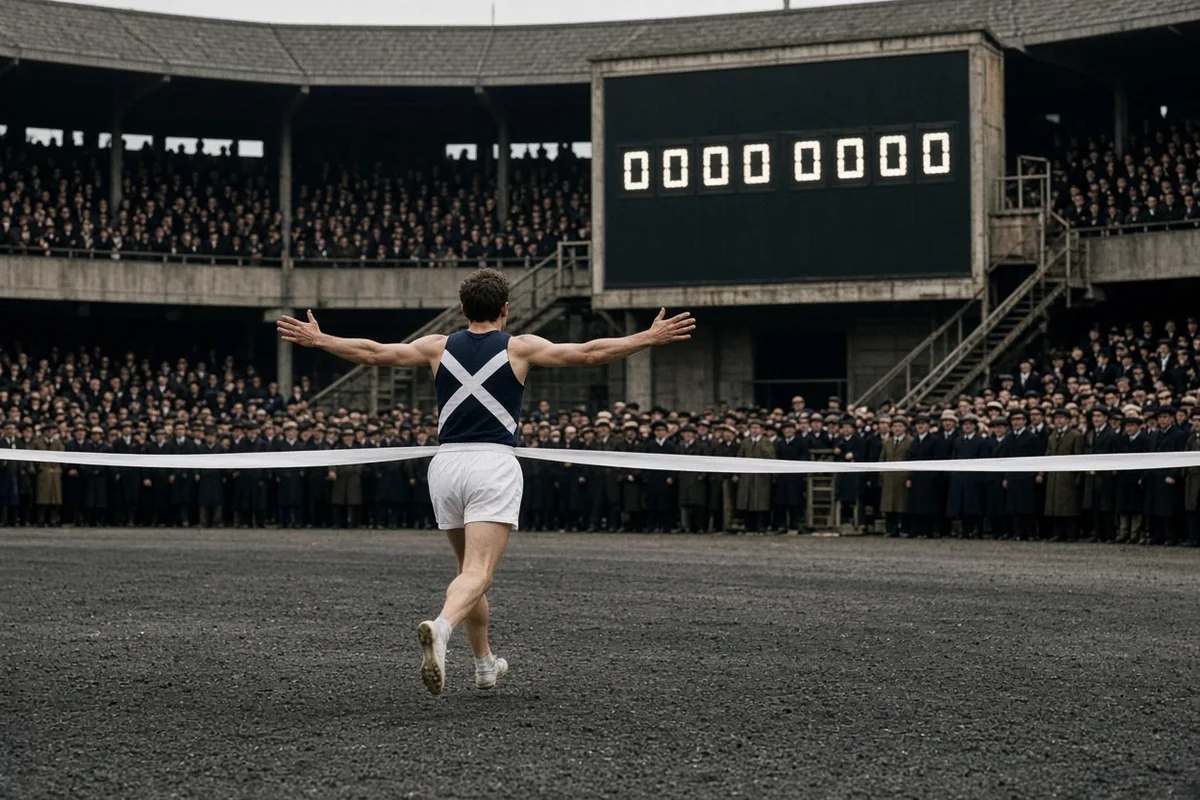
He did not stay long enough afterward to become the kind of man who lives off a single afternoon in Paris. Within a couple of years he had gone back to China, to the mission work his own parents had given their lives to, teaching and preaching in Tientsin and later further into the country, the running left behind him the way a man leaves behind a coat he no longer needs in a warmer climate.
I heard news of him only in scraps after that, the way you do of a friend who has gone somewhere else to live out the part of his life that matters most to him — marriage, children, the war closing in on the coast of China through the back half of the thirties and into the forties until there was no safe way out for missionaries who stayed as long as he did.
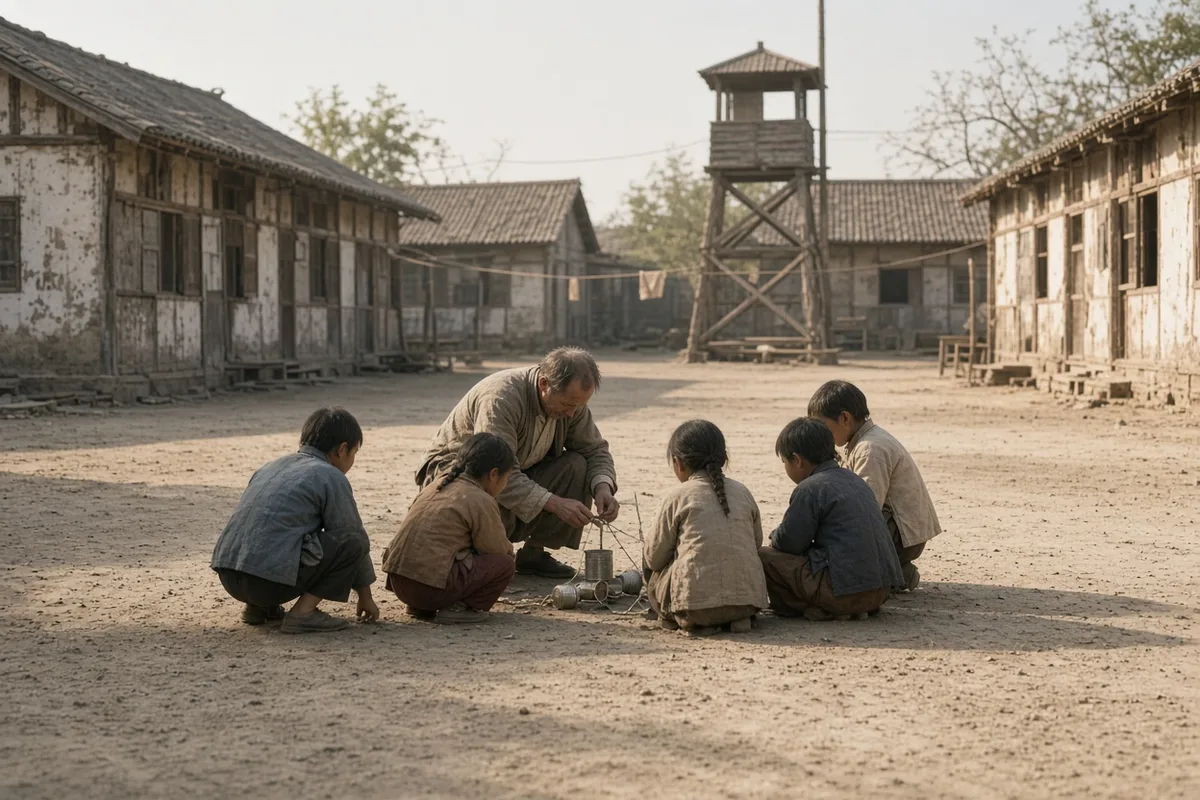
The last of it reached us the way such things always do, late and secondhand: that he had been taken into a Japanese internment camp with the other foreign nationals still in China when the fighting swallowed the treaty ports, and that conditions there wore down men far younger than he already was.
He died in that camp in 1945, not long before the war that had put him there finally ended, and he never once laid eyes on the youngest of his daughters, born after he was already shut behind the camp's wire with no way through to see her.
I think of him still in the outside lane at Colombes, unable to see the men running against him, running anyway as though the blindness of it made no difference to how hard a man ought to try — head back, arms going, the whole ungainly shape of him somehow faster than every calculation said it should be, closing on a line nobody watching believed he could reach first.