George Müller Feeds 10,000 Orphans on Prayer
A dramatized first-person retelling of documented events
The bread bin was empty again that morning, and I knew it before I even lifted the lid, because the lid came up too light in my hand. Wilson Street was quiet at that hour, just the milk carts somewhere off toward the market and the first grey coming up over the rooftops, and I stood there in that cold kitchen with twenty-six children asleep above me and not one crust to put in front of them.
I had come to that house in the spring of 1836, not long after Mr. Müller and his wife Mary had opened its doors, and I had heard him say plainly, more than once, standing in that same kitchen with his coat still buttoned from the morning air, that we would never ask a soul for money. Not a subscription card sent round, not a collection plate passed at the chapel door, not so much as a hint dropped to a wealthy visitor. He said the children's Father in Heaven knew their address, and that was appeal enough.

I thought that a strange kind of arithmetic when I first heard it, coming as I did from a house where you begged when you were hungry and were glad of what you got. But I watched him kneel by that kitchen table more mornings than I could count, and I watched the food come, and after a year or two I stopped being surprised by it, though I never once stopped feeling my heart go tight in my chest on the mornings the bin was empty.
That particular morning it was not only the bread. There was no milk either — the small girl who ran the dairy jug down to the corner had come back the evening before with the jug still empty, because there was no penny to give the dairyman, and no bread besides, because the baker had not been paid in some weeks and there was nothing owing to us on trust. Twenty-six children, no breakfast, and the clock in the hall already moving toward the hour when they came down the stairs in their pinafores, hair combed, faces scrubbed, expecting what children always expect, which is that the meal will be there because it always has been.
I went and found Mr. Müller in the little room off the passage where he did his praying, and I told him what I had already told myself twice over, that there was nothing, not a slice, not a drop, and that I did not know what I was to set on that table. He did not look at me the way I expected. He looked, if anything, glad of the news, the way another man might look glad of a letter he had been waiting for.

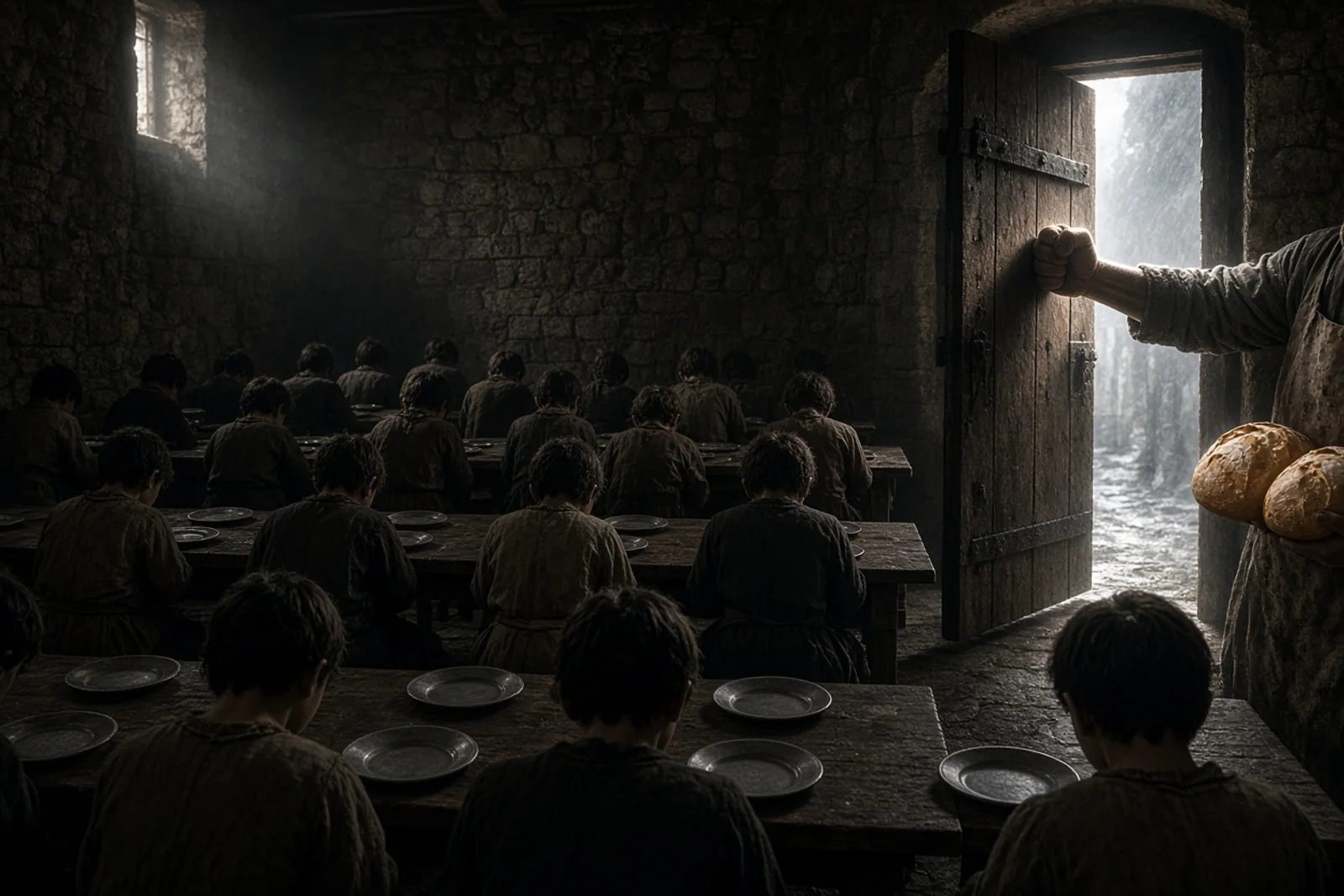
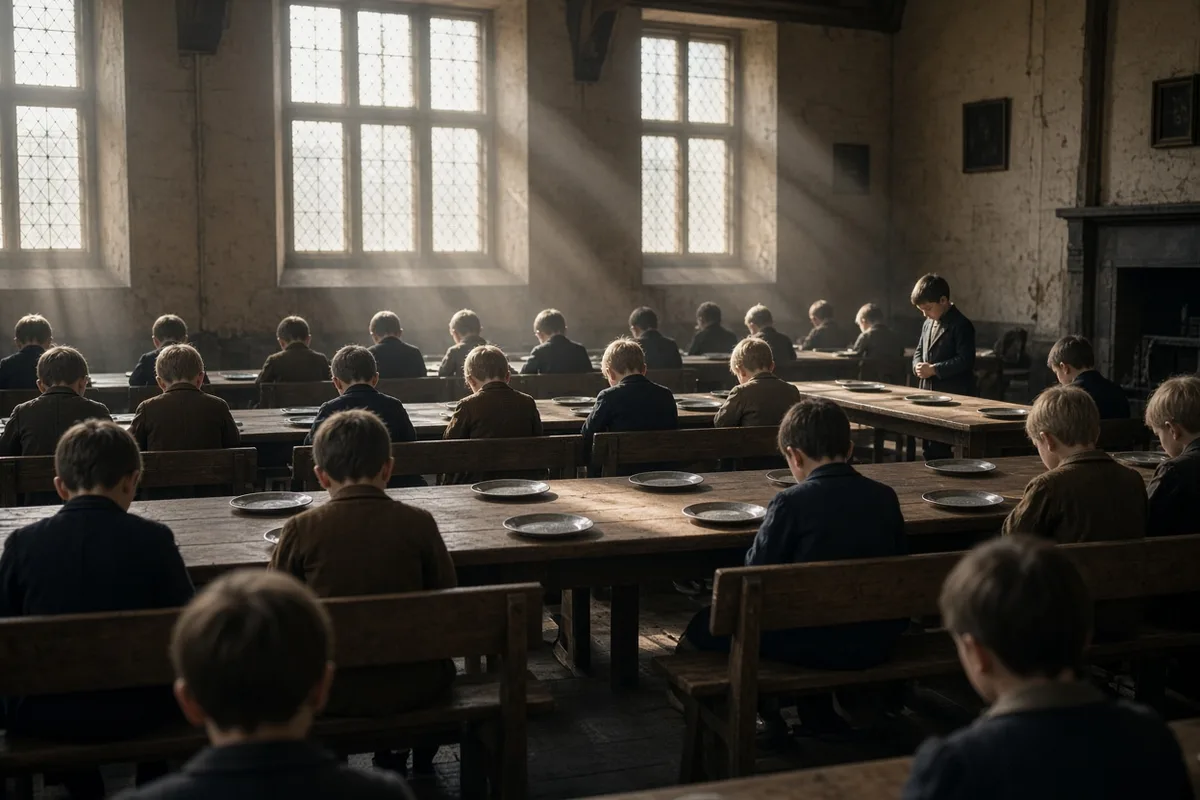
He said the children should come down and sit as they always did. I set the places myself, the same worn plates, the same tin cups, twenty-six of them in two long rows, and not one thing on any plate. The children came down in their turns, and if they wondered at the bareness of the table they had learned already not to ask, because asking was not how things were done in that house.
Mr. Müller stood at the head of the table with his hands folded and his eyes closed, and I stood by the door with my apron twisted in my fingers, watching those small faces, some too young yet to know what an empty plate meant and some old enough to know it very well. He gave thanks. I heard him give thanks, aloud, for the food, in front of plates with nothing on them, and I remember thinking that if I had not seen it with my own eyes I would not have believed a grown man could say such words and mean them.

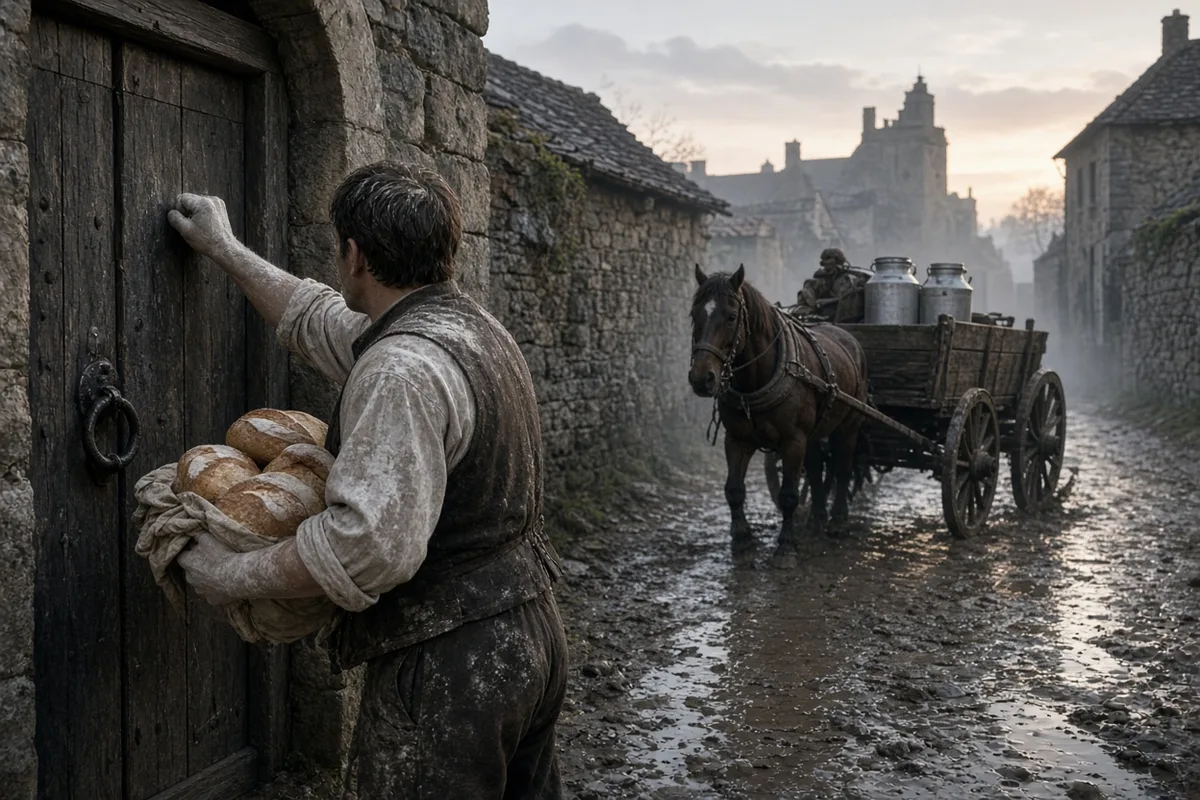
Before the last of the children had settled their hands in their laps there came a knock at the door, three short knocks, and I went to it with my heart going faster than it had any business going for a knock at a door. It was the baker. He told Mr. Müller, standing right there on the step with the morning cold coming in past him, that he had lain awake in the night unable to sleep, feeling he must rise and bake bread for the orphans, and that he had brought three loaves, still warm from his oven, because he could not rest until he had.
I carried those loaves in myself and I remember the heat of them coming through the cloth into my hands, and I remember thinking that bread had never in my life smelled so much like an answer to something.
I had barely set the loaves down when there was a second sound, out in the street this time, not a knock but a clatter and a stop, a cart wheel come to a sudden halt right outside our door. It was the milkman, and his cart had broken down that instant, that exact spot, in front of the house, and rather than let the milk stand and spoil while he saw to the wheel, he asked would Mr. Müller take the cans off his hands, all of it, so it should not go to waste.

So there was milk after all, and bread after all, on a morning that had begun with neither, and I stood at that table pouring cups for children who had no notion of what had passed at that door in the space of ten minutes, and Mr. Müller did not make a speech of it. He simply thanked God again, quietly, the way another man might thank a neighbor for passing the salt, and told the children to eat before it went cold.
That was not the only such morning, not by a long measure, though it stayed the sharpest in my memory because it was among the first. There were others through those years on Wilson Street and afterward, when a house full of children stood between a full table and an empty one and something arrived, a sack of potatoes left at the door by a stranger's cart, a note with money in it slipped through the letterbox by a hand nobody saw, always in time, never early enough to spare the waiting, but never late enough to let a meal be missed.
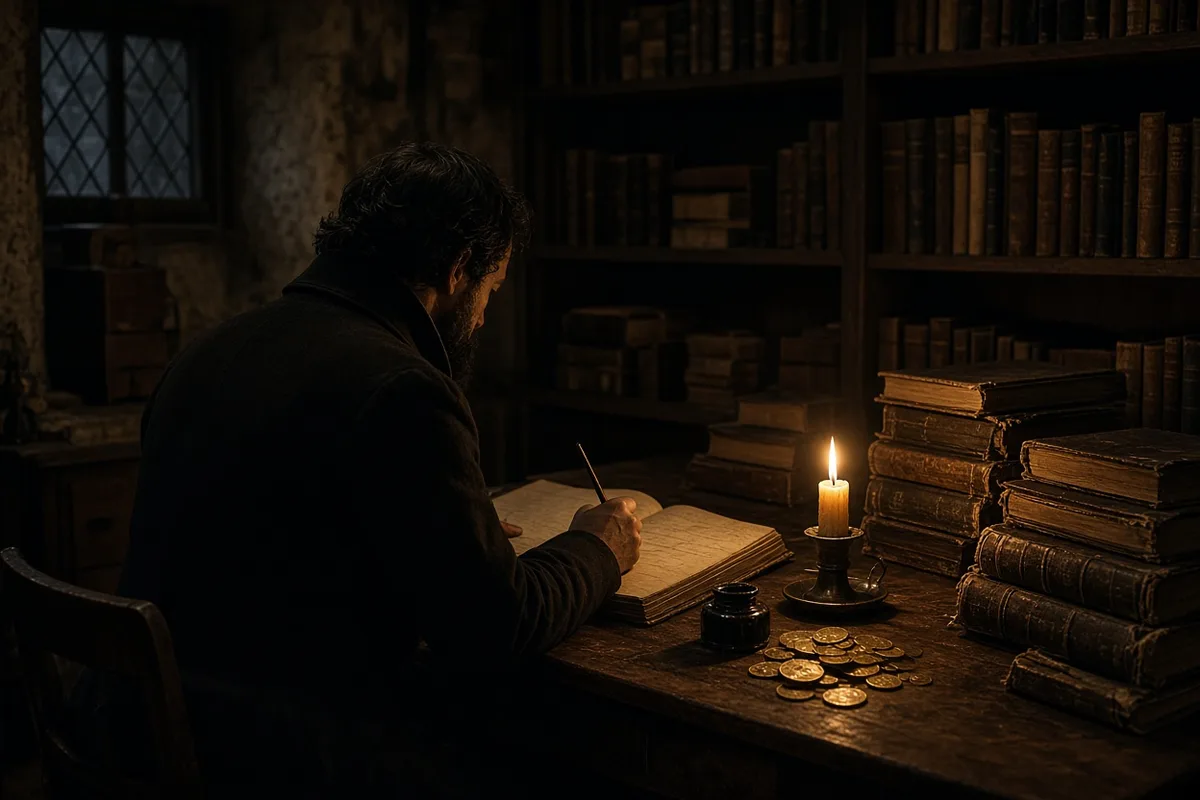
Mr. Müller kept an account of every one of these mornings, and of every penny, in ledgers he showed to anyone who cared to look, because he wanted it known and doubted by no one that not a shilling had ever come by asking. He would say the trials themselves were part of the design, that a need met before it pinched would teach a child nothing, and a need met in the pinching of it would teach the whole house something it would not otherwise learn.
The work he and his wife had begun with a rented house and thirty children on Wilson Street did not stay small. Within a few years there was more than one house, and more than a hundred children, and the trials I had known as a girl carrying an empty jug became trials on a larger scale, whole houses waiting on a whole day's provision, and still the rule held — no appeals, no loans, no debts run up against tomorrow's hope. I moved on from that first house in time, married, had children of my own, but I kept hearing of it, the way you hear of a river you once lived beside, the news of it reaching you long after you've left its banks.
By the time they built up on Ashley Down, great plain buildings standing up out of the fields north of the city, the numbers were beyond anything I could have pictured standing in that first kitchen with an empty bin in my hands. Hundreds of children under one roof, then more than a thousand across the five houses that eventually stood there, boys and girls fed and clothed and taught their letters, all of it paid for the same way that first breakfast had been paid for — nothing asked, nothing borrowed, only prayed for and waited on.
I heard, in the years after, that the money that had come in, unasked, over the whole span of that work, reached past a million and a half pounds, sums beyond anything a rented kitchen on Wilson Street could have imagined holding, yet it had come the same way the three warm loaves had come, a little at a time, always just ahead of the need and never far ahead of it.
I heard too, and it stayed with me more than any figure, that if you counted every child who passed through those houses over all the years the work ran, from that first small household to the last, the number climbed past ten thousand souls, ten thousand children who had eaten because a man and his wife had decided, in a rented house in Bristol, to ask nothing of anyone but God.
Mrs. Müller did not live to see the whole span of it; she went on before her husband did, though the record of the work does not dwell long on her leaving, only that it happened, and that he went on afterward as he had begun. Mr. Müller himself lived to be an old man, still holding to the same rule he had held to at that kitchen table, still keeping the ledgers, still telling the stories afterward rather than the appeals beforehand, until he died in the year 1898, an old man in a house full of children who had never known him any other way.
The work did not stop with him. It passed to his son-in-law, a man named James Wright, who had married into that same household and taken up the same discipline of asking nothing and recording everything, and after him to others who kept the ledgers open on the same terms.
I think sometimes of that morning still, though I am an old woman now myself and the details of other mornings have long since worn smooth in my memory the way river stones wear smooth. I think of the weight of that bread bin lid coming up too light in my hand, and the smell of warm loaves through a cloth, and a milk cart stopped dead in the road outside a door for no reason any driver could have planned. I think of twenty-six children with their hands folded over empty plates, waiting without knowing they were waiting for anything at all.
I have told the story to my own grandchildren, the bread and the milk cart both, and they ask me every time whether I am quite sure it happened exactly so, whether memory has not sweetened it in the telling the way memory does. I tell them I stood at that door. I tell them I carried the loaves in myself, and felt the heat of them, and poured the milk from cans a broken wheel had left standing in our street. I tell them I do not need to sweeten what I saw with my own eyes on a cold morning in Bristol, when there was nothing on the table, and then there was.