Father Damien Chooses the Leper Colony
A dramatized first-person retelling of documented events
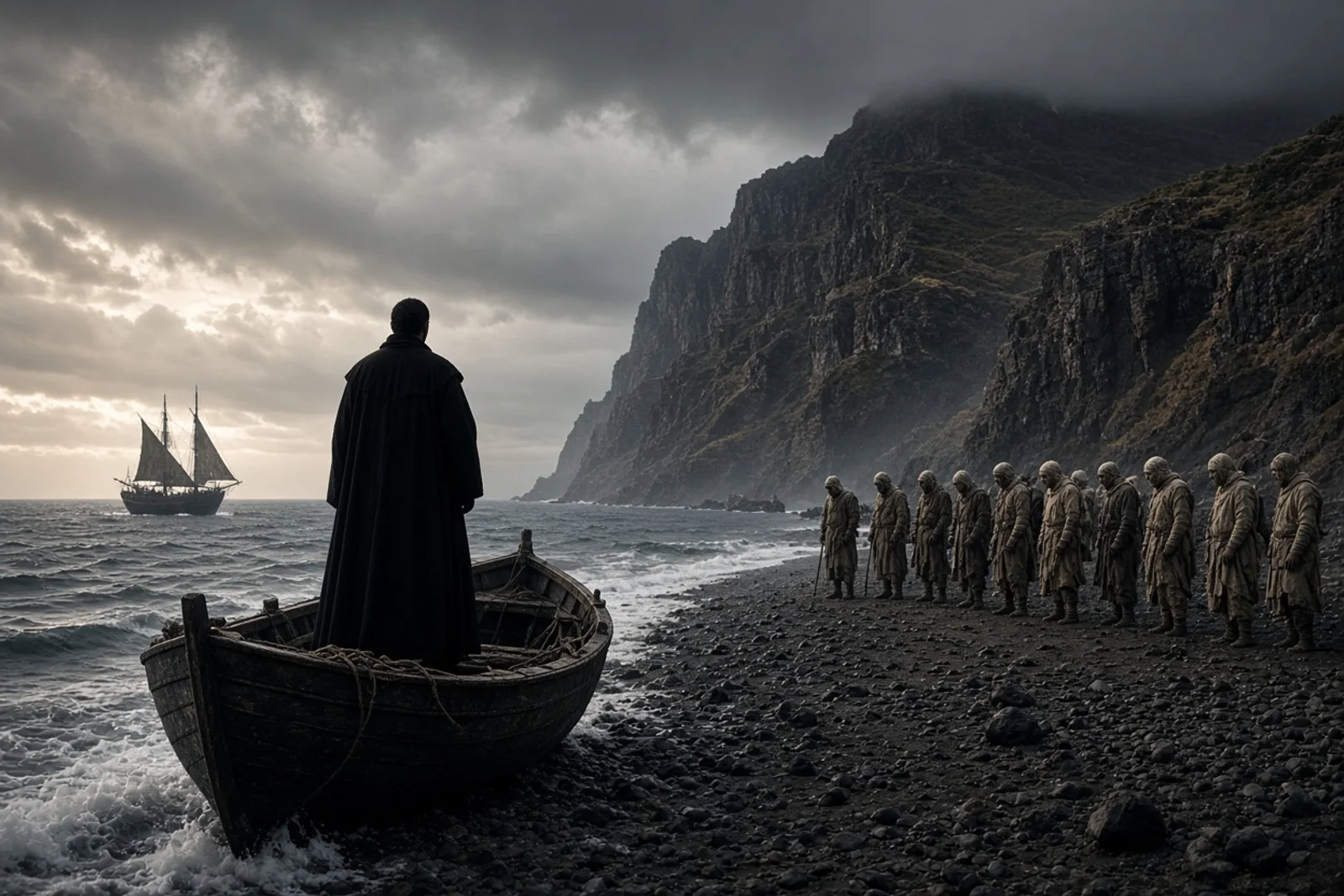
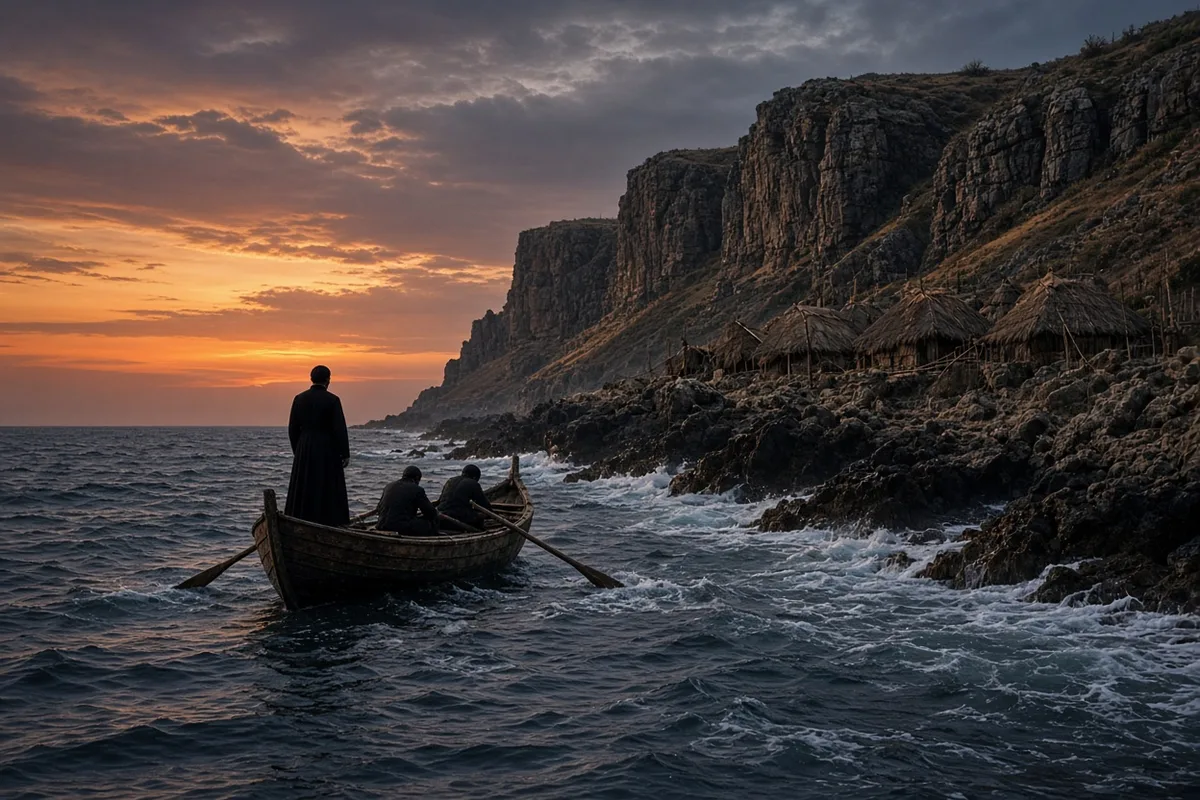
The surf at Kalawao runs high most mornings, and that morning it ran higher than I had ever seen it, white water breaking over black rock, and I stood on the shingle with the others who could still stand, watching a boat fight its way toward us through the channel between Molokai and the world we had already lost.
I had been on that shore two years by then, sent over on a cattle boat much like this one, my hands already going numb in patches, my face not yet marked enough to frighten children, though it would be. Six hundred of us lived under those cliffs, penned in by a wall of rock nearly two thousand feet high on one side and open water full of sharks on the other, and we had learned by then not to expect much from any boat that came. Boats brought rice, sometimes. Boats brought more of us. This one brought cattle lowing in their pen amidships, and fifty more sick men and women clinging to the rail, and among them a young priest in a black cassock who did not look away from us the way the sailors did.

His name, we would learn, was Damien, though he had been born Joseph de Veuster, a farmer's son from a town in Belgium called Tremeloo, and he had crossed an ocean at twenty-three to take his brother's place on a mission neither of them had ever seen, his brother too sick himself to go. He had spent eight years riding the districts of Hawaii island, Puna and Kohala and Hamakua, building chapels with the same hands that would soon be building for us, and when the bishop asked for volunteers to serve the settlement on Molokai, he did not wait to be asked twice. Three other priests said they would go, in their turn, later. Damien went first, on the tenth of May, 1873, on that boat with the cattle.
We watched him come ashore soaked to the knees, and we watched him not flinch at the smell of us, which by then none of us could smell ourselves but knew from the faces of every official who had ever been sent to count us. There had been ministers before him, Congregational men, Mormon elders, family who followed their own into exile out of love rather than duty. He was not the first kind face at Kalawao. But something in the way he stood on that beach, not stepping back, not holding a handkerchief to his face, made the crowd of us go quiet in a way I had not heard since the day we arrived ourselves.

The superintendent of the board of health had written to the bishop, before Damien came, that as long as we could still care for ourselves we managed well enough, but once the disease took our hands and our feet and our sight, he said, even demons would pity us and wish us a quicker death. That was the truth of Kalawao before Damien. We had food, most weeks. We had cloth to wrap wounds that would not close. We did not have anyone to dig a grave when a man's hands had rotted past holding a shovel, or to sit with a woman through the last fever when her own children had already been sent away sick themselves, or dead.
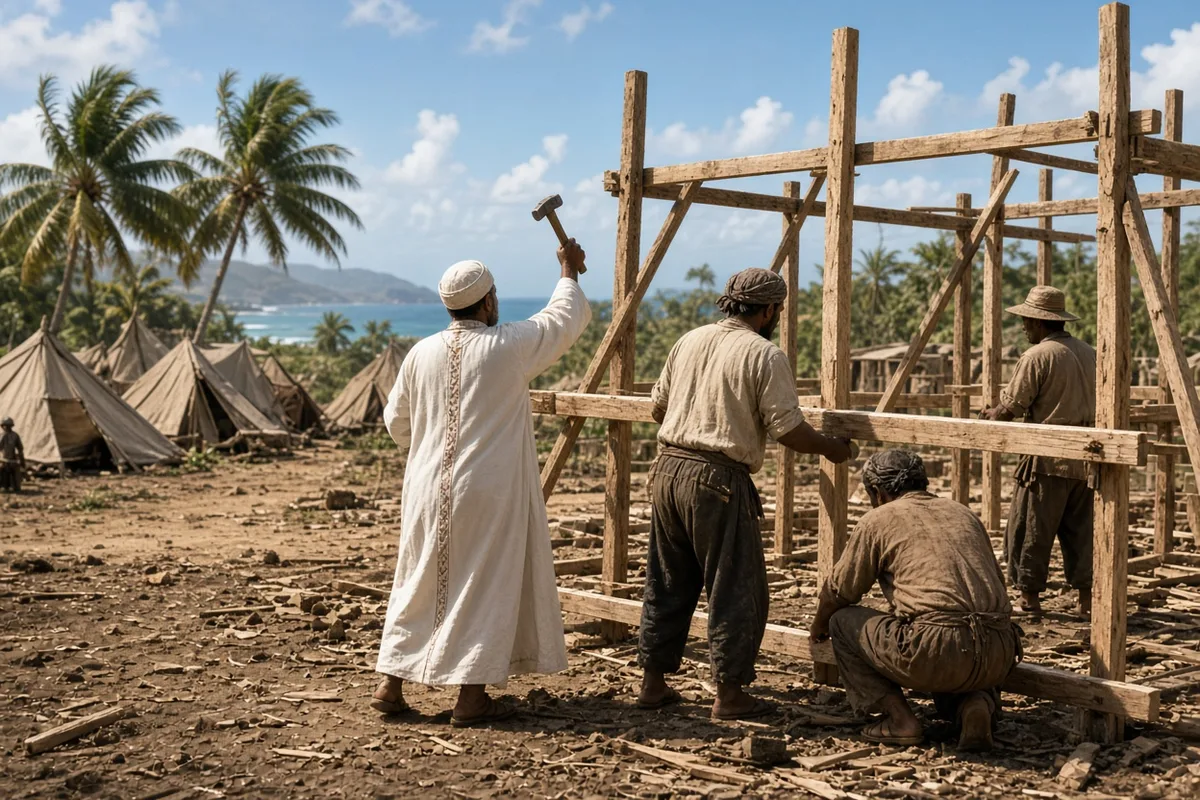
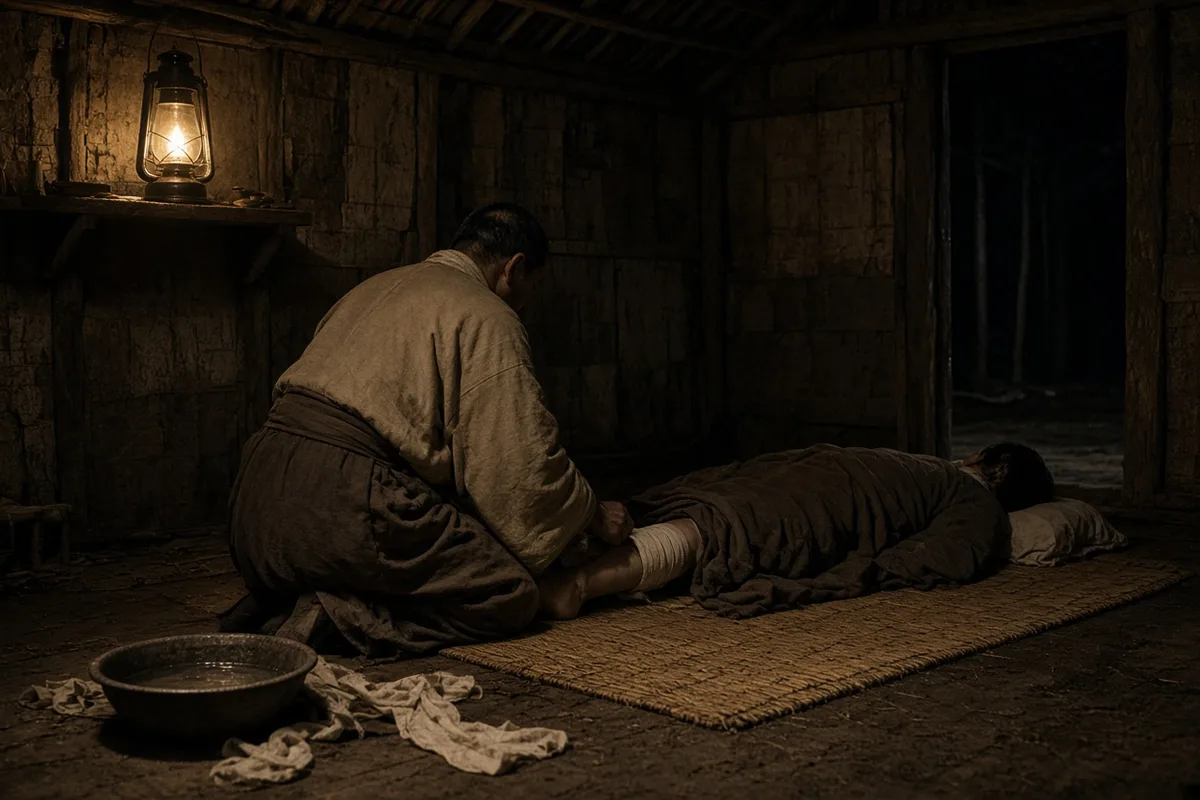
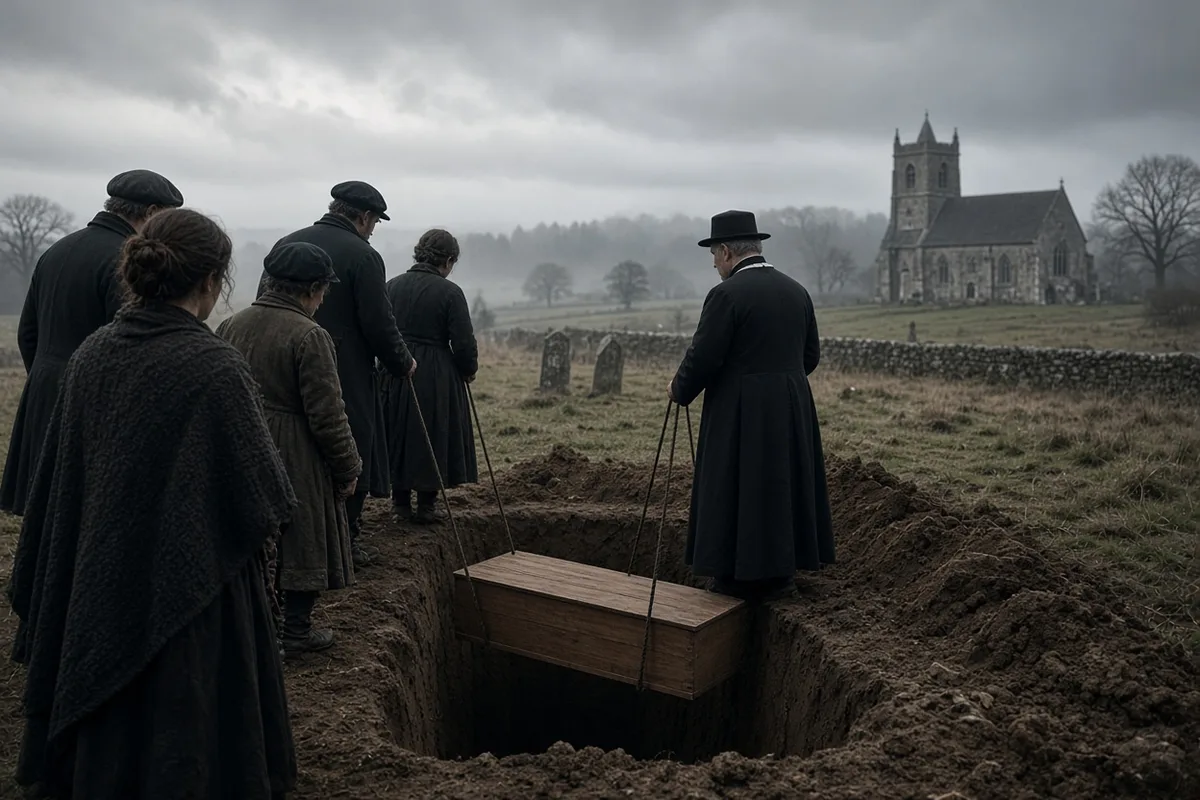
He changed that within the first year, though not by any miracle anyone could point to. He simply did the things no one else would do. He dressed the ulcers himself, unwrapping and rewrapping bandages that no other man on that peninsula would touch with bare hands. He helped us raise the frames of our own houses, driving nails alongside patients whose fingers could no longer close around a hammer. When the dead needed burying, and there were more dead most weeks than there were hands left whole enough to dig, he took up the spade.
He learned our language quickly, faster than any missionary I had known, and he used it not for sermons alone but for arguing, for planning, for teasing children in the yard behind the chapel. He organized a choir, and a band with borrowed instruments, and a school for the children born to patients or sent along with sick parents who had nowhere else to leave them. He put in pipes and dug for water so that we would not have to carry it from the far stream every day on backs that could no longer bear the weight. He planted trees along the paths, and I remember thinking at the time it was a strange thing to do in a place most of us assumed we would die in within a few years, planting shade for people who might never sit under it.
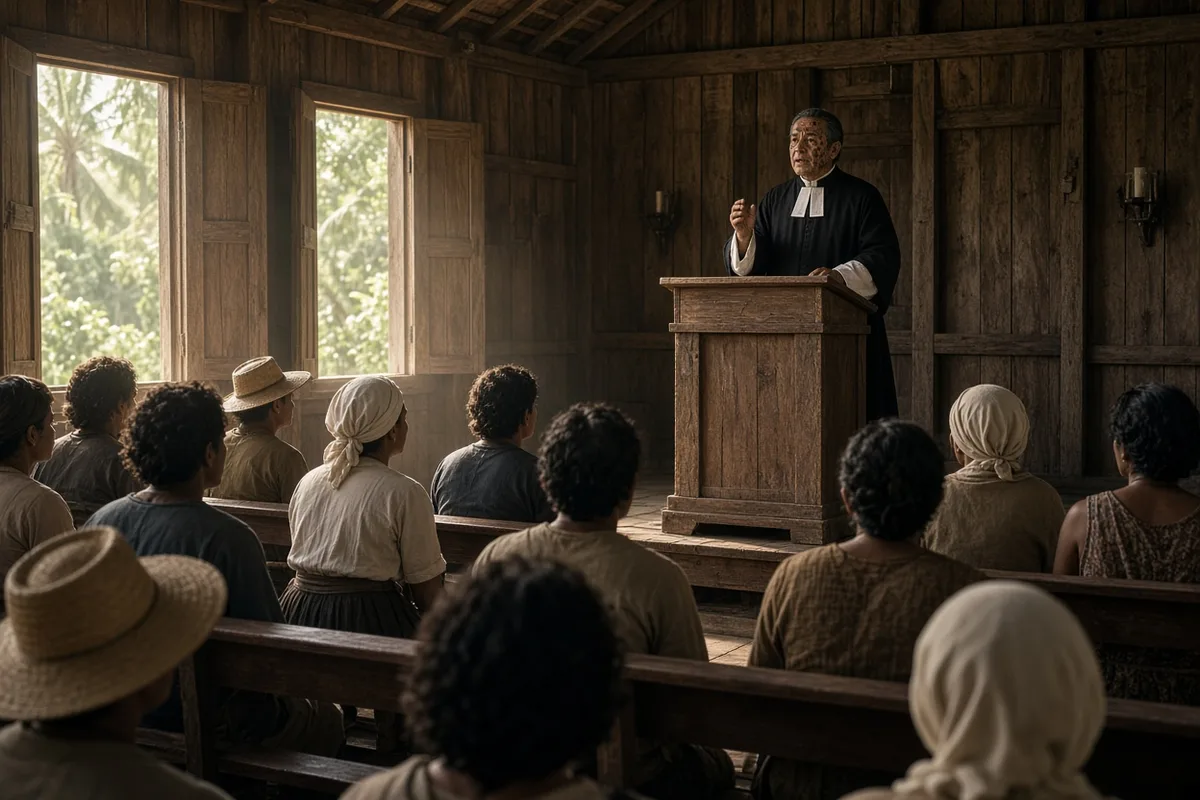
He rebuilt the old church, Saint Philomena, adding to it board by board until it could hold more of us than it was ever meant to, and on Sundays the sound of the choir came out through the open windows across the whole settlement, voices some of them ragged with the disease itself, but voices all the same. He was not a quiet man about our needs. He wrote to the government in Honolulu, and he wrote to his own superiors in the church, and he did not soften his letters when he thought we were being given too little. Some officials found him difficult. We did not care. We had never had anyone difficult on our behalf before.
Word of him began to travel beyond Molokai in a way none of us expected, ships' officers carrying stories to Honolulu, and from Honolulu out across the ocean to places we had never seen and never would. Visitors started coming, careful men who kept their distance on the beach and asked questions about the priest who lived among the lepers, and some of them wrote what they saw, and it went further still, to newspapers in cities whose names meant nothing to most of us. For the first time since the quarantine began, people outside Molokai were made to think about what happened to us once the boat left the harbor.
I do not think Damien himself cared much for the attention. What I remember is that he kept working exactly as he had the first year, whether anyone across the ocean was reading about it or not. He shared what he had without much thought for what it might cost him. He ate from the same bowl of poi that was passed hand to hand at gatherings, dipping his fingers in alongside ours without hesitation. He smoked a pipe, and passed it, and took it back. He bandaged sores with his bare hands and did not always stop to wash between one patient and the next, not out of carelessness exactly, but because there was always another wound needing wrapping before the water could be found and heated.
We did not think much of it at the time. Twelve years is a long while to watch a man live that way and see nothing happen to him, and I think some of us had come to believe, without saying so, that whatever kept him well was something more than luck. Then, in 1885, the marks began to show on him the way they had shown on every one of us at some point, a numbness in a patch of skin, a change in the face that a man who has lived among the afflicted for twelve years knows how to read in an instant, even in his own mirror.
He did not stop. I want that understood plainly, because it would have been easy for him to stop, to let the two priests and two brothers who had come by then take up more of the work while he rested. He did not rest. He kept dressing wounds and burying the dead and arguing with Honolulu for more resources, and if anything he seemed to move faster in those last years, as though he had been given a number of days and intended to spend every one of them the same way he had spent the twelve years before.
More help arrived in those later years than Kalawao had ever known. A layman named Joseph Dutton came in 1886, a quiet man with his own reasons for seeking out hard work in a hard place, and he stayed on long after. Then in 1888 a nun named Mother Marianne Cope arrived from the mainland with two of her sisters from the Order of St. Francis, and I remember the particular steadiness of her, the way she moved among the patients as though she had already decided nothing she saw would make her leave.
By the last winter, Damien could barely walk the paths he had once cleared himself. His feet had gone the way so many of ours had gone, and his hands, the same hands that had driven nails and dug graves and turned pages of the Hawaiian grammar he had mastered, could no longer manage simple tasks. He wrote to his brother Pamphile in Belgium, the brother whose illness years before had sent Damien to the islands in the first place, and in that letter he said he was gently going to his grave, and there was no fear in the words, only the plain accounting of a man reporting what he saw was true.
He became fully helpless toward the end of March, 1889, and did not linger long past it. On the fifteenth of April, he died at Kalawao, forty-nine years old, having spent fifteen years among us, twelve of them healthy and three of them sick with the same disease he had come to serve. Mother Marianne sat with him at the last.
We buried him under the same pandanus tree where he had slept his first nights at the settlement, back when there was no house built yet for the new priest and he had simply lain down among us rather than ask for shelter he could not yet provide for anyone else. It seemed right that the ground that had first held him should hold him again at the end, though later his remains would be moved across the ocean to the country of his birth, to a homeland he had left as a young man and never seen again in life.
The work did not stop with him. Mother Marianne and her sisters carried it forward, and four more brothers arrived in 1895 to keep the schools running and the sick cared for, and Joseph Dutton stayed on for decades after that, long enough that the settlement he had joined as a stranger became, in time, simply his home. The trees Damien had planted grew tall enough to shade paths that were still being walked by patients born after he died, children who had never seen his face and knew him only as a name carved into a headstone and spoken by the old ones who remembered.
Years on, men who had once questioned his conduct, who had written unkind things about the priest who lived so carelessly among the diseased, found their claims answered and set aside by others who had actually known him, and the record settled, slowly, in his favor, the way it usually does for men who did the work rather than defended themselves. Long after most of us who watched that first boat come in were gone ourselves, the Church would name him a saint, and pilgrims would come to the peninsula where we had once been sent to be forgotten, walking the same shingle beach where I stood as a young man and watched a stranger step off a cattle boat without once looking away from us.
I think of that morning still, the surf high, the smell of the cattle pen, the sound of fifty more of us being unloaded onto a shore we did not choose. And I think of him standing there in his wet cassock, twenty-three years an ocean from home, looking at six hundred ruined faces and not stepping back. That is the whole of it, really. He came on a boat that had no return passage built into it, and he stayed until the ground itself took him, and in between he built us water pipes and coffins and a choir that could still be heard singing on Sundays long after every one of us who first heard it was gone.