Overview
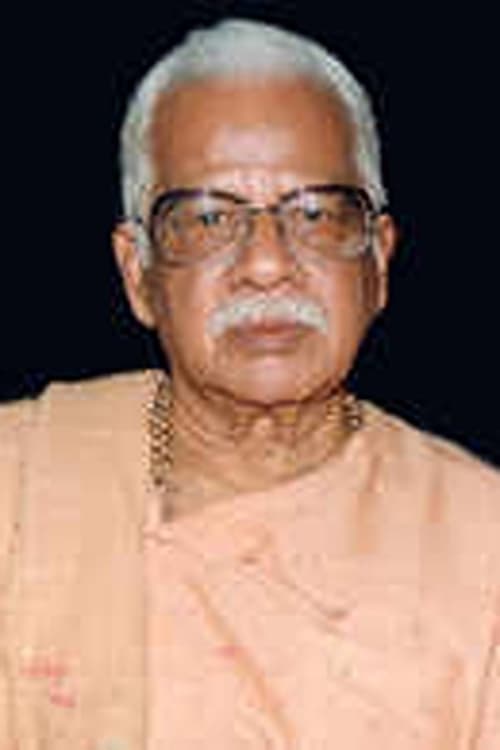
Thikkurissy Sukumaran Nair (16 October 191611 March 1997) was an Indian poet, playwright, script writer, lyricist, orator, film director and actor, though he is best known as an actor in Malayalam cinema. He is the recipient of Padma Shri from the Government of India, which is one of the highest civilian honours in India. In a career that spanned about 47 years, he acted in over 700 films. He is considered to be the "first superstar of Malayalam cinema". In 1993, he was honoured with the J. C. Daniel Award, Kerala government's highest honour for contributions to Malayalam cinema.
Early life
Sukumaran Nair was born on 16 October 1916 in the village of Thikkurissy, Nagercoil, then part of Travancore. The village of Thikkurissy is now in Nanchilnadu, Nagercoil, Kanyakumari district, Tamil Nadu. He was born in an aristocratic Nair family to Mangat C. Govinda Pillai and N. Lekshmi Amma. He was a good writer and an orator even when he was doing his schooling in Marthandam Government Boys School. He wrote his first poem at the age of 8 and his poem was published for the first time when he was 14 in Dhakshina Bharathi. His poems were collectively published as a book named Kedavilakku when he was 20. His parents wanted him to secure a government job, but he launched his career in writing and arts even before he completed his studies. Incidentally, his sister L. Omanakkunjamma was the first female magistrate in India.
Career
He launched his career as a playwright. His plays Mareechika and Kalakaran were hugely successful. He then went on to write three more—Sthree, Maya and Sariyo Thetto—that revolutionised the professional play scenario in Malayalam. He replaced the melodramatic romantic musicals, which ruled the roost till then, with dialogue centred prose plays having themes of realism and social importance.
He entered the Malayalam film industry in 1950, which was in its early years with only about 10 films produced. He debuted in the industry with the film adaptation of his breakthrough play Sthree. He produced the film and played the protagonist as well. It failed to make much impact at the box office, the film scene in Kerala then being ruled by Tamil and Hindi films. Thikkurussy's next film Jeevitha Nouka (1951), produced by K and K Productions and directed by K. Vembu, was a turning point in Malayalam film history.
From Wikipedia (CC BY-SA 4.0).