Overview
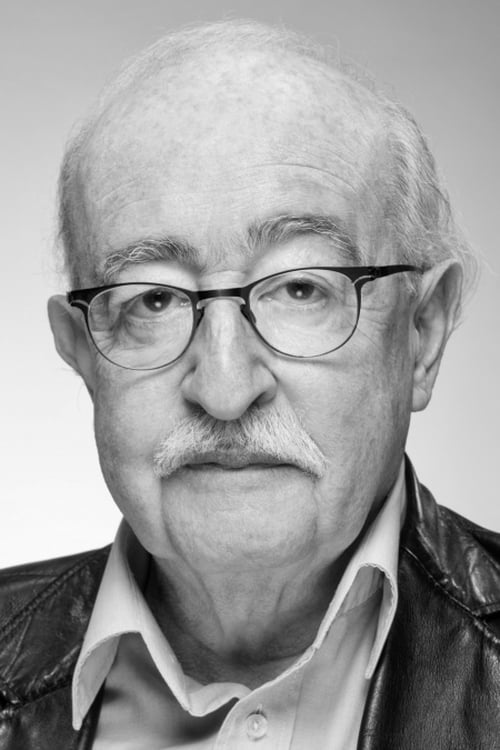
Juraj Herz (4 September 1934 – 8 April 2018) was a Slovak film director, actor, and scene designer, associated with the Czechoslovak New Wave movement of the 1960s. He is best known for his 1969 horror/black comedy The Cremator, often cited as one of the best Czechoslovak films of all time, though many of his other films achieved cult status. He directed for both film and television, and in the latter capacity he directed episodes of a French-Czech television series based on George Simenon's Maigret novels.
Early life and education
Herz was born in 1934 in Kežmarok, in modern-day Slovakia, to Jewish parents. He was a Holocaust survivor, having been imprisoned at the Ravensbrück concentration camp during his childhood. Roughly 60 members of his family perished during the Holocaust, but all of his immediate family members survived. After attending secondary school in Bratislava, he studied photography at the city's University of Applied Arts, going on to study directing and puppetry at the Theatre Faculty of the Academy of Performing Arts in Prague (DAMU) alongside Jan Švankmajer. He remained in Prague after he completed his studies to work at the Semafor Theatre and Barrandov Studios.
Film career
Herz was self-taught as a film director. His first experience working on films was as second-unit director under Zbyněk Brynych (Transport from Paradise; 1962) and Ján Kadár (The Shop on Main Street; 1965). Because he had attended DAMU rather than its sister film school, FAMU, Herz was initially not part of the core group of directors who would form the Czechoslovak New Wave. His 1965 short film The Junk Shop was excluded from the group's manifesto anthology Pearls of the Deep (1966) due to its running time.
Herz made his breakthrough with his 1969 film, The Cremator, based on a novel by Ladislav Fuks, starring Czech actor Rudolf Hrušínský as a demented crematorium manager who collaborates with the Nazis during World War II. The film was selected as the Czechoslovak entry for the Best Foreign Language Film at the 42nd Academy Awards, but was not accepted as a nominee. In 1972, it won the Festival de Cine de Sitges Best Film award, as well as awards for Hrušínský and cinematographer Stanislav Milota. Immediately banned by Communist censors after its premiere, The Cremator was not seen again in Czechoslovakia until after the Velvet Revolution in 1989, but achieved wide international acclaim and cult status. It was re-released in 2017.
From Wikipedia (CC BY-SA 4.0).