Overview
{{Infobox person
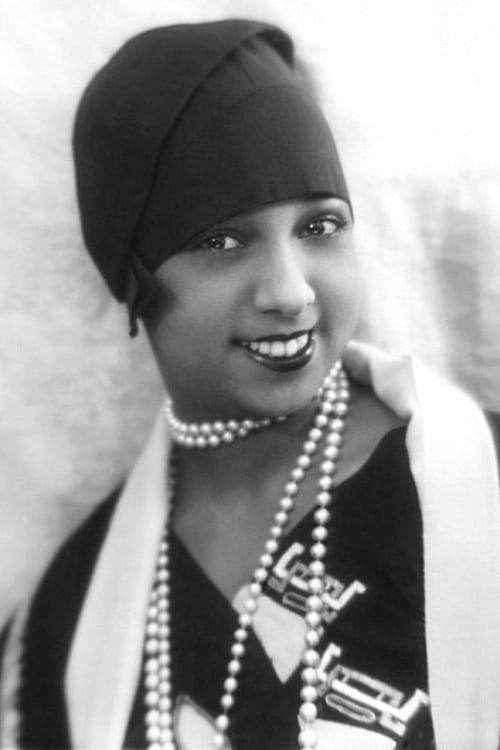
| name = Josephine Baker
| image = File:Baker Harcourt 1940 2.jpg
| caption = Baker in 1940
| birth_name = Freda Josephine McDonald
| birth_date =
| birth_place = St. Louis, Missouri, US
| death_date =
| death_place = Paris, France
| resting_place = Monaco Cemetery
| nationality = American (renounced)French (1937–1975)
| occupation = Vedette, singer, dancer, actress, civil rights activist, French Resistance agent
| years_active = 1921–1975
| spouse =
| partner = Robert Brady (1973–1975)
| children = 12; Jean-Claude Baker presented himself as her foster son (contested by the Baker children<ref>[https://www.sudouest.fr/dordogne/sarlat-la-caneda/je-lui-dois-bien-plus-que-ca-9224950.php Sud ouest, « Je lui dois bien plus que ça », 03/24, 2012]</ref>)
| signature = Signature de Joséphine Baker - Archives nationales (France).png
| module =
}}
Freda Josephine Baker (; June 3, 1906 – April 12, 1975), naturalised as Joséphine Baker, was an American-born French dancer, singer and actress. Her career was centered primarily in Europe, mostly in France. She was the first black woman to star in a major motion picture, the 1927 silent film Siren of the Tropics, directed by and .
During her early career, Baker was among the most celebrated performers to headline the revues of the in Paris. Her performance in the revue in 1927 caused a sensation in the city. Her costume, consisting of only a short skirt of artificial bananas and a beaded necklace, became an iconic image and a symbol both of the Jazz Age and the Roaring Twenties.
Baker was celebrated by artists and intellectuals of the era, who variously dubbed her the "Black Venus", the "Black Pearl", the "Bronze Venus", and the "Creole Goddess". Born in St. Louis, Missouri, she renounced her U.S. citizenship and became a French national after her marriage to French industrialist Jean Lion in 1937. She raised her children in France.
From Wikipedia (CC BY-SA 4.0).