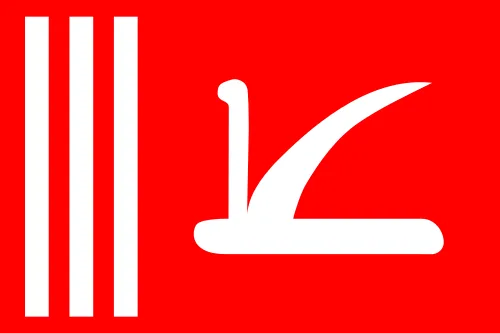
Overview
Jammu and Kashmir was a region formerly administered by India as a state from 1952 to 2019, constituting the southern and southeastern portion of the larger Kashmir region, which has been the subject of a dispute between India, Pakistan and China since the mid-20th century. The underlying region of this state were parts of the former princely state of Jammu and Kashmir, whose western districts, now known as Azad Kashmir, and northern territories, now known as Gilgit-Baltistan, are administered by Pakistan. The Aksai Chin region in the east, bordering Tibet, has been under Chinese control since 1962.
After the Government of India repealed the special status accorded to Jammu and Kashmir under Article 370 of the Indian constitution in 2019, the Parliament of India passed the Jammu and Kashmir Reorganisation Act, which contained provisions that dissolved the state and reorganised it into two union territories – Jammu and Kashmir in the west and Ladakh in the east, with effect from 31 October 2019. At the time of its dissolution, Jammu and Kashmir was the only state in India with a Muslim-majority population.
History
Establishment
After the Indo-Pakistani War of 1947–1948, the princely state of Jammu and Kashmir was divided between India (which controlled the regions of Jammu, Kashmir Valley, and Ladakh) and Pakistan (which controlled Gilgit–Baltistan and Azad Kashmir). Maharaja Hari Singh signed the Instrument of Accession on 26 October 1947 after an invasion by Pakistani tribesmen. Sheikh Abdullah was appointed as the Prime Minister of Jammu and Kashmir as part of an interim government by Maharaja Hari Singh in March 1948. In order to integrate the provisions of the instrument of accession relating to the powers of the state and Indian government, the Constituent Assembly of India drew up the draft provision named Article 306-A, which would later become Article 370.
From Wikipedia (CC BY-SA 4.0).