Overview
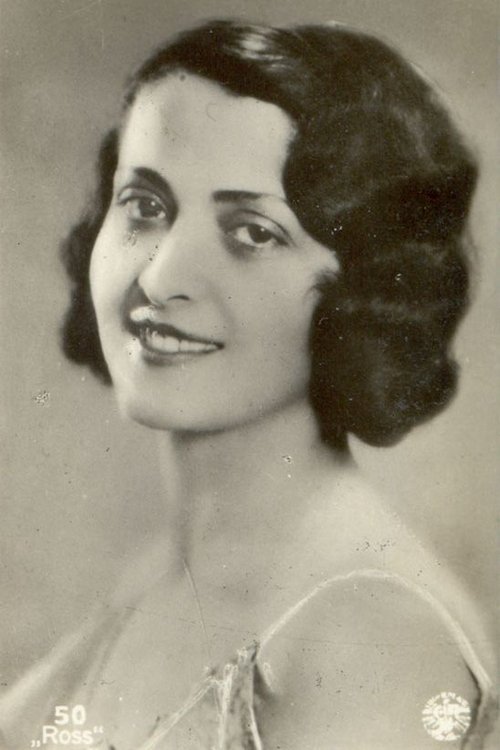
Irene Eisinger (8 December 1903 – 8 April 1994) was a German and British opera singer and film actress. Her career was closely linked to the foundation and the early years of the Glyndebourne Festival Opera.
Life and career
Irene Eisinger was born in Cosel, Silesia, Germany (now Koźle, now in the district of Kędzierzyn-Koźle, Poland). She was trained as a soubrette soprano and studied acting with Paula Mark-Neusser in Vienna and piano with G. Schönewald.
Operas and films
Her debuts – both in opera and film – took place in 1926. She played a minor role in Frederic Zelnik's silent movie Die Försterchristl and started singing leading roles in operas and operettas at the Stadttheater Basel in the north of Switzerland. In 1928 she was called to Berlin and within a short period became one of the favourite singers of conductor Otto Klemperer – first at the Kroll Opera House, later on at the prestigious Staatsoper Unter den Linden. Although best remembered for her soubrette roles in Mozart operas, especially Despina and Blonde, and as Ännchen in Weber's Der Freischütz, she achieved also great successes and admiration in Strauss operetta roles, particularly as Arsena in Der Zigeunerbaron and as Adele in Die Fledermaus. Musicologist Elizabeth Forbes describes her singing: "Her voice, bright-toned, light and very flexible, and her charming, diminutive appearance, invariably drew adjectives such as 'enchanting' and 'winsome' from the critics."
In 1930 came what can be considered her breakthrough in both Germany and Austria as she debuted as Adele in Max Reinhardt's version of Die Fledermaus, as Cherubino in Mozart's Le nozze di Figaro at the Salzburg Festival and again as Adele at the Vienna State Opera. Furthermore, in this year her first sound film was released, the light comedy Two Hearts in Waltz Time – with Eisinger as Anni Lohmeier and with the popular actor Willi Forst in a leading role. This film was the first foreign language film to be released with subtitles in the United States. Two further leading film parts followed in 1931: Leopoldine in Die lustigen Weiber von Wien and the title role in another Zelnik-version of Die Försterchristl, now with sound and singing.
From Wikipedia (CC BY-SA 4.0).