Overview
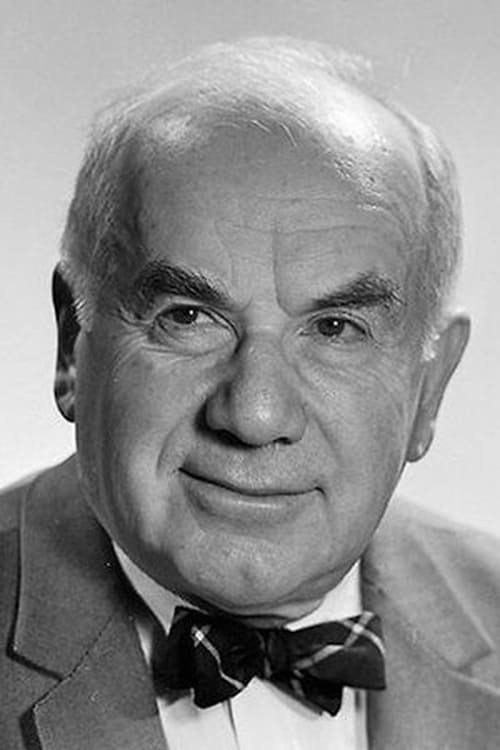
Igor Vladimirovich Ilyinsky (; 24 July 1901 – 13 January 1987) was a Soviet and Russian stage and film actor, director and comedian. Hero of Socialist Labour (1974) and People's Artist of the USSR (1949).
Early years
Igor Ilyinsky was born on 24 July 1901 in Moscow. At age 16 he entered the Theatre Studio of Theodore Komisarjevsky and in half a year already debuted on the professional stage in Komissarzhevskaya Theatre. His first theatre role was that of the "Old Man" in Aristophanes' play Lysistrata. In 1920, he joined the Vsevolod Meyerhold Theatre. The young actor's style was in correspondence with the principles of Meyerhold, and so Ilyinsky soon became the central actor of that theatre.
He worked with Meyerhold on several of his most famous productions: Mistery-Buffo (1921), The Forest (1924), The Magnanimous Cuckold (1926), Woe to Wit (1928), The Bedbug (1929). Alongside Erast Garin, he was the most prominent actor in the Meyerhold theater and this is where he learned the acting technique called Biomechanics.
Career in silent cinema
In the mid-1920s Ilyinsky started to appear in movies, where he also played vivid comic characters. In 1924, Yakov Protazanov featured him in his futuristic film Aelita, which was followed by his role in Protazanov's comedy The Tailor from Torzhok (1925). In 1926, he appeared in three films.“I can act on the roof of a train carriage, on the radiator of a moving car, on back of a galloping horse, or while swimming in the sea”.
1930s-1950s
In 1938 he joined the Maly Theatre that had been his favourite one since school years. Afterwards Ilyinsky stayed in the Maly Theatre for almost fifty years and even staged several plays there himself. Ilyinsky would later write that it was Russian classic literature that had helped him overcome the crisis and feeling that he had been unable to create new characters, different from the previous ones. An outstandingly prolific period in the actor's life was related to his work with the film director Grigori Aleksandrov. In 1938 Ilyinsky splendidly acted as Byvalov in the comedy Volga-Volga (for this role, he was awarded Stalin Prize in 1941). He deliberately avoided any comic traits in his character to create a common image of a red-tapist.
From Wikipedia (CC BY-SA 4.0).