Overview
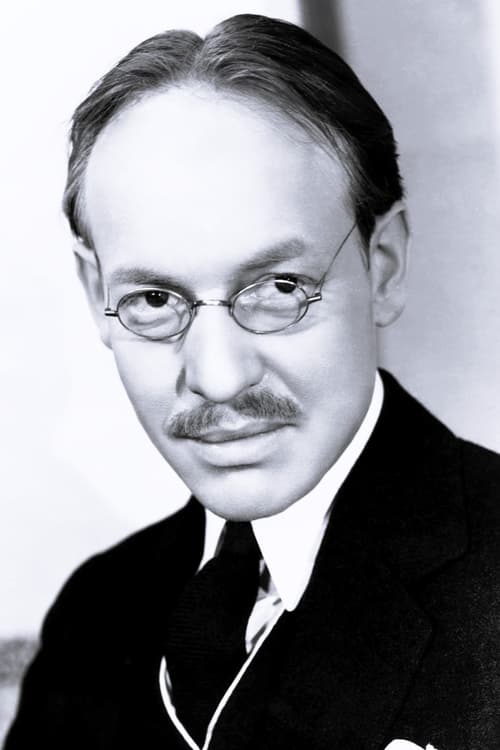
Byron Kay Foulger (August 27, 1898 – April 4, 1970) was an American character actor who over a 50-year career performed in hundreds of stage, film, and television productions.
Early years
Born in Ogden, Utah, Byron was the second of four children of Annie Elizabeth (née Ingebertsen) of Norway and Arthur Kay Foulger, a native of Utah who worked as a carpenter for the region's railroad company. Byron completed his primary and secondary education in local public schools before enrolling at the University of Utah, where he started acting through his participation in community theatre. Foulger was a member of the Church of Jesus Christ of Latter-day Saints.
Career
Foulger made his Broadway debut in March 1920 in a production of Medea featuring Moroni Olsen, and performed in four more productions with Olsen on the "Great White Way", back-to-back, ending in April 1922. He then toured with Olsen's stock company.
By the early 1930s, Foulger was working at the Pasadena Playhouse as an actor, assistant director, and director. In 1932 he began performing in films, initially in bit parts. His first three screen appearances are in Night World (1932), The Little Minister (1934), and The President's Mystery (1936), the latter based on a story by Franklin Delano Roosevelt. He also starred in an exploitation film, It's All in Your Mind (1937, released 1938), in which Foulger, a timid bookkeeper, samples the fast life of nightclubs and parties. Byron Foulger's motion picture career, however, did not begin in earnest until 1937, after he performed in December of that year on NBC Radio opposite Mae West in a racy "Adam and Eve" sketch on the network's popular variety program The Chase and Sanborn Hour. That sketch and another performance by West with Charlie McCarthy during a later segment of the same program resulted in her being banned from NBC programming until 1950. Foulger, who provided the voice of the serpent in the controversial biblical parody, was not banned for his brief supporting role; instead, his association with the sketch brought him widespread media attention and greater audience recognition. From that point on, he worked steadily in motion pictures.
From Wikipedia (CC BY-SA 4.0).