Overview
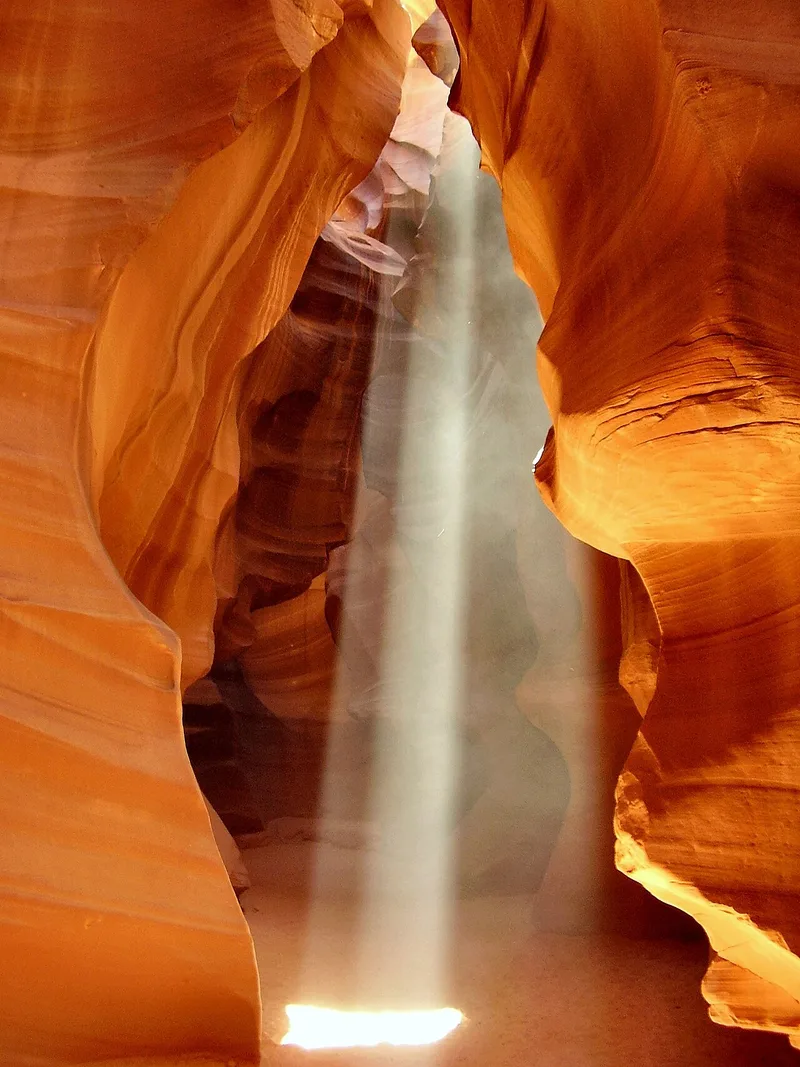
Navajo Upper Antelope Canyon is a slot canyon in the American Southwest, on Navajo land east of Lechee, Arizona. It includes six separate, scenic slot canyon sections on the Navajo Reservation, referred to as Upper Antelope Canyon (or The Crack), Rattle Snake Canyon, Owl Canyon, Mountain Sheep Canyon, Canyon X and Lower Antelope Canyon (or The Corkscrew). It is the primary attraction of Lake Powell Navajo Tribal Park, along with a hiking trail to Rainbow Bridge National Monument.
The Navajo name for Upper Antelope Canyon is , which means 'the place where water runs through the (Slot Canyon) rocks'. Lower Antelope Canyon is (called "Hasdestwazi" by the Navajo Parks and Recreation Department), or 'spiral rock arches'. Both are in the LeChee Chapter of the Navajo Nation. They are accessible by Navajo guided tour only.
Geology
Antelope Canyon was formed by the erosion of Navajo Sandstone due to flash flooding and other sub-aerial processes. Rainwater, especially during monsoon season, runs into the extensive basin above the slot canyon sections, picking up speed and sand as it rushes into the narrow passageways. Over time the passageways eroded away, deepening the corridors and smoothing hard edges to form characteristic "flowing" shapes.
Tourism and sightseeing
Antelope Canyon is a popular location for sightseers, and a source of tourism business for the Navajo Nation. It has been accessible by tour since 1983 by Pearl Begay Family and 1997, when the Navajo Tribe made it a Navajo Tribal Park. Besides the Upper and Lower areas, there are other slots in the canyon that can be visited, such as the Rattle Snake Canyon, Owl Canyon, Mountain Sheep Canyon which is also part of the same drainage as Antelope Canyon.
From Wikipedia (CC BY-SA 4.0).