Trump Sends 3-Word Message to Biden During Visit to East Palestine
Former President Donald Trump is sending a message to his successor about the Ohio town impacted by a train derailment. On Wednesday, a reporter asked Trump during his visit to East Palestine, Ohio, “What’s your message…
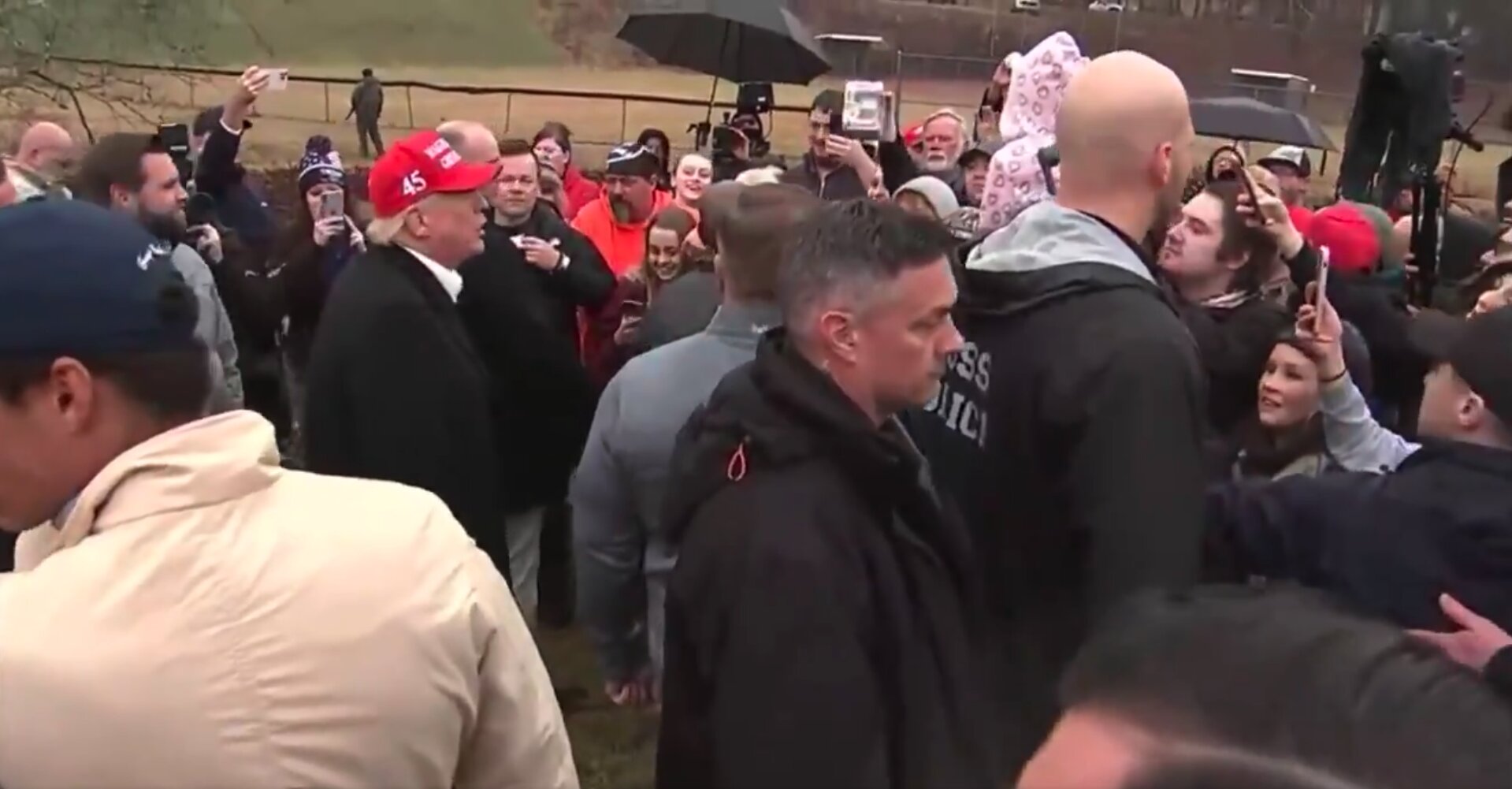
Former President Donald Trump is sending a message to his successor about the Ohio town impacted by a train derailment.
On Wednesday, a reporter asked Trump during his visit to East Palestine, Ohio, “What’s your message to Joe Biden?”
He responded with three words, saying, “Get over here.”
Watch the video below:
President Joe Biden has faced criticism for not traveling to East Palestine after a train carrying hazardous materials derailed there on Feb. 3.
Following the derailment, officials conducted a “controlled release” of vinyl chloride — a carcinogenic chemical.
Since then, there have been reports of 3,500 dead fish in local waterways. There have also been reports of chickens dying. Still, officials insist the town is safe to return to.
On Monday, East Palestine, Ohio, Mayor Trent Conaway appeared on Fox News and blasted Biden for visiting Ukraine and not his town.
“That was the biggest slap in the face. That tells you right now he doesn’t care about us,” Conaway said.
He went on, “So … he can send every agency he wants to, but I found that out this morning that he was in the Ukraine giving millions of dollars away to people over there, not to us, and I’m furious.”
The mayor added, “ Presidents Day in our country, he’s … over in Ukraine. So that tells you what kind of guy he is.”
In case you missed it:
During Trump’s visit, he also claimed federal officials were originally “intending to do absolutely nothing.”
“When I announced that I was coming, they changed their tune… We got them to move,” he added.
Federal officials have been accused of a slow response to the incident.
However, on Friday, the Federal Emergency Management Agency said it would deploy a Regional Incident Management Assistance Team (IMAT) to “support ongoing operations, including incident coordination and ongoing assessments of potential long-term recovery needs.”