
Sylvia Alice Earle (born August 30, 1935) is an American marine biologist, oceanographer, explorer, writer, and lecturer. She has been a National Geographic Explorer at Large (formerly Explorer in Residence) since 1998. Earle was the first chief scientist of the U.S. National Oceanic and Atmospheric Administration, and was named by Time Magazine as its first Hero for the Planet in 1998.
Earle is part of the group Ocean Elders, which is dedicated to protecting the ocean and its wildlife.
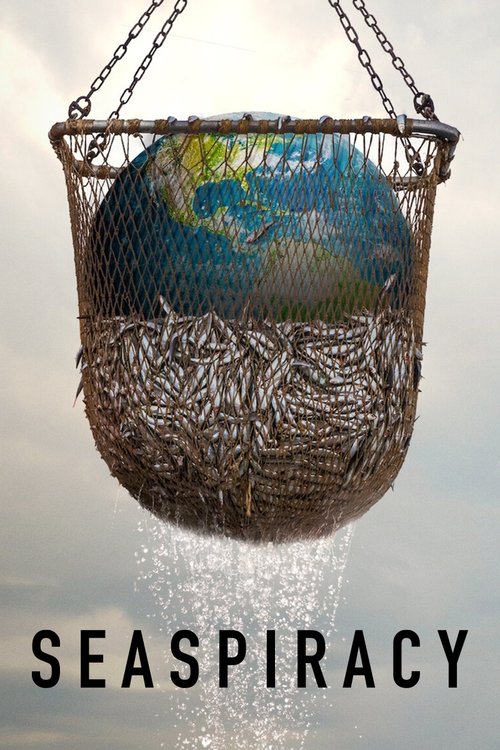
Earle gained a large amount of publicity when she was featured in Seaspiracy (2021), a Netflix Original documentary by British filmmaker Ali Tabrizi.
Earle eats a vegetarian diet. She describes the chemical build-up in carnivorous fish, the 90% depletion of populations of large fish, and references the health of oceans in her dietary decision. Also, she describes the seafood industry as "factory ships vacuuming up fish and everything else in their path. That's like using bulldozers to kill songbirds…".
In a discussion at the Good Food Conference in California, Earle warns of disappearing fish stocks, and that while coastal people's diets have included seafood for centuries, the commercial fishing industry no longer makes sense. She encourages transitions to plant-based diets as a solution.
Contents
Early life and education
Earle was born in 1935 in the Gibbstown section of Greenwich Township, Gloucester County, New Jersey, to Alice Freas (Richie) Earle and Lewis Reade Earle. Both her parents were enthusiastic about the outdoors and supportive of their daughter's early interests in the natural world. The family moved to Dunedin on the western coast of Florida during Earle's childhood. Earle received an associate degree from St. Petersburg Jr. College (1952), a Bachelor of Science degree from Florida State University (1955), a Master of Science (1956) and a Doctorate of Phycology (1966) from Duke University.
Sylvia Earle's life work has been shaped directly by Rachel Carson, whose talent she rhapsodizes about in the Introduction to the 2018 edition of Carson's 1951 best-seller, The Sea Around Us.
"Most remarkable to me is what she did imagine. Her writings are so sensitive to the feelings of fish, birds and other animals that she could put herself in their place, buoyed by the air or by water, gliding over and under the ocean's surface. She conveyed the sense that she was the living ocean…"
Career
Earle was a Radcliffe Institute Scholar (1967–1969) and a research fellow at Harvard University (1967–1981). After receiving her Ph.D. in 1966, she spent a year as a research fellow at Harvard, then returned to Florida as the resident director of the Cape Haze Marine Laboratory.
Earle was a research associate at the University of California, Berkeley (1969–1981). In 1969, she applied to join the Tektite Project, an installation fifty feet below the surface of the sea off the coast of the Virgin Islands which allowed scientists to live submersed in their area of study for up to several weeks. Although she had logged more than 1,000 research hours underwater, Earle was rejected from the program. The next year, she was selected to lead the first all-female team of aquanauts in Tektite II.
Earle was the Curator of Phycology at the California Academy of Sciences (1979–1986). In 1979, she made an open-ocean JIM suit dive, untethered, to the sea ocean floor near Oahu. She set the women's depth record of 381 metres (1,250 ft) which still holds to date. In 1979 she also began her tenure as the Curator of Phycology at the California Academy of Sciences, where she served until 1986.
From 1980 to 1984, she served on the National Advisory Committee on Oceans and Atmosphere.
In 1982 she and her later husband, Graham Hawkes, an engineer and submersible designer, founded Deep Ocean Engineering to design, operate, support and consult on piloted and robotic subsea systems. In 1985, the Deep Ocean Engineering team designed and built the Deep Rover research submarine, which operates down to 1,000 metres (3,300 ft). By 1986, Deep Rover had been tested and Earle joined the team conducting training off Lee Stocking Island in the Bahamas.
Earle left the company in 1990 to accept an appointment as Chief Scientist at the National Oceanic and Atmospheric Administration, where she stayed until 1992. She was the first woman to hold that position. During this post, given her expertise on the impact of oil spills, Earle was called upon to lead several research trips during the Persian Gulf War in 1991 to determine the environmental damage caused by Iraq's destruction of Kuwaiti oil wells.
Accomplishments and honors
1970: U.S. Department of Interior Conservation Service Award and Los Angeles Times Woman of the Year
1976: NOGI Award for Science
1980: Explorers Club Lowell Thomas Award
1981: Ordained as a Knight of the Order of the Golden Ark by the Prince of the Netherlands
1986: Set the women's record for a world solo dive depth and tie the overall record with Graham Hawkes
1990: Society of Woman Geographers gold medal
1991: American Academy of Achievement Golden Plate Award
1996: Lindbergh Foundation award, the Explorers Club Medal and Zonta International Honorary Member
1997: SeaKeeper Award at The International SeaKeepers Society's Bal de la Mer
1998: UN Global 500 Laureate and National Wildlife Federation Conservationist of the Year
2000: National Women's Hall of Fame, Library of Congress Living Legend, Women Divers Hall of Fame
2001: Robin W. Winks Award For Enhancing Public Understanding of National Parks
2004: International Banksia Award, the Richard Hopper Day Memorial Medal from the Philadelphia Academy of Sciences, and the Barnard College medal
2005: John P. McGovern Science and Society Award from Sigma Xi
Publications
Earle has authored more than 150 publications.
Earle, Sylvia & Al Giddings (1980). Exploring the Deep Frontier: The Adventure of Man in the Sea. National Geographic Society. ISBN 0-87044-343-7.
Earle, Sylvia (1996). Sea Change: A Message of the Oceans. Ballantine Books. ISBN 0-449-91065-2.
Earle, Sylvia (1999). Dive!: My Adventure in the Deep Frontier. National Geographic Children's Books. ISBN 0-7922-7144-0.
Earle, Sylvia (1999). Wild Ocean: America's Parks Under the Sea. National Geographic Society. ISBN 0-7922-7471-7.
Earle, Sylvia (2000). Sea Critters. National Geographic Children's Books. ISBN 0-439-28575-5.
Ellen, Prager & Earle, Sylvia (2000). The Oceans. McGraw-Hill. ISBN 0-07-138177-5.
Earle, Sylvia (2001). Hello, Fish!: Visiting the Coral Reef. National Geographic Children's Books. ISBN 0-7922-6697-8.
Earle, Sylvia (2001). National Geographic Atlas of the Ocean: The Deep Frontier. National Geographic. ISBN 0-7922-6426-6.
Earle, Sylvia (2003). Jump into Science: Coral Reefs. National Geographic Children's Books. ISBN 0-7922-6953-5.
Earle, Sylvia & Linda K. Glover (2008). Ocean: An Illustrated Atlas (National Geographic Atlas). National Geographic. ISBN 978-1-4262-0319-0.
Earle, Sylvia (2009). The World Is Blue: How Our Fate and the Ocean's Are One. National Geographic Books. ISBN 978-1-4262-0541-5.