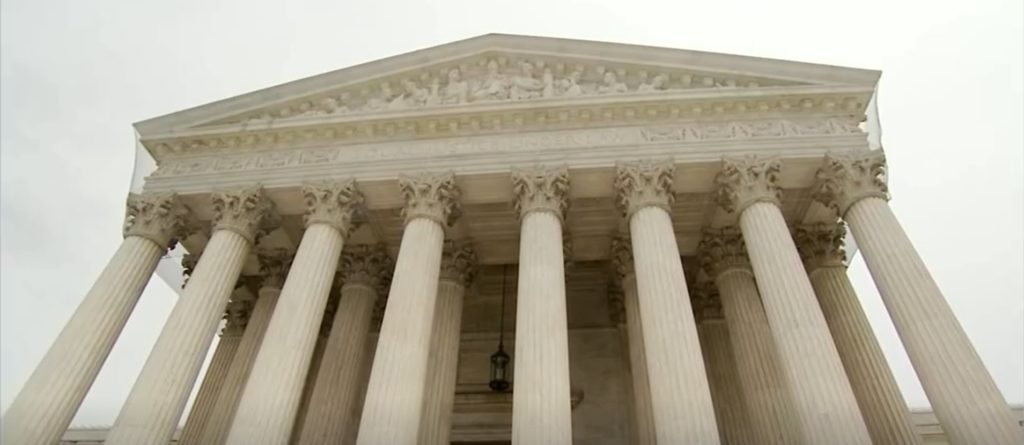
The National Labor Relations Board (NLRB) is an independent agency of the federal government of the United States that enforces U.S. labor law in relation to collective bargaining and unfair labor practices. Under the National Labor Relations Act of 1935, the NLRB has the authority to supervise elections for labor union representation and to investigate and remedy unfair labor practices. Unfair labor practices may involve union-related situations or instances of protected concerted activity.
The NLRB is governed by a five-person board and a general counsel, all of whom are appointed by the president with the consent of the Senate. Board members are appointed for five-year terms and the general counsel is appointed for a four-year term. The general counsel acts as a prosecutor and the board acts as an appellate quasi-judicial body from decisions of 36 administrative law judges, as of November 2023. The NLRB is headquartered at 1015 Half St. SE, Washington, D.C., and it has over 30 regional, sub-regional, and residential offices throughout the United States.
Contents
History
1933–1935: First collective bargaining organization National Labor Board
The history of the National Labor Relations Board (NLRB) can be traced to enactment of the National Industrial Recovery Act in 1933. Section 7(a) of the act protected collective bargaining rights for unions, but was difficult to enforce. The NLRB was not given monitoring powers. A massive wave of union organizing was punctuated by employer and union violence, general strikes, and recognition strikes. The National Industrial Recovery Act was administered by the National Recovery Administration (NRA). At the outset, NRA Administrator Hugh S. Johnson believed that Section 7(a) would be self-enforcing, but the tremendous labor unrest proved him wrong. On August 5, 1933, President Franklin D. Roosevelt announced the establishment of the National Labor Board, under the auspices of the NRA, to implement the collective bargaining provisions of Section 7(a).
The National Labor Board (NLB) established a system of 20 regional boards to handle the immense caseload. Each regional board had a representative designated by local labor unions, local employers, and a "public" representative. All were unpaid. The public representative acted as the chair. The regional boards could hold hearings and propose settlements to disputes. Initially, they lacked authority to order representation elections, but this changed after Roosevelt issued additional executive orders on February 1 and February 23, 1934.
The NLB, too, proved ineffective. Congress passed Public Resolution No. 44 on June 19, 1934, which empowered the president to appoint a new labor board with authority to issue subpoenas, hold elections, and mediate labor disputes. On June 29, President Roosevelt abolished the NLB and in Executive Order 6763 established a new, three-member National Labor Relations Board.
Lloyd K. Garrison was the first chairman of the National Labor Relations Board (often referred to by scholars the "First NLRB" or "Old NLRB"). The "First NLRB" established organizational structures which continue at the NLRB in the 21st century. This includes the regional structure of the board; the use of administrative law judges and regional hearing officers to initially rule on cases; an appeal process to the national board; and the use of expert staff, organized into various divisions, at the national level. Formally, Garrison established the:
1935–1939: Constitutionality, communism, and organizational changes
The first chairman of the "new" NLRB was J. Warren Madden, professor of the University of Pittsburgh School of Law. Madden largely confirmed the previous structure of the "first NLRB" by formally establishing five divisions within the agency:
Administrative Division: Oversaw all administrative activities of national and regional boards and their finances; led by the secretary
Economic Division: Analyzed economic evidence in cases; made studies of economics of labor relations for use by board and courts; supervised by the chief industrial economist; also known as the Technical Service Division
Legal Division: Handled NLRB either decisions appealed to courts or cases in which NLRB sought enforcement of its decisions; overseen by general counsel (hired by NLRB board); has two subdivisions:
Litigation Section: Advised national and regional boards, prepared briefs, worked with Justice Department
Review Section: Analyzed regional hearings and decisions; issued interpretations of law; prepared forms; drafted regulations
Publications Division: Handled all press and public inquiries; published decisions of national and regional boards and their rules and regulations; overseen by the director of publications
Trial Examining Division: Held hearings before the national board; overseen by the chief trial examiner
Benedict Wolf served as first secretary of the NLRB, Charles H. Fahy the first general counsel, and David J. Saposs the first chief industrial economist. Wolf resigned in mid-1937, and Nathan Witt, an attorney in the Legal Division, was named Secretary in October.
1940–1945: Economics Division and World War II
Another major structural change occurred at the same time that Madden left the NLRB. The Smith Committee's anti-communist drive also targeted David J. Saposs, the NLRB chief industrial economist. Saposs had been surreptitiously assessed by members of the Communist Party USA for membership, and rejected as a prospect. But Smith and others attacked Saposs as a communist, and Congress defunded his division and his job on October 11, 1940. Although the Smith committee's investigation proved critical, the disestablishment of the Economic Division was due to many reasons—both internal and external to the NLRB, and only some of which involved allegations of communist infiltration. As historian James A. Gross observed:
The Division was eliminated for all kinds of reasons which had nothing to do with the merits and importance of its work: political pressures and maneuverings, jealousy and empire building between and among lawyers and economists inside the Board, opposition to leftist ideologies, a personal attack on the Chief Economist, David Saposs, and a mighty hostility to the administrative process.
The loss of the Economic Division was a major blow to the NLRB. It had a major tactical impact: Economic data helped the NLRB fulfill its adjudicatorial and prosecutorial work in areas such as unfair labor practices (ULPs), representation elections, and in determining remedial actions (such as reinstatement, back pay awards, and fines). Economic data also undermined employer resistance to the agency by linking that opposition to employer ULPs. The loss also left the board dependent on the biased information offered by the parties in dispute before it, leading to poor decision-making and far less success in the courts. It also had a major strategic impact: It left the board unable to determine whether its administration of the law was effective or not. Nor could the board determine whether labor unrest was a serious threat to the economy or not. As labor historian Josiah Bartlett Lambert put it: "Without the Economic Research Division, the NLRB could not undertake empirical studies to determine the actual impact of secondary boycotts, jurisdictional strikes, national emergency strikes, and the like." The Economic Division was critical to a long-range NLRB process to lead to the long-term evolution of industrial labor relations in the U.S., but that goal had to be abandoned. Most importantly, however, the evisceration of the Economic Division struck at the fundamental purpose of federal labor law, which was to allow experts to adjudicate labor disputes rather than use a legal process. With this data and analysis, widespread skepticism about the board's expertise quickly spread through Congress and the courts. It also left the board largely unable to engage in rulemaking, forcing it to make labor law on an inefficient, time-consuming case-by-case basis. As of 1981, NLRB was still the only federal agency forbidden to seek economic information about the impact of its activities.
1947–1965: Taft–Hartley
A major turning point in the history of the NLRB came in 1947 with passage of the Taft–Hartley Act. Disruptions caused by strikes during World War II as well as the huge wave of strikes that followed the end of the war fueled a growing movement in 1946 and 1947 to amend the NLRA to correct what critics saw as a pro-labor tilt in federal law. Drafted by the powerful Republican senator Robert A. Taft and the strongly anti-union representative Fred A. Hartley Jr., the Taft–Hartley Act banned jurisdictional strikes, wildcat strikes, political strikes, secondary boycotts, secondary picketing, mass picketing, union campaign donations made from dues money, the closed shop, and unions of supervisors. The act also enumerated new employer rights, defined union-committed ULPs, gave states the right to opt out of federal labor law through right-to-work laws, required unions to give an 80-days' strike notice in all cases, established procedures for the president to end a strike in a national emergency, and required all union officials to sign an anti-Communist oath. Organizationally, the act made the general counsel a presidential appointee, independent of the board itself, and gave the general counsel limited powers to seek injunctions without referring to the Justice Department. It also banned the NLRB from engaging in any mediation or conciliation, and formally enshrined in law the ban on hiring personnel to do economic data collection or analysis.
In August 1947, Robert N. Denham became the NLRB's general counsel. He held "conservative views" and wielded "considerable influence" on labor-management relations and interpretations of the newly passed Taft–Hartley Act. In 1950, US president Harry S. Truman fired Denham (The New York Times: "left at the behest of the President"). While NLRB general counsel, Denham received considerable news coverage as a "quasi-Republican". Nominated by President Truman, Denham received unanimous approval by the US Senate Labor Committee. He received "full and independent powers to investigate violations, file complaints and prosecute offenders before the board." In August 1947, he supported an "Anti-Red Affidavit Rule" and so sided with US senator Robert A. Taft. In October 1947, the NLRB overruled him, which meant that top officers of the American Federation of Labor (AFL) and Congress of Industrial Organizations (CIO) would not have to sign an anti-Communist oath per the Taft–Hartley Act.
Herzog publicly admitted the need for some change in the NLRA, but privately he opposed the proposed Taft–Hartley amendments. He felt the communist oath provisions were unconstitutional, that the amendments would turn the NLRA into a management weapon, that creation of an independent general counsel would weaken the NLRB, and that the law's dismantling of the agency's economic analysis unit deprived the NLRB of essential expertise. Nonetheless, Congress overrode Truman's veto of the Taft–Hartley Act on June 23, 1947, and the bill became law.
1966–2007: Expansion of jurisdiction
In 1974, Congress amended the National Labor Relations Act to protect employees of non-profit hospitals and allow the board to adjudicate their claims. The 1935 Wagner Act had protected non-profit hospital workers, but the Taft–Hartley Act removed those protections in 1947. Congress had expressed concern about the impact of potential labor strikes on patient care, but decided that the proposed legislation was an appropriate compromise.
In July 1987, the board began work on a comprehensive regulation for collective-bargaining units in health care organizations. The board held 14 days of hearings and considered testimony from 144 witnesses and over 1,800 public comments, and finally issued the rule in April 1989. The rule was challenged in court and ultimately reached the Supreme Court, which unanimously upheld the rule in April 1991.
2007–2014: Lack of quorum and legal challenges
From December 2007 to mid-July 2013, the agency never had all five members, and not once did it operate with three confirmed members, creating a legal controversy. Three members' terms expired in December 2007, leaving the NLRB with just two members—Chairman Wilma B. Liebman and Member Peter Schaumber. President George W. Bush refused to make some nominations to the board and Senate Democrats refused to confirm those which he did make.
On December 28, 2007, just before the board lost its quorum, the four members agreed to delegate their authority to a three-person panel per the National Labor Relations Act. Only Liebman and Schaumber remained on the board, but the board concluded that the two constituted a quorum of the three-person panel and thus could make decisions on behalf of the board. Liebman and Schaumber informally agreed to decide only those cases which were in their view noncontroversial and on which they could agree, and issued almost 400 decisions between January 2008 and September 2009.
In April 2009, President Obama nominated Craig Becker (associate general counsel of the Service Employees International Union), Mark Gaston Pearce (a member on the Industrial Board of Appeals, an agency of the New York State Department of Labor), and Brian Hayes (Republican Labor Policy Director for the Senate Committee on Health, Education, Labor and Pensions) to fill the three empty seats on the NLRB.
The U.S. Courts of Appeals for the First, Second, and Seventh Circuits upheld the two-member NLRB's authority to decide cases, while the U.S. Court of Appeals for the D.C. Circuit rejected its authority. In September 2009, the Justice Department asked the U.S. Supreme Court to immediately hear its appeal from the Seventh Circuit's decision in New Process Steel, L.P. v. NLRB and settle the dispute, given the high stakes involved. The Supreme Court granted certiorari in October and agreed to decide the issue.
Becker's nomination appeared to fail on February 8, 2010, after Republican Senators (led by John McCain) threatened to filibuster his nomination. President Obama said he would consider making recess appointments to the NLRB due to the Senate's failure to move on any of the three nominations. On March 27, 2010, Obama recess appointed Becker and Pearce.
2015–2024
In an August 2016 case between Columbia University and a union Graduate Workers of Columbia, the NLRB ruled that graduate students who worked as teaching or research assistants at private universities have the right to unionize under federal labor law.
In 2017, the NLRB's leadership shifted when President Donald Trump nominated and the Senate confirmed new members, changing the board's composition to a 3–2 Republican majority. In December, the NLRB overturned an Obama-era decision that expanded the joint employer standard, which held employers liable for labor violations committed by their subcontractors or franchisees. However, this decision was later vacated due to an ethical conflict because board member William Emanuel had ties to one of the law firms arguing the case. The NLRB also issued a decision in the Boeing Company case which made it easier for employers to justify policies that restrict employees' rights to engage in protected concerted activity.
In January 2019, the NLRB issued a decision that clarified the test for determining whether workers are independent contractors or employees under the National Labor Relations Act (NLRA).
In 2020, the NLRB created a rule codifying the joint employer standard that had been overturned in 2017, making it easier for employees to hold companies liable for labor violations committed by their subcontractors or franchisees.
In 2023, in response to the company Cemex having been found guilty of illegal labor practices by interfering with a union election, the NLRB instated a new policy meant to deter election interference. Under the new policy if a majority of workers demonstrate support for a union, the company must recognize them or ask the NLRB to conduct an election. However, if they commit unfair labor practices, the union will automatically be recognized, and the company will be required to bargain. This differs from the then-defunct Joy Silk standard, which had required employers to recognize a union unless they had a good-faith doubt that the union had majority employee support. Nonetheless, Cemex was noted as a significant strengthening of union protections and a partial revival of Joy Silk.
In 2024, SpaceX, Amazon, and Trader Joe's argued in various court filings that the NLRB was unconstitutional by the theory that it violates separation of powers and due process.
2025–present
After taking office, Trump fired two NLRB officials, including board member Gwynne Wilcox, the first NLRB member to be fired in the 90 years of the agency' existence. This action not only caused the board to fall below its quorum (of three members), but it may also have violated the National Labor Relations Act, as board members are only supposed to be removed by the president for "neglect of duty or malfeasance in office". As of mid-February 2025, the board had not said publicly when it intended to have a quorum again. All NLRB investigations, including 24 into Elon Musk's companies, cannot move forward until Trump nominates new members. On February 5, 2025, Wilcox filed suit against Trump and NLRB chair Marvin Kaplan challenging her removal, and on March 6, Judge Beryl Howell ruled that Trump's action was null and void and Wilcox was effectively reinstated. On April 9 the Supreme Court issued a temporary administrative stay of the reinstatement.
In early March, the NLRB came under targeting by the Department of Government Efficiency, who with law enforcement escort, accessed the board's databases for information, including sensitive information on unionizing employees, ongoing legal cases, labor investigations, and corporate secrets. IT staff on site were given little indication of what was happening apart from that DOGE demanded top level IT access to read, write, and copy data unrestricted; before said IT staff were told to stay out of DOGE's way. DOGE engineers then shortly thereafter installed a 'container', which allowed engineers backdoor access and to work invisibly. DOGE then proceeded to attempt to cover their tracks by turning off monitoring tools and deleting records of their access. Soon after, the NLRB began detecting suspicious login attempts from Russian IP addresses; twenty attempts using the precise login credentials created by DOGE began within 15 minutes of the accounts being set up. The whistle blower also revealed that he had received a threatening note, including apparent drone photos of him walking his dog.
The IT team subsequently tried to launch a formal security breach investigation, requesting help from the Cybersecurity and Infrastructure Security Agency in the process; however these efforts were quickly disrupted without explanation.
Tim Bearese, the NLRB's acting press secretary, issued a statement denying that DOGE had ever requested or been granted access to the NLRB's systems, and that no security breaches had occurred. White House spokesperson Anna Kelly subsequently stated that DOGE employees were active in a number of federal agencies, including the NLRB
Structure
In 1947, the Taft–Hartley Act created a formal administrative distinction between the board and the general counsel of the NLRB. In broad terms, the general counsel is responsible for investigating and prosecuting unfair labor practice claims and for the general supervision of the NLRB field offices. The general counsel is appointed by the president to a four-year term and independent from the board; it has limited independence to argue for a change in the law in presenting cases to the board. The general counsel oversees four divisions: the Division of Operations Management, the Division of Administration, the Division of Advice, and the Division of Enforcement Litigation.
The board, on the other hand, is the adjudicative body that decides the unfair labor practice cases brought to it. Once the board has decided the issue, it is the general counsel's responsibility to uphold the board's decision, even if it is contrary to the position it advocated when presenting the case to the board. The board is also responsible for the administration of the act's provisions governing the holding of elections and resolution of jurisdictional disputes. It is a reactive and not a proactive power. The NLRB rarely promulgates administrative rules.
The board has more than thirty regional offices. The regional offices conduct elections, investigate unfair labor practice charges, and make the initial determination on those charges (whether to dismiss, settle, or issue complaints). The board has jurisdiction to hold elections and prosecute violations of the act in Puerto Rico and American Samoa.
Jurisdiction
The board's jurisdiction is limited to private sector employees and the United States Postal Service; other than Postal Service employees, it has no authority over labor relations disputes involving governmental, railroad and airline employees covered by the Adamson Railway Labor Act, or agricultural employees. On the other hand, in those parts of the private sector its jurisdictional standards are low enough to reach almost all employers whose business has any appreciable impact on interstate commerce.
Processing of charges
Charges are filed by parties against unions or employers with the appropriate regional office. The regional office will investigate the complaint. If a violation is believed to exist, the region will take the case before an administrative law judge who will conduct a hearing. The decision of the administrative law judge may be reviewed by the five member board. Board decisions are reviewable by United States Courts of Appeals. The board's decisions are not self-executing: it must seek court enforcement in order to force a recalcitrant party to comply with its orders. (For greater detail on this process see the entry for unfair labor practice.)
General counsel
Lafe Solomon was named acting general counsel on June 21, 2010. His nomination was sent to the Senate on January 5, 2011. Solomon's authority came into question on August 13, 2013, when Judge Benjamin Settle for the United States District Court for the Western District of Washington denied a petition for injunctive relief, ruling that Solomon had not been properly appointed under the Federal Vacancies Reform Act of 1998 (FVRA). Although other district courts had enforced Solomon's requests, Settle's decision called into question all of Solomon's activity since June 21, 2010, focusing on subsections (a)(1) and (2) of the FVRA; some pundits claimed that Solomon's appointment was allowed under subsection (a)(3). President Obama withdrew Solomon's nomination.
On July 31, 2013, President Obama nominated former NLRB nominee Richard Griffin as general counsel, calling Griffin "a kind of prosecutor at the board" who would fill "one of the most critical roles at the agency." The Senate approved Griffin's nomination on October 29, 2013, by a vote of 55 to 44.
Peter B. Robb was nominated by President Donald Trump in September 2017 and was confirmed by the U.S. Senate on November 8, 2017. He was sworn in as general counsel of the National Labor Relations Board on November 17, 2017, for a four-year term. Immediately following President Joe Biden's inauguration on January 20, 2021, the White House sent a letter to Robb requesting his resignation. Just hours later, Robb refused. He was fired that evening. Unions had wished for Robb to be replaced so that previous agency procedure could be restored; supporters of the firing argued that it was legal, citing the recent Supreme Court decision in Seila Law LLC v. Consumer Financial Protection Bureau (2020). The general counsel had never been fired previously.
On January 25, 2021, President Biden appointed Peter Sung Ohr, a veteran employee of the NLRB, to serve as acting general counsel. On February 17, 2021, Biden nominated Jennifer Abruzzo, a former acting general counsel of the NLRB, to serve as the new general counsel. Her nomination was confirmed by the Senate on July 21, 2021, in a 51–50 vote, with Vice President Kamala Harris breaking the tie in her favor. Her four-year team in office began on July 22, 2021.
Board members
Current board members
The current board members as of August 17, 2026:
Recent appointments
On January 25, 2017, President Donald Trump appointed Philip Miscimarra the acting chairman of the NLRB. Miscimarra's term expired on December 16, 2017. Marvin Kaplan succeeded him as NLRB chairman on December 21, 2017. Kaplan was replaced as chairman in April 2018 by John F. Ring.
President Trump announced on March 2, 2020, that he would renominate Republican Marvin Kaplan and Democrat Lauren McGarity McFerran to seats on the board. On July 29, 2020, Kaplan was confirmed by the Senate by a vote of 52–46 to a second term of five years expiring August 27, 2025, and McFerran was confirmed by the Senate by a vote of 53–42 to a second term of five years expiring December 16, 2024.
In his second term, President Trump nominated Scott Mayer and James Murphy in July 2025 to fill two vacant seats on the NLRB. On December 18, 2025, the Senate confirmed both Mayer and Murphy, restoring a quorum to the NLRB.
On January 20, 2021, President Joe Biden appointed Democratic member Lauren McFerran as chair of the NLRB.
Biden subsequently nominated Gwynne Wilcox to fill the then vacant Carmody seat on the board and David Prouty to replace William Emanuel as holder of the Smith seat when the latter's term expires in August 2021. Both nominees have strong ties to organized labor and have represented unions. They received Senate confirmation on July 28, 2021. On September 6, 2023, Wilcox was confirmed by the Senate for a second 5-year term.
Past board members
Source:
Chair
The president designates one member of the board to serve as chairman. Chairmen serve at the pleasure of the president, and the president can designate another member as chairman at any time.
The chairman's powers are limited. The chairman, like other board members, has a chief legal counsel and a legal staff. Except for certain limited and purely administrative functions (such as being the recipient of appeals or Freedom of Information Act requests), one former NLRB chairman has said "the chairmanship—given the authority of the general counsel to appoint regional staff and recommend regional directors to the entire board (not just to the chairman)—is more like a bully pulpit than a position of authority." The chairman does, however, work with the Office of Management and Budget to craft the NLRB's budget proposal to Congress, may propose to the board changes to NLRB procedures and guidance manuals, and may propose that the board engage in rulemaking.
From 1935 to 1953, it was customary for the chairman (like all members of the NLRB) to be a neutral career government employee rather than an advocate of either labor unions or management. President Dwight Eisenhower's appointment of Guy Farmer in 1953 broke this two-decade-old tradition (Farmer was a management attorney). Presidents John F. Kennedy and Lyndon B. Johnson both returned to the tradition of appointing neutral third parties to the position of board chairman, but President Richard M. Nixon appointed a management-side attorney. The board as a whole was under intense Congressional scrutiny from its inception until the 1960s. This ended in the 1960s and 1970s, but resumed in the 1980s. Subsequent appointments to the position of chairman have been heavily partisan and from either a strongly pro-union or pro-management position.