Overview
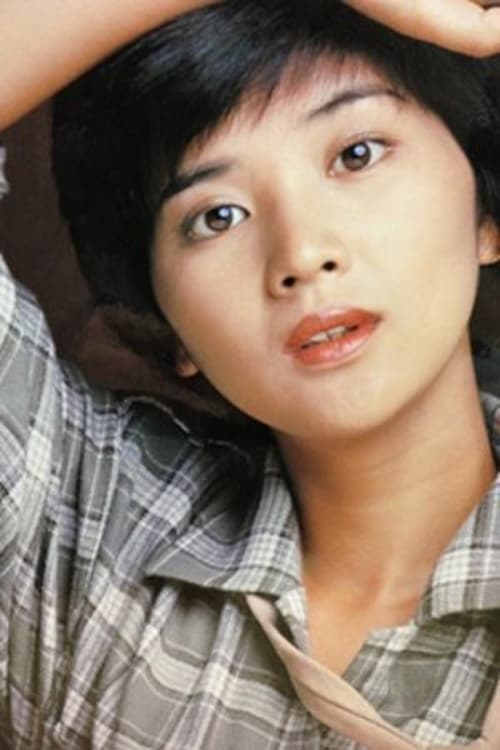
is a Japanese singer and actress. She was part of a music trio in 1973, which included Momoe Yamaguchi and Masako Mori. Sakurada then became successful in a solo music career, with 18 top ten singles in the 1970s. Her acting career ran from 1973 to 1993. She received multiple awards for her acting roles, including the Hochi Film Award, Award of the Japanese Academy, Kinema Junpo Award, and Mainichi Film Concours. Following her marriage, in a Blessing ceremony of the Unification Church in 1992, she retired from performing. In 2013, Junko Sakurada made a comeback.
Biography
Sakurada was born in 1958. She is a singer and actress. In 1973, she was part of "a hit female trio", which also included musicians Momoe Yamaguchi and Masako Mori. The music trio became popular as part of the television program Producing the Stars (Star Tanjō!); they were known as "The Trio of Third-Year Junior High School Students" ("Hana no Chu 3 Trio"). According to Japan Pop!: Inside the World of Japanese Popular Culture, after this experience in a music group, she went off on her own to develop a solo music career, and became a megastar. Cruising the Anime City: An Otaku Guide to Neo Tokyo described Sakurada as a 1970s music idol, like Pink Lady and Linda Yamamoto.
Throughout the 1970s she released a string of hit singles; nine top 5 singles, and in total eighteen top 10 singles of which "Hajimete no Dekigoto" (First Affair) sold best, grossing over 527,000 copies according to Oricon and peaking at number one. After winning the 4th edition of the Star Tanjō! contest in 1972, with highest ever points and jury votes, she released her first single in February 1973 called "Tenshi Mo Yume Miru" (The Dreams of an Angel) which was written by Yu Aku, and sold over 120,000 copies while peaking at number 12. With the release of her third single, "Watashi No Aoi Tori" (My Bluebird), she won the prestigious Best Newcomer award the 15th edition of the Japan Record Award. In the winter of 1973 following 1974 the single "Hana Monogatari" (Flower Fairy Tales) was her first top ten hit single, which sold over 237,000 copies. She participated for the first time at the 25th edition of the Kōhaku Uta Gassen festival in 1974, with her hit single "Kiiroi Ribbon" (Yellow Ribbon). She would perform for a total of 9 times at the festival.
From Wikipedia (CC BY-SA 4.0).