Overview
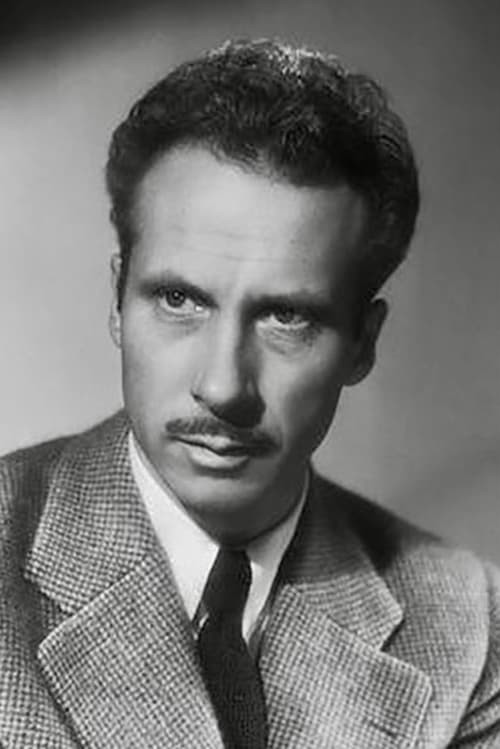
Jacques Becker (; 15 September 1906 – 21 February 1960) was a French film director and screenwriter. His films, made during the 1940s and 1950s, encompassed a wide variety of genres, and they were admired by some of the filmmakers who led the French New Wave movement.
Biography
Born in Paris, Becker was from an upper-middle-class background. His father Louis Becker, from Lorraine, was corporate director for Fulmen, a battery manufacturer; his mother, Margaret Burns, of Scottish and Irish descent, managed a fashion house in rue Cambon near Chanel in Paris. He was educated at the Lycées Condorcet and Carnot and then at the École Bréguet. Becker was reluctant to pursue a business career like his father and at the age of 18 he went to New York. On a transatlantic liner he met the film director King Vidor who offered him a job but Becker turned it down.
Back in France Becker developed a friendship with Jean Renoir, whom he had first met in 1921 through their mutual acquaintance with the Cézanne family, and they discovered a shared enthusiasm for sports cars and jazz music as well as films. In 1929 Becker took a small acting role in Renoir's film Le Bled, and he went on to become Renoir's assistant for nine of his films of the 1930s. He also made brief appearances in some of them, such as La Grande Illusion (in which he played an imprisoned English officer who smashes his watch rather than allow the Germans to have it).
Becker had his first chance of directing a film of his own in 1939 with L'Or du Cristobal, but it ran into difficulties and he left the production after three weeks. After the outbreak of WW2 and the German invasion of France, Becker was captured and spent a year in a prisoner-of-war camp in Pomerania before getting released. Returning to occupied France, he was able to make his proper first feature, Dernier Atout (1942), thanks to a friend who was setting up an independent production company. Some of the filming of Dernier Atout took place around Nice on the Côte d'Azur and Becker used the opportunity to establish links between an anti-Nazi group of film-makers there and the Parisian resistance. In 1943 he was one of the film-makers who set up the Comité de libération du cinéma français to make preparations for the cinema after the war, and in the following year they organised filming of the uprising in Paris for the documentary La Libération de Paris.
From Wikipedia (CC BY-SA 4.0).