Overview
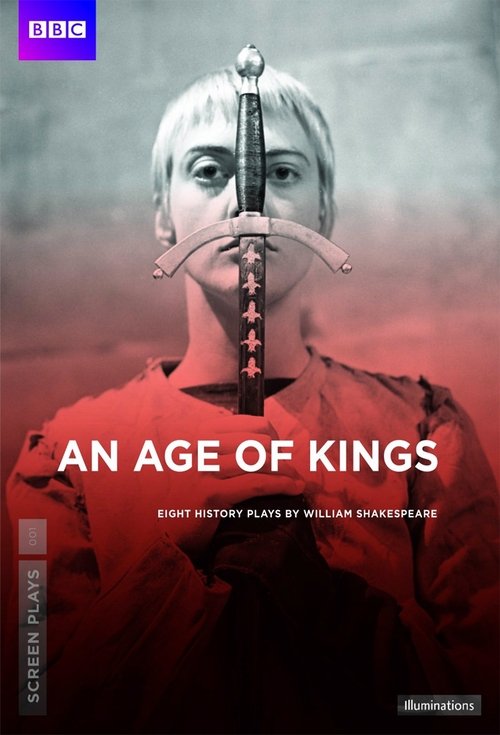
An Age of Kings is a fifteen-part serial adaptation of the eight sequential history plays of William Shakespeare (Richard II, 1 Henry IV, 2 Henry IV, Henry V, 1 Henry VI, 2 Henry VI, 3 Henry VI and Richard III), produced and broadcast in Britain by the BBC in 1960. The United States broadcast of the series the following year was hosted by University of Southern California professor Frank Baxter, who provided an introduction for each episode specifically tailored for the American audience. At the time, the show was the most ambitious Shakespearean television adaptation ever made, and was a critical and commercial success in both the UK and the US.
Performed live, all episodes were telerecorded during their original broadcasts and, for their success and cultural significance, have survived intact.
Introduction
The concept for the series originated in 1959 with Peter Dews, a veteran BBC producer and director, who was inspired by a 1951 Anthony Quayle-directed production of the Henriad at the Theatre Royal and a 1953 Douglas Seale-directed repertory cast production of the three parts of Henry VI at the Birmingham Repertory Theatre and subsequently, The Old Vic. At the time, An Age of Kings was the most conceptually ambitious Shakespeare project ever undertaken, containing over 600 speaking roles, and requiring thirty weeks of rehearsal prior to performance. Each episode cost roughly £4,000. Adapter Eric Crozier cut the text of the eight plays into sixty-, seventy-, seventy-five- and eighty-minute episodes, with each episode roughly corresponding to half of each play. The only exception to this was 1 Henry VI, which was reduced to a single hour-long episode.
Dews sourced most of his cast from The Old Vic, using many of the same actors who had appeared in Seale's production, although in different roles (Paul Daneman for example, played Henry VI for Seale, but played Richard III in Age of Kings). Dews also used actors with whom he had worked whilst directing undergraduate plays at Oxford University. He gave the job of directing to his assistant, Michael Hayes. The initial plan was for the series to be the inaugural production in the BBC's newly built BBC Television Centre in London, but when the studios opened, the series was not ready, and was instead broadcast from the Riverside Studios in Hammersmith.
From Wikipedia (CC BY-SA 4.0).