Video Games That Defined Your Childhood
From pixelated platformers to sprawling sandboxes, these are the games that ate up countless afternoons and shaped a generation's idea of fun. Vote for the ones that truly defined your childhood.
What counts: Ranking reflects overall childhood impact — a mix of cultural staying power, nostalgia factor, and how many people actually played it. Sales and ratings are approximate, rounded estimates meant for comparison, not precise historical record.

Super Mario Bros.
World 1-1 taught an entire generation how video games worked before a single word of instruction was needed — jump, stomp, grab the mushroom, don't touch the turtle. It single-handedly resurrected an industry left for dead after 1983 and turned a plumber into a global mascot bigger than Mickey Mouse. Every platformer that followed is arguing with this game whether it knows it or not.'
Release Year: 1985Original Platform: NESGenre: PlatformerNostalgia Factor: 9.5/10Copies Sold: 40 million
added by IJRin 5 rankings
0The Legend of Zelda: Ocarina of Time
Stepping into Hyrule Field for the first time as a kid felt like the world had suddenly become infinite, and the Water Temple traumatized a generation into learning what 'backtracking' meant the hard way. It codified 3D action-adventure design so thoroughly that studios are still copying its lock-on targeting decades later. For millions it's the game that made 'movie-like' storytelling in games feel possible.
Release Year: 1998Original Platform: Nintendo 64Genre: Action-AdventureNostalgia Factor: 9.3/10Copies Sold: 14 million
added by IJRin 9 rankingsThe Legend of Zelda: Ocarina of Time
0Pokémon Red/Blue
Playground trading and battling turned a Game Boy cartridge into a social currency — you needed a friend with the other version just to see the whole game, and that friction became the entire point. It sold over 30 million copies and launched a media empire that still prints money, but the real legacy is every kid who filled a notebook with hand-drawn Pokémon nobody asked for. Gotta catch 'em all wasn't a slogan, it was a mission statement for millions of childhoods.
Release Year: 1996Original Platform: Game BoyGenre: RPGNostalgia Factor: 9.4/10Copies Sold: 31 million
added by IJR
0
The moment you first ran Mario into that castle courtyard and dove into a painting to go swimming with penguins, 3D gaming clicked into place for an entire generation. Its camera-and-analog-stick control scheme became the blueprint every 3D platformer since has borrowed or stolen outright. It's the game that proved jumping could still feel like magic even when the world suddenly had depth.
Release Year: 1996Original Platform: Nintendo 64Genre: PlatformerNostalgia Factor: 9.2/10Copies Sold: 11 million
added by IJRin 10 rankingsSuper Mario 64
0
Sonic the Hedgehog
Sega needed an answer to Mario and got a blue blur with 'attitude' who turned platforming into a speed run before speedrunning was a word. Green Hill Zone's music is tattooed on the brains of an entire generation of Genesis kids who chose 'cool' over 'cute' in the great console war. It never quite matched Mario's staying power, but its cultural footprint — mascot wars, cartoons, a thousand memes — earns it a permanent seat at the table.
Release Year: 1991Original Platform: Sega GenesisGenre: PlatformerNostalgia Factor: 8.8/10Copies Sold: 15 million
added by IJRin 3 rankings
0Minecraft
No tutorial, no plot, just a pixelated world and the terrifying hiss of a creeper sneaking up behind you at night — Minecraft let kids build castles, redstone computers, and entire friendships out of blocks. It became the first true YouTube-native childhood game, watched as much as played, turning creators into celebrities and servers into second homes. For a whole generation born after 2010, this is what 'my childhood game' actually means.
Release Year: 2011Original Platform: PC / Multi-platformGenre: SandboxNostalgia Factor: 8.7/10Copies Sold: 300 million
added by IJRin 12 rankings
0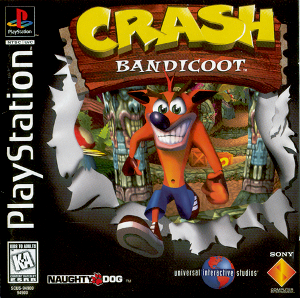
Crash Bandicoot
Spinning through jungle levels as PlayStation's answer to Mario, Crash brought bright, chaotic 3D platforming to a console that desperately needed a mascot of its own. The bridge-crossing crocodile levels and Aku Aku masks are burned into the memory of every '90s PlayStation kid who rented it from Blockbuster on a Friday night. It never dethroned Nintendo's icons, but it made PlayStation feel like a place for kids too, not just Final Fantasy and Metal Gear.
Release Year: 1996Original Platform: PlayStationGenre: PlatformerNostalgia Factor: 8.5/10Copies Sold: 8 million
added by IJR
0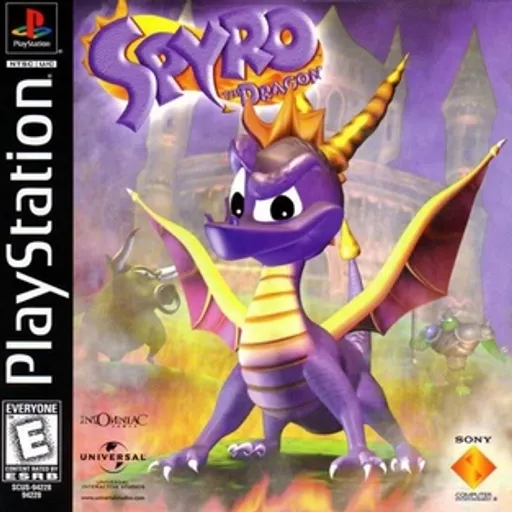
Gliding over glittering gem-filled valleys with a tiny purple dragon and his dragonfly sidekick Sparx, Spyro offered a warmer, more whimsical alternative to Crash's chaos on the same console. Collecting every last gem and freeing every dragon statue became an obsessive completionist ritual for kids who wanted 100% or nothing. It's the cozy comfort-food entry on this list — less culturally seismic, but fiercely beloved by the kids who grew up with it.
Release Year: 1998Original Platform: PlayStationGenre: PlatformerNostalgia Factor: 8/10Copies Sold: 5 million
added by IJRSpyro the Dragon
0GoldenEye 007
Four controllers crammed into one N64, split-screen chaos in the Facility level, and someone always camping with the RCP-90 — GoldenEye basically invented the console shooter as a social event. It proved first-person shooters could work without a mouse and keyboard, setting the template that Halo would later perfect. For an entire generation of kids, 'let's play GoldenEye' was code for a sleepover that would end in genuine arguments.
Release Year: 1997Original Platform: Nintendo 64Genre: First-Person ShooterNostalgia Factor: 8.6/10Copies Sold: 8 million
added by IJRin 8 rankings
0
Mario punching Pikachu off a stage while Fox McCloud reflects lasers shouldn't have worked as a fighting game, but Melee's speed and depth turned it into a competitive religion that's still run at tournaments 20+ years later. It was the GameCube game every kid had, the one that turned birthday parties into four-way brawls over who got to be Falco. Few games bridge casual living-room nostalgia and hardcore esports legitimacy the way this one does.
Release Year: 2001Original Platform: GameCubeGenre: FightingNostalgia Factor: 8.9/10Copies Sold: 7 million
added by IJRin 4 rankingsSuper Smash Bros. Melee
0Grand Theft Auto: San Andreas
CJ rolling through Los Santos on a lowrider bike, blasting the radio, was the moment console gaming grew up and got dangerous — this was the game your parents didn't want you playing, which is exactly why every kid played it anyway. Its sprawling open world, gang-war storyline, and sheer anything-goes freedom made it feel like the biggest game ever made at the time. It's the forbidden-fruit entry on this list, the one traded on burned discs and hushed schoolyard conversations.
Release Year: 2004Original Platform: PlayStation 2Genre: ActionNostalgia Factor: 8.7/10Copies Sold: 27 million
added by IJRin 4 rankings
0The Pillar of Autumn crash-landing on a ringworld gave console shooters a legitimate sci-fi epic, and the Warthog run finale became one of gaming's great climaxes. But its real legacy was LAN parties and split-screen Blood Gulch matches that turned living rooms into makeshift arenas for hours of Halo has become a verb. It proved shooters could be console-first, setting up the Xbox as a real contender and reshaping multiplayer gaming for a generation.
Release Year: 2001Original Platform: XboxGenre: First-Person ShooterNostalgia Factor: 8.4/10Copies Sold: 6 million
added by IJRin 6 rankingsHalo: Combat Evolved
0A pink puffball who could inhale enemies and steal their powers turned Kirby into one of Nintendo's most quietly beloved icons, and this NES entry proved the system still had gas left in the tank in 1993. Its forgiving difficulty and colorful whimsy made it a gateway game for younger siblings who found Mario too hard. It's smaller-scale nostalgia than the giants on this list, but ask anyone who grew up with it and they'll defend it fiercely.
Release Year: 1993Original Platform: NESGenre: PlatformerNostalgia Factor: 7.8/10Copies Sold: 3 million
added by IJRKirby's Adventure
0
Rainbow Road became shorthand for rage-quitting decades before that was even a phrase, and the blue shell taught kids their first brutal lesson in cosmic unfairness. Four-player split-screen turned it into the ultimate family and sleepover game, the one title everyone could actually play together regardless of skill gap. It's the game most responsible for making 'one more race' the most-broken promise of the '90s.
Release Year: 1996Original Platform: Nintendo 64Genre: RacingNostalgia Factor: 8.8/10Copies Sold: 9 million
added by IJRin 2 rankingsMario Kart 64
0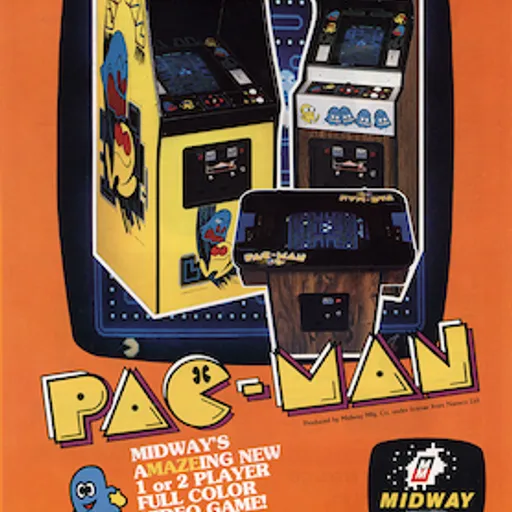
Pac-Man
A yellow circle eating dots while fleeing four ghosts became the first video game character recognizable outside the arcade, turning gaming from a niche hobby into pop culture overnight. Its perfect, simple loop — pattern, risk, chase — is still the reference point for 'easy to learn, hard to master' design. For kids of the arcade era, that iconic waka-waka sound was the sound of childhood itself.
Release Year: 1980Original Platform: ArcadeGenre: ArcadeNostalgia Factor: 8/10Copies Sold: —
added by IJRin 3 rankings
0
Tetris
Falling blocks, a Russian folk melody stuck in your head for decades, and the quiet dopamine hit of clearing four lines at once made Tetris the game that traveled from a Soviet research lab into every household on Earth. It was the killer app that sold the original Game Boy, turning long car rides and waiting rooms into puzzle marathons. Nearly 40 years later it's still the answer to 'what's the most universally played video game of all time.'
Release Year: 1984Original Platform: Multi-platformGenre: PuzzleNostalgia Factor: 8.3/10Copies Sold: 100 million
added by IJRin 4 rankings
0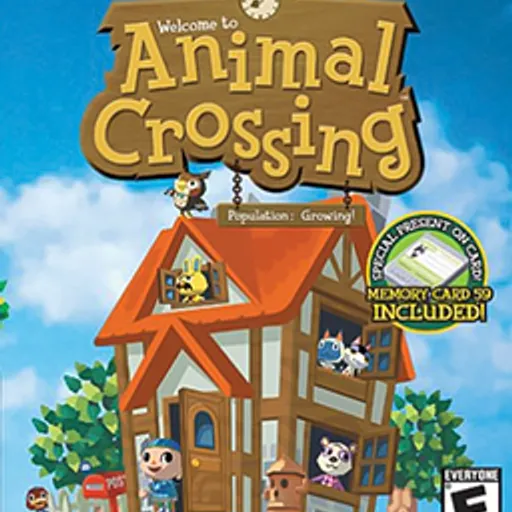
Animal Crossing
No goal, no timer, no way to lose — just fishing, paying off Tom Nook's debt, and chatting with a cranky villager named Wart Jr., Animal Crossing gave kids a slow, gentle world that ran on real time and real seasons. It taught patience in a medium obsessed with speed, rewarding you simply for showing up day after day. Its 2020 pandemic revival proved the format was always ahead of its time, but for GameCube-era kids it was already the comfort game before comfort games were a genre.
Release Year: 2001Original Platform: GameCubeGenre: SimulationNostalgia Factor: 7.9/10Copies Sold: 2 million
added by IJR
0World of Warcraft
Logging into Azeroth after school and losing entire weekends to dungeon runs and guild drama made WoW the game that quietly ate the social lives of a generation of teens, in the best and worst ways. It turned raiding with strangers on Ventrilo into genuine friendships and turned 'brb, pulling the boss' into a household phrase for anyone whose sibling played. Few games so completely rewired how a generation thought about online community, addiction, and virtual belonging.
Release Year: 2004Original Platform: PCGenre: MMORPGNostalgia Factor: 8.1/10Copies Sold: —
added by IJRin 6 rankings
0
Keep ranking
Comments
Free account · your comment posts right after signup