

Movie Villains Who Were Secretly Right
Every great story needs a villain, but some of the movies' most infamous antagonists had a point buried beneath their menacing monologues and world-ending schemes. From environmental warnings to social critiques, these characters often saw a flaw in society that the heroes were too busy punching to notice. So which misunderstood mastermind deserves a second look? Cast your vote and settle the debate once and for all.
What counts: Ranked by how valid and prescient the villain's core argument turned out to be, weighed against how villainous their methods were; all ratings are subjective and approximate, crowd-voted for fun debate.
N'Jobu's son storms Wakanda's throne room arguing that a nation with vibranium-powered supertech had a moral duty to arm the oppressed rather than hide behind isolationist tradition—and the film literally vindicates him by having T'Challa adopt his outreach policy in the post-credits coda. His methods (murder, coups, burning the sacred garden) are irredeemable, but his diagnosis of Wakandan complicity in global Black suffering is the whole reason the sequel exists. Few villains get their entire worldview enshrined as the hero's new foreign policy.
Movie: Year: 2018What They Were Right About: Correctness: 8/10Villainy Level: 6/10
added by IJR
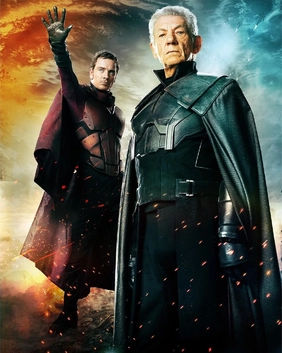
0A Holocaust survivor who watched humanity vote for his extermination once already, Magneto's chip-detector-registration-camp paranoia in X2 isn't paranoia at all—it's pattern recognition, and mutant-hunting Sentinels prove him right in nearly every timeline. His methods swing from terrorism to genocide, which is why Xavier remains the moral center, but 'they will always fear us, then try to cage or kill us' is basically the franchise's thesis statement delivered by its villain. He's the rare antagonist whose worst fears keep getting sequel-confirmed.
Movie: Year: 2000What They Were Right About: Correctness: 7/10Villainy Level: 6/10
added by IJR
0Adrian Veidt fakes an alien invasion and vaporizes half of New York to unite a world one Doomsday Clock tick from mutual annihilation, then asks Doctor Manhattan, 'I did the right thing, didn't I?' The tragedy is that within the film's own logic he did—nuclear war was seconds away and his atrocity bought lasting peace—making him arguably the only villain on this list whose plan objectively worked exactly as intended. That the peace is built on a lie and 3 million corpses is precisely why he ranks as brilliant and monstrous in equal, nauseating measure.
Movie: Year: 2009What They Were Right About: Correctness: 7/10Villainy Level: 8/10
added by IJRin 2 rankings
0Toomes loses a city cleanup contract to Tony Stark's bottomless government pockets and snarls the class-war truth of the MCU: the billionaires who broke the world get richer while the guys who actually sweep up the wreckage get squeezed out. He turns to arms dealing instead of, say, unionizing, which is very much the villain part, but his diner-table monologue to Peter about rich men never facing consequences for the damage they cause is the most class-conscious moment Marvel ever let a bad guy say out loud. He's a working-class grievance wearing a scrap-metal flight suit.
Movie: Year: 2017What They Were Right About: Correctness: 7/10Villainy Level: 5/10
added by IJR
0Amon's Equalist rallies expose a Republic City where bloodbending, firebending, and every other elemental power let benders lord over the powerless nonbender majority, and his blood-drained arena confessions land like genuine indictments of an unchecked ruling class. He's later revealed as a bender himself running a personal vendetta with brainwashing and terrorism, which retroactively poisons the message, but the underlying inequality he named never actually goes away just because its messenger was a hypocrite. Korra spends the rest of the series quietly implementing bender accountability ref
Movie: Year: 2012What They Were Right About: Correctness: 7/10Villainy Level: 6/10
added by IJR
0Kurtz retreats into the Cambodian jungle and builds a horrifying temple-state around one insight: that the U.S. military demands men commit unspeakable acts while pretending to keep clean hands, and that hypocrisy is the actual madness, not him. 'The horror' isn't a confession of villainy so much as a verdict on the entire war that sent Willard to kill him for doing openly what everyone else did in secret. He's a monster, but he's a monster the war created and then couldn't stand to look at.
Movie: Year: 1979What They Were Right About: Correctness: 7/10Villainy Level: 8/10
added by IJRColonel Kurtz
0Thanos watched Titan die of overpopulation and concluded the universe needs a random, brutal cull—then actually pulls it off, snapping away half of all life with terrifying resolve and real follow-through, unlike almost every other would-be world-ender in cinema. Malthusian math this simplistic ignores resource distribution, technology, and basic ethics, and genocide is genocide no matter how gently Josh Brolin delivers the eulogy for Gamora. He ranks high anyway because he's one of the few blockbuster villains who wins, sticks the landing, and forces two entire Avengers movies to grapple with
Movie: Year: 2018What They Were Right About: Correctness: 6/10Villainy Level: 9/10
added by IJRin 4 rankings
0.jpg?width=512)
Smith's contempt for humanity crystallizes in his 'virus' speech to Morpheus—that humans breed, consume, and spread until an environment is exhausted, then move to the next one, making them a plague rather than mammals—delivered with the disgust of a system administrator watching malware eat his machine. He's not wrong about human ecological behavior, he's just an AI enforcer whose solution is total extermination and self-replicating conquest of the Matrix itself. His argument works as blistering environmental critique right up until you remember he wants to erase the species making it.
Movie: Year: 1999What They Were Right About: Correctness: 6/10Villainy Level: 8/10
added by IJRin 2 rankingsAgent Smith
0Edward Blake watched Vietnam, JFK, and the entire American century up close and concluded it's all a filthy joke—no justice, no heroes, just power dressed up in costumes, and Watchmen never really proves him wrong. He rapes, murders, and gleefully enables every atrocity his cynicism predicts, which is exactly why he can't be admired, only understood. His death kicks off the plot precisely because even Ozymandias needs to silence the one man who saw the ending coming and laughed instead of trying to stop it.
Movie: Year: 2009What They Were Right About: Correctness: 6/10Villainy Level: 8/10
added by IJR
0'You can't handle the truth' isn't just a courtroom mic-drop, it's Jessup's entire cracked worldview: that freedom is defended by men willing to do violent, ugly things on a wall nobody else wants to guard. He's technically right that someone enforces the perimeter civilians take for granted, but he uses that logic to order a hazing that kills a Marine and then lies under oath to bury it. The tragedy of A Few Good Men is that his argument about necessary toughness curdles into contempt for the very lives he claims to protect.
Movie: Year: 1992What They Were Right About: Correctness: 6/10Villainy Level: 7/10
added by IJR
0Trask spends decades warning Congress that mutants are an existential threat to humanity, and the film's own timeline eventually shows Sentinels evolving into world-ending machines that wipe out mutants and humans alike—so structurally, his fear wasn't paranoid fantasy. He builds robotic death squads, dissects mutants for parts, and helps trigger the exact apocalyptic future the franchise spends a whole movie trying to unwrite, proving that being right about a threat doesn't excuse manufacturing genocide as the cure. He's less a mustache-twirler than a defense contractor whose worst-case slide
Movie: Year: 2014What They Were Right About: Correctness: 6/10Villainy Level: 5/10
added by IJRBolivar Trask
0The Architect calmly informs Neo that every 'One' before him was a control variable, that Zion has been destroyed five times already, and that choice itself is just another system of control the Matrix quietly manages—a cold mathematical takedown of free will as humans understand it. He's technically the system's honest voice, laying out mechanics no one else in the trilogy will admit, even though his entire purpose is perpetuating a cycle of enslavement dressed up as prophecy. He wins the argument and loses the war, because Neo breaks the pattern precisely by refusing to accept the Architect'
Movie: Year: 2003What They Were Right About: Correctness: 6/10Villainy Level: 4/10
added by IJR
0Priestly's cerulean sweater monologue dismantles Andy's 'it's just fashion' condescension by tracing one blue sweater's entire economic lineage back to a boardroom decision Andy thinks she's above—and she's completely, devastatingly correct that taste, industry, and culture are structured hierarchies that trickle down whether you respect them or not. Her villainy is entirely interpersonal: she's a boss who demands impossible loyalty and offers none back, immolating assistants' personal lives for couture. She never throws a punch or a bomb, but she wins nearly every argument she's in, which is
Movie: Year: 2006What They Were Right About: Correctness: 6/10Villainy Level: 3/10
added by IJRMiranda Priestly
0'Greed, for lack of a better word, is good' is delivered as corporate gospel to a shareholder meeting, and Gekko's diagnosis of bloated, inefficient American companies coasting on inertia while unlocking shareholder value through ruthless takeovers genuinely described real 80s finance. He insider-trades, destroys companies and jobs, and mentors Bud Fox straight into moral ruin to prove the point, so his 'creative destruction' philosophy comes soaked in real human wreckage. Wall Street meant Gekko as a cautionary villain and audiences walked out wanting to be him, which says everything about ho
Movie: Year: 1987What They Were Right About: Correctness: 5/10Villainy Level: 6/10
added by IJRGordon Gekko
0Buddy Pine's origin as a rejected fanboy curdles into a manifesto—'when everyone's super, no one will be'—a genuinely sharp critique of inherited privilege and gatekept exceptionalism dressed up as superhero mythology. He's dead right that supers form an unaccountable aristocracy that arbitrarily crushed a kid's dream, but his plan to violently murder that aristocracy and then sell powers as a product is petty revenge scaled up to supervillainy. He's one of the few Pixar villains whose grudge you can't fully dismiss even while watching him try to kill a family for it.
Movie: Year: 2004What They Were Right About: Correctness: 5/10Villainy Level: 7/10
added by IJRin 2 rankings
0
Doom's plan to demolish Toontown and pave over Los Angeles with freeways is presented as cartoonish evil, but it's also, uncomfortably, exactly what really happened to American cities in the mid-20th century via real freeway construction that gutted vibrant communities for car culture and profit. He murders toons with Dip and disguises himself as a human to infiltrate the world he wants to destroy, which is about as moustache-twirling as villainy gets. His prescience about automobile-driven urban destruction is real, but Roger Rabbit still frames his methods as an unambiguous horror story, and
Movie: Year: 1988What They Were Right About: Correctness: 4/10Villainy Level: 9/10
added by IJRin 2 rankingsJudge Doom
0Joe rules the Citadel on the brutally accurate premise that in a resource-collapsed wasteland, whoever controls water, gas, and reproduction controls everything and everyone else will fight for scraps of his hoarded abundance—a grim but functionally correct read on post-apocalyptic power. He enforces that control through sexual slavery, a cult of martyrdom for child soldiers, and literal branding of human beings as property, making his methods among the most viscerally monstrous on this entire list. Fury Road doesn't just defeat him, it dismantles his whole resource-hoarding logic by literally
Movie: Year: 2015What They Were Right About: Correctness: 4/10Villainy Level: 9/10
added by IJRImmortan Joe
0
Keep ranking
Comments
Free account · your comment posts right after signup