Most Brilliant Military Strategies Ever
From ancient double-envelopments to modern deception campaigns, these are the battle plans and doctrines historians still study in war colleges today. Vote for the strategies you think were the most ingenious.
What counts: Best' means the strategy's tactical brilliance (creativity, deception, and execution relative to the era) and its historical impact on the outcome of the conflict or on military doctrine afterward. Dates, commanders, and ratings are approximate and subject to historical debate.

Hannibal let his center sag on purpose, inviting the Roman legions to punch through into a trap while his heavy cavalry looped around and slammed the door shut from behind—annihilating some 50,000 Romans in a single afternoon, the worst defeat in the Republic's history. It remains the platonic ideal of the double envelopment, still taught at West Point and Sandhurst as the textbook example of using your enemy's aggression as the weapon against him.'
Date: 216 BCKey Commander(s): Hannibal BarcaTactical Brilliance: 10/10Historical Impact: 9/10
added by IJRin 3 rankingsBattle of Cannae
0
Trojan Horse
After ten fruitless years besieging Troy's walls, the Greeks packed soldiers into a giant wooden 'gift' and simply sailed away, letting Trojan hubris do the rest of the work by wheeling the thing inside their own gates. Myth or not, it codified the eternal lesson that psychological deception can succeed where a decade of brute force fails, making 'beware Greeks bearing gifts' a permanent fixture of strategic thought.'
Date: ~1200 BC (legendary)Key Commander(s): OdysseusTactical Brilliance: 9/10Historical Impact: 8/10
added by IJR
0
Outnumbered maybe five-to-one against Darius III's scythed chariots and a battlefield leveled for cavalry, Alexander deliberately marched his line obliquely to the right, luring the Persian flanks to overextend before punching a diagonal gap straight at the king's own position. The gambit shattered the Achaemenid Empire in one stroke and opened all of Asia to a 25-year-old conqueror, proving that geometry and nerve could out-fight sheer mass.'
Date: 331 BCKey Commander(s): Alexander the GreatTactical Brilliance: 9/10Historical Impact: 9/10
added by IJRin 2 rankingsBattle of Gaugamela
0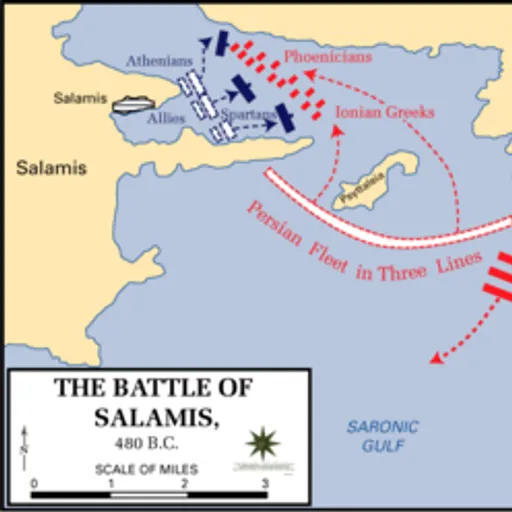
Battle of Salamis
Themistocles goaded Xerxes into funneling his massive fleet into the cramped straits of Salamis, where superior Persian numbers became a liability and nimble Greek triremes rammed them into chaos. The victory saved Greek civilization from Persian absorption and, by extension, preserved the intellectual soil that grew Athenian democracy and philosophy—arguably the single most civilization-altering naval ambush in antiquity.'
Date: 480 BCKey Commander(s): ThemistoclesTactical Brilliance: 8/10Historical Impact: 8/10
added by IJRin 2 rankings
0
Epaminondas broke centuries of hoplite orthodoxy by stacking his left flank fifty men deep instead of spreading evenly, crushing Sparta's elite right wing before the rest of the line even engaged and killing a Spartan king in the process. It ended Sparta's two-century military supremacy overnight and introduced the concept of concentrated, asymmetric force that Alexander and Epaminondas's own student would later perfect.'
Date: 371 BCKey Commander(s): EpaminondasTactical Brilliance: 8/10Historical Impact: 6/10
added by IJRBattle of Leuctra
0Genghis Khan's Mongol Campaigns
Genghis Khan weaponized feigned retreats, fake message relays, and terrifyingly fast logistics to make relatively small mounted armies look like unstoppable hordes, luring enemies like the Khwarezmians into overextension before encircling and annihilating them. His doctrine of decentralized command, psychological terror, and continent-spanning mobility built the largest contiguous land empire in history and still underpins modern maneuver warfare theory.'
Date: 1206–1227Key Commander(s): Genghis KhanTactical Brilliance: 9/10Historical Impact: 10/10
added by IJR
0
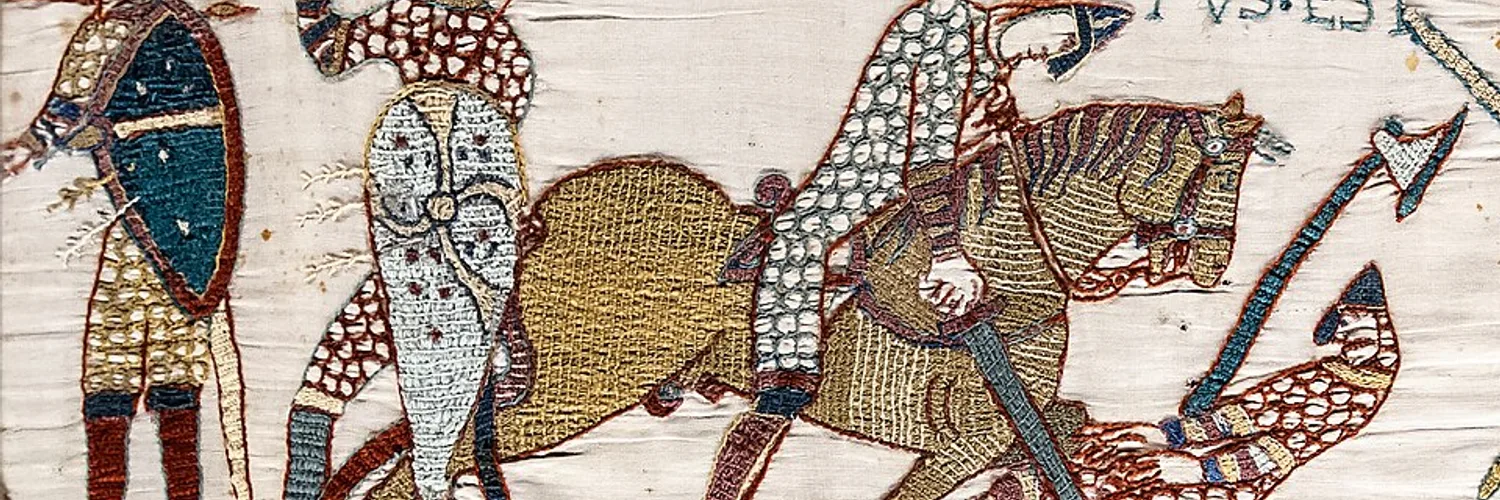
William the Conqueror's Norman forces staged fake retreats that lured Harold's shield wall down from the high ground it had held all day, breaking the formation that had repelled cavalry and archery charges for hours. Harold's death by arrow sealed not just a battle but the entire course of English language, law, and culture—rarely has one tactical trick reshaped a nation so completely.'
Date: 1066Key Commander(s): William the ConquerorTactical Brilliance: 7/10Historical Impact: 9/10
added by IJRin 3 rankingsBattle of Hastings
0Zhuge Liang's Empty Fort Strategy
Facing a vastly superior Wei army with his own city garrison away, Zhuge Liang allegedly threw open the gates, sat calmly on the walls playing a guqin, and dared the enemy commander Sima Yi to walk into what looked like an obvious trap. Sima Yi's paranoia did the rest, retreating rather than risk an ambush—an audacious bluff built entirely on reputation and psychology that has become shorthand in Chinese strategic culture for winning without fighting.'
Date: ~228 ADKey Commander(s): Zhuge LiangTactical Brilliance: 7/10Historical Impact: 5/10
added by IJR
0.jpg?width=512)
Napoleon deliberately looked weak, abandoning the Pratzen Heights to bait the Austro-Russian coalition into over-extending their center, then unleashed Soult's corps up through fog to seize the heights and split the enemy army in two. It's the perfected 'strategy of the central position,' the battle that made him seem invincible and set the template for operational deception copied for the next two centuries.'
Date: 1805Key Commander(s): Napoleon BonaparteTactical Brilliance: 10/10Historical Impact: 9/10
added by IJRBattle of Austerlitz
0Nelson threw out the rulebook on line-ahead naval engagement and instead drove two columns perpendicular straight into the combined French-Spanish fleet, sacrificing formation for speed and chaos even though it exposed his lead ships to murderous raking fire. The gamble destroyed Napoleon's naval power for good, guaranteed British mastery of the seas for a century, and made 'Nelson's touch' synonymous with calculated audacity.'
Date: 1805Key Commander(s): Horatio NelsonTactical Brilliance: 8/10Historical Impact: 9/10
added by IJRin 2 rankingsBattle of Trafalgar
0
Germany's grand pre-WWI blueprint called for a scythe-like sweep through neutral Belgium to encircle and crush France in six weeks before Russia could mobilize, a staggering feat of railway-timetable choreography for its era. It ultimately collapsed at the Marne and dragged the world into four years of trench slaughter, making it less a triumph than the cautionary tale of what happens when brilliant planning meets rigid inflexibility.'
Date: Devised 1905, executed 1914Key Commander(s): Alfred von SchlieffenTactical Brilliance: 6/10Historical Impact: 7/10
added by IJRSchlieffen Plan
0Blitzkrieg Doctrine
German panzer divisions paired with close air support tore through supposedly impregnable Allied lines by simply moving faster than anyone thought possible, treating tanks and planes not as infantry support but as an independent spearhead of shock and encirclement. France fell in six weeks in 1940, and the doctrine permanently rewrote land warfare, making speed and combined-arms coordination the new gold standard militaries chase to this day.'
Date: 1939–1940Key Commander(s): German High CommandTactical Brilliance: 8/10Historical Impact: 9/10
added by IJR
0
The Allies built an entire phantom army—inflatable tanks, fake radio traffic, a decoy general in Patton—to convince Hitler that the real invasion target was Calais, not Normandy, and kept German Panzer reserves pinned there for critical weeks after D-Day. It's arguably the most successful strategic deception in modern history, a masterclass in turning imagination and stagecraft into a battlefield weapon that saved untold Allied lives.'
Date: 1944Key Commander(s): Allied CommandTactical Brilliance: 9/10Historical Impact: 9/10
added by IJROperation Fortitude
0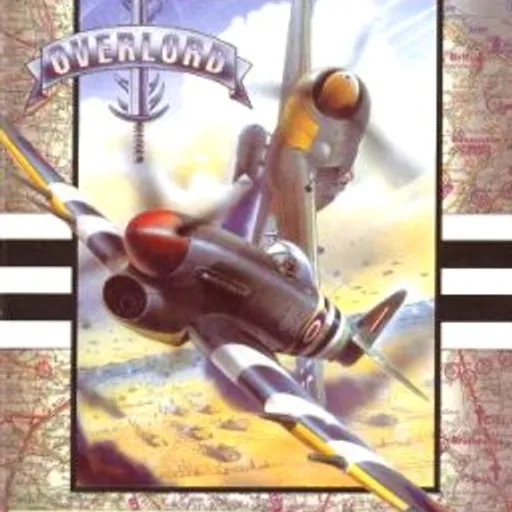
D-Day / Operation Overlord
Landing 156,000 men across five heavily fortified beaches in a single dawn required synchronizing naval bombardment, airborne drops, and amphibious assault on a scale never before attempted, all while the deception of Fortitude kept German reserves looking the wrong way. Its success cracked open Fortress Europe and set the clock ticking on the Reich's collapse, cementing it as the logistical and operational summit of 20th-century combined-arms warfare.'
Date: 1944Key Commander(s): Dwight D. EisenhowerTactical Brilliance: 8/10Historical Impact: 10/10
added by IJR
0
After grinding house-to-house urban combat bled the German 6th Army dry, the Soviets sprang Operation Uranus—a massive pincer through the weaker Romanian and Italian flanks that encircled an entire German army inside the city it thought it was conquering. The trap turned Hitler's crown-jewel offensive into 91,000 prisoners and 300,000 casualties, marking the definitive turning point of the Eastern Front and arguably of the entire war.'
Date: 1942–1943Key Commander(s): Georgy ZhukovTactical Brilliance: 8/10Historical Impact: 10/10
added by IJRin 4 rankingsBattle of Stalingrad
0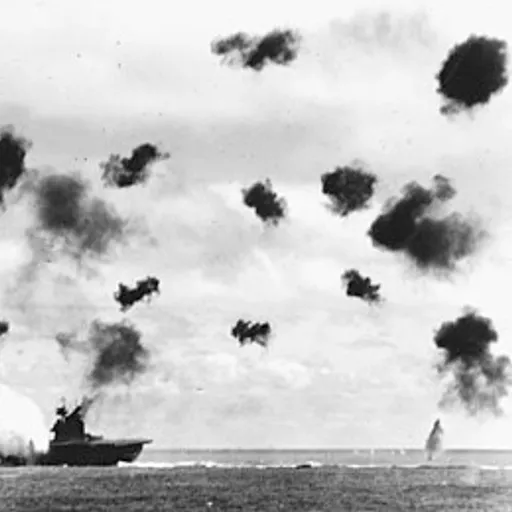
Battle of Midway
American codebreakers cracked Japanese naval ciphers and used a fake water-shortage message to confirm Midway was the true target, letting three outnumbered US carriers ambush and sink four Japanese fleet carriers in a single day. It obliterated Japan's carrier-based offensive capability just six months after Pearl Harbor, flipping the entire momentum of the Pacific War on the strength of intelligence and a few lucky, well-timed dive-bomber runs.'
Date: 1942Key Commander(s): Chester NimitzTactical Brilliance: 8/10Historical Impact: 9/10
added by IJRin 4 rankings
0
The Viet Cong and North Vietnamese launched a massive, coordinated surprise assault on dozens of South Vietnamese cities during a supposed holiday truce, and while it was a crushing tactical defeat that gutted their own forces, the sheer audacity shattered American public confidence that victory was near. It's the rare case where losing on the battlefield won the war in the living rooms of Middle America, proving that strategy in the television age is measured in perception as much as terrain.'
Date: 1968Key Commander(s): Võ Nguyên GiápTactical Brilliance: 7/10Historical Impact: 8/10
added by IJRTet Offensive
0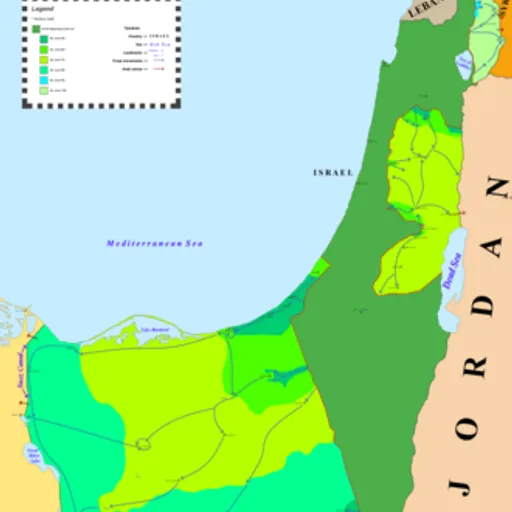
Six-Day War
Israel opened the war with Operation Focus, a meticulously timed simultaneous strike that destroyed Egypt's entire air force on the ground within hours, then pivoted with blitz-speed armored thrusts to seize the Sinai, West Bank, and Golan Heights before enemies could even coordinate a response. Six days transformed the map and strategic balance of the Middle East for generations, standing as one of history's most complete demonstrations of preemptive air superiority married to lightning maneuver warfare.'
Date: 1967Key Commander(s): Israeli Defense ForcesTactical Brilliance: 8/10Historical Impact: 8/10
added by IJR
0
Keep ranking
Comments
Free account · your comment posts right after signup