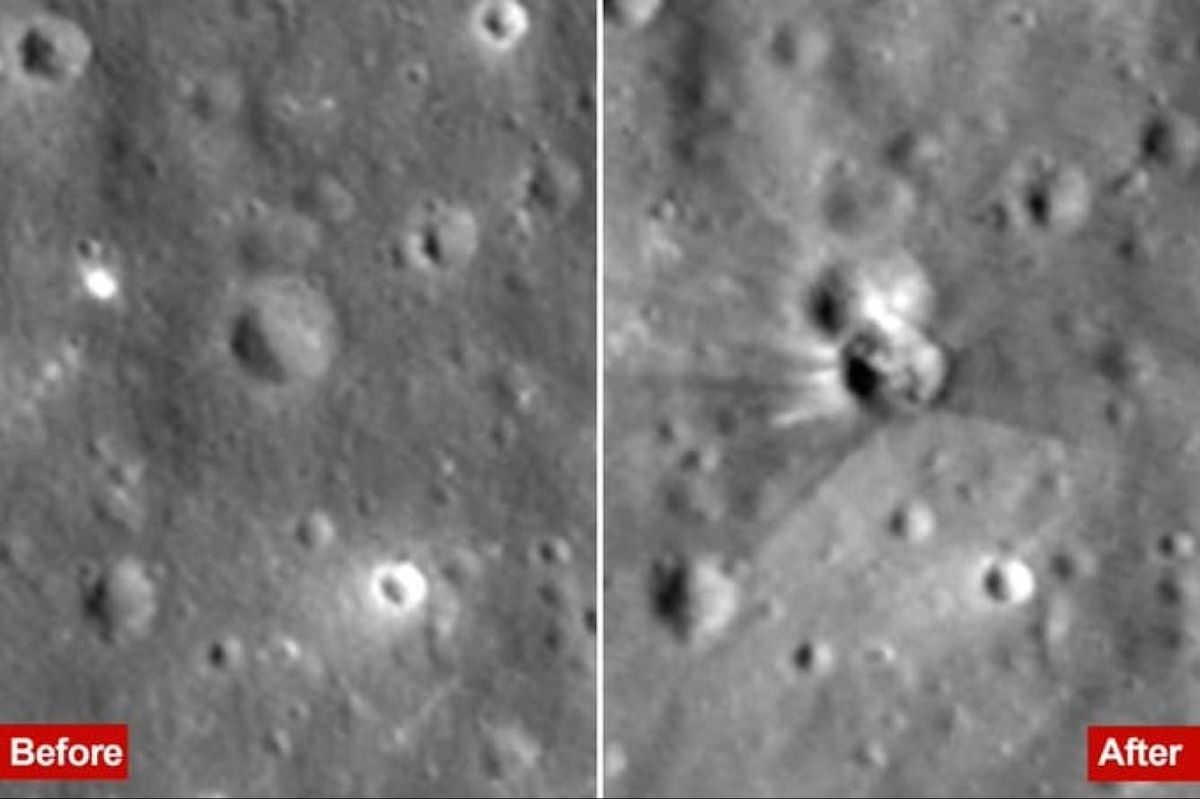
LRO Captures Falcon 9 Moon Impact Imagery, Danuri Aid
NASA’s Lunar Reconnaissance Orbiter captured fresh imagery of a 60-foot-wide crater on the Moon after SpaceX’s Falcon 9 upper-stage crashed on Aug. 5, traveling about 5,400 mph. The crater shows dark ejecta rays and bright rays indicating excavated material and newly exposed rock from depth, with a depth of less than 10 feet (3 meters). LRO imaging spanned roughly six days as the Moon’s rotation brought the site into view from about 60 miles high, beyond the previously reported Aug. 11–12 window. Danuri’s early observations complemented the imagery, reflecting ongoing international collaboration. Analysts say the event was initially unplanned and demonstrates the value of pre- and post-impact imagery for studying lunar geology and impact processes. This incident provides one of the clearest views to date of an uncontrolled piece of space hardware impacting the Moon and highlights challenges in deorbiting upper stages.