Black Sea Attacks Disrupt Global Grain Shipments
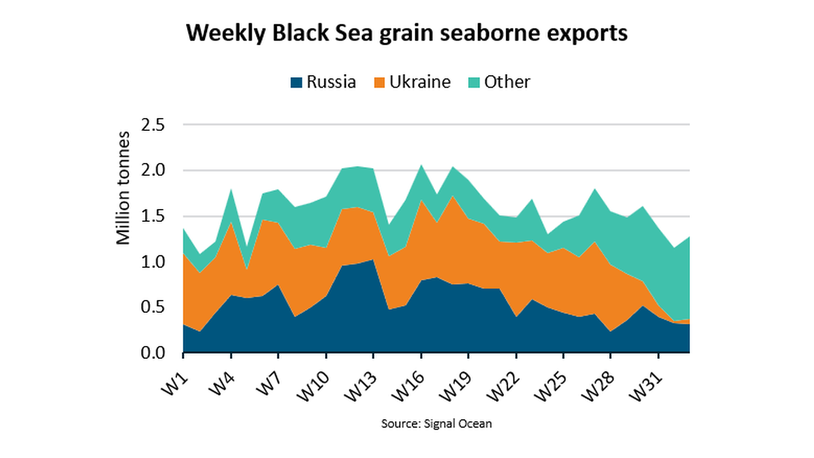
Global grain shipments have fallen notably, with Black Sea exports down about 26% year-on-year over five weeks as disruptions persist, weighing on global supply and prices. Ongoing tensions between Russia and Ukraine and setbacks to a Black Sea export corridor hinder any near-term recovery in shipments, while weaker maize from Brazil adds to the drag. The disruption could shift some U.S. wheat demand higher as buyers diversify away from the Black Sea, but freight costs, class differences, and quality specs will determine how much demand shifts and where it goes. Shipping risk remains elevated, with attacks on vessels near Novorossiysk and a spike in port and sea incidents in July, complicating logistics for grain flows. Importers in Asia, Egypt, Indonesia, and other countries face higher costs and potential shortages, driving interest in alternative origins such as Australia, North America, Argentina, Romania, and Bulgaria. Market dynamics could mark a shift from a temporary geopolitical premium to a more structural change in global wheat flows, influencing prices, export demand, and farm margins through 2026.